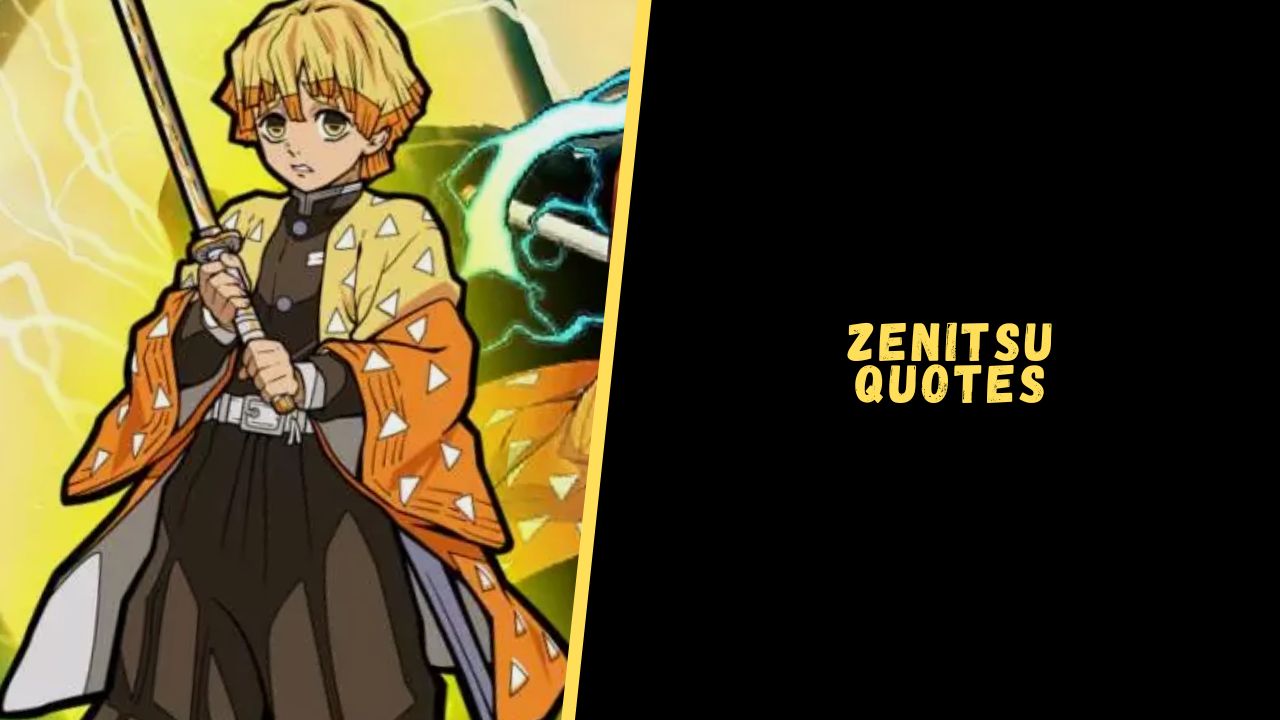
He’s loud. He’s annoying. He spends half his screen time sobbing or passed out from sheer terror. If you asked a casual fan during the first season of Demon Slayer: Kimetsu no Yaiba who the most heroic character was, Zenitsu Agatsuma wouldn't even make the top ten. But then we hit the Infinity Castle arc. Suddenly, the phrase Zenitsu you are my pride and joy isn't just a line from a flashback—it's the emotional anchor of one of the most brutal character arcs in modern shonen history.
It’s easy to dismiss Zenitsu as comic relief. Koyoharu Gotouge, the series creator, wrote him with these sharp, jagged edges of anxiety that grate on the nerves. Yet, buried under that yellow haori is a story about the crushing weight of expectation and the simple, desperate need to be loved by a father figure.
Jigoro Kuwajima, the former Thunder Hashira, didn't see a coward. He saw a successor.
The Weight of the Phrase: Zenitsu You Are My Pride and Joy
When we talk about Zenitsu you are my pride and joy, we are talking about a moment that happens post-mortem. It’s a spiritual reconciliation. For years, Zenitsu lived in a state of constant self-loathing. He believed he was a disappointment because he could only master the First Form of Thunder Breathing: Thunderclap and Flash.
Most slayers are expected to be versatile. Zenitsu? He’s a one-trick pony. But Jigoro told him that was enough. He told him that if you can only do one thing, hone it until it’s perfect. It's the ultimate "fear the man who has practiced one kick ten thousand times" philosophy.
The tragedy is that Zenitsu didn't believe it until it was almost too late. He spent his training years running away, hiding in trees, and getting struck by literal lightning. He thought Jigoro’s discipline was a burden. It wasn't until the reveal of Kaigaku’s betrayal—Zenitsu’s "senior" who turned into a demon—that the stakes became life or death. Jigoro committed seppuku because his student became a demon. He died alone, in agony, without a second to help him.
That guilt is what fuels Zenitsu. It’s why that specific validation, hearing that he was a source of pride, carries such a heavy punch. It’s not just a "good job, kid." It’s a "you were enough exactly as you were."
Breaking Down the Fight with Kaigaku
The showdown between Zenitsu and Kaigaku is arguably the most personal fight in the manga. It’s not about saving the world or killing Muzan. It’s a family feud settled with blades. Kaigaku represents everything Zenitsu feared he was: someone who would sell their soul just to survive and feel superior.
Kaigaku mocked him. He called Zenitsu a "dirt-clayer." He couldn't wrap his head around why their master loved the "weak" one.
In this moment, Zenitsu stops crying. The sniveling, sleepy swordsman disappears. He’s wide awake. He uses a form he created himself—the Seventh Form: Honoikazuchi no Kami (Flaming Thunder God). It’s a move so fast that even a Upper Rank demon couldn't track it.
Why the Seventh Form Matters
- It proves Zenitsu surpassed the traditional Breath of Thunder.
- It shows he took Jigoro’s advice to "perfect" his craft to its logical extreme.
- It’s a direct response to the feeling of inadequacy that plagued him.
The visual of Zenitsu crossing the finish line of that fight, only to fall into the abyss of his own exhaustion, leads us directly to the "borderline" between life and death. That’s where the phrase Zenitsu you are my pride and joy finally lands.
The Psychology of Jigoro Kuwajima’s Mentorship
Let’s be real for a second. Jigoro’s training methods were borderline abusive by modern standards. He hit Zenitsu. He yelled. He forced him into situations that triggered massive panic attacks. But within the context of the Taisho era and the Demon Slayer Corps, he was the only person who didn't give up on Zenitsu.
Zenitsu was a debt-ridden orphan. Nobody wanted him. Jigoro "bought" him by paying off his debts.
Most people see a transaction. Zenitsu saw a savior.
The nuanced beauty of their relationship is that Zenitsu’s cowardice was actually a form of hyper-awareness. He hears everything. He hears the heartbeat of a demon from miles away. He hears the "sound" of people's souls. He knew Jigoro was disappointed in Kaigaku’s arrogance, even if Kaigaku couldn't hear it himself.
When Zenitsu finally hears his master tell him, "Zenitsu, you are my pride and joy," it’s the first time his internal "sound" matches the external reality. The noise stops. The anxiety settles. He finally has a place to belong.
Why Fans Keep Coming Back to This Moment
There’s a reason this specific scene trends every time a new season is announced. It resonates with anyone who has ever felt like they weren't "enough."
Tanjiro is the gold standard of morality. Inosuke is the peak of raw confidence. Zenitsu is just... us. He’s the guy who wants to go home. He’s the guy who is terrified of getting hurt. Seeing someone that relatable receive the ultimate validation from a father figure hits a primal emotional chord.
It’s also about the subversion of the "chosen one" trope. Zenitsu wasn't chosen because he was the best; he was chosen because he had the potential to be persistent.
Common Misconceptions About the "Pride and Joy" Scene
A lot of people think Zenitsu only becomes strong when he’s asleep. That’s a Season 1 mindset. By the time he hears Zenitsu you are my pride and joy, he has evolved.
He fights Kaigaku while fully conscious.
There’s no "Sleepy Zenitsu" in the final arc. That version of him was a defensive mechanism—a way for his body to use its training without his conscious fear getting in the way. But to truly honor Jigoro, he had to face the world with his eyes open. He had to accept the pain of the truth: his master is gone, his brother is a monster, and he is the last line of defense for the Thunder Breathing style.
Key Takeaways from Zenitsu’s Growth
- Vulnerability isn't weakness: Zenitsu’s ability to cry and still stand up is what makes him a "Hashira-level" threat by the end.
- Specialization is a valid path: You don't need to be good at everything. You just need to be undeniable at one thing.
- Forgiveness is internal: Zenitsu had to forgive himself for not being the "perfect" student before he could hear Jigoro’s praise.
Honestly, the animation for this upcoming sequence is going to break the internet. ufotable has a way of making lightning look like liquid gold, and when you pair that with the emotional weight of a dying master's praise, it’s going to be a cultural moment for the anime community.
Practical Lessons We Can Take From Zenitsu
You don't have to be a demon slayer to get something out of this. The core of the Zenitsu you are my pride and joy moment is about the impact of positive reinforcement on a fractured psyche.
If you're struggling with "imposter syndrome" or feeling like you're only "good at one thing," remember Zenitsu. He didn't need to learn the other five forms of Thunder Breathing to be a hero. He just needed to master his own fear and lean into his singular strength.
Next time you feel like a failure, think about the "one-trick pony" who ended up saving the world. Focus on your "First Form." Hone it. Polish it until it glows.
To really understand the depth of this character, re-watch the drum house arc and then immediately read the Kaigaku fight. The contrast is staggering. You’ll see that the words Zenitsu you are my pride and joy weren't just a comfort—they were a transformation.
Actionable Next Steps for Fans
- Track the Sound Cues: Go back and listen to the soundtrack during Zenitsu's major moments. The "sound" of his soul changes from chaotic strings to a singular, sharp note as he nears the Infinity Castle arc.
- Read the Gaiden Chapters: There are extra materials that dive deeper into Jigoro's history as the Thunder Hashira which add even more weight to his relationship with Zenitsu.
- Analyze the Color Palette: Notice how Zenitsu's yellow is often contrasted with the dark purples of the demons he fights, symbolizing a bolt of light in the darkness—a direct visual metaphor for being someone's "pride and joy."
Understanding Zenitsu requires looking past the screaming. When you do, you find a story about a boy who just wanted to make his grandpa proud. And in the end, he did more than that. He became the very lightning his master knew he could be.