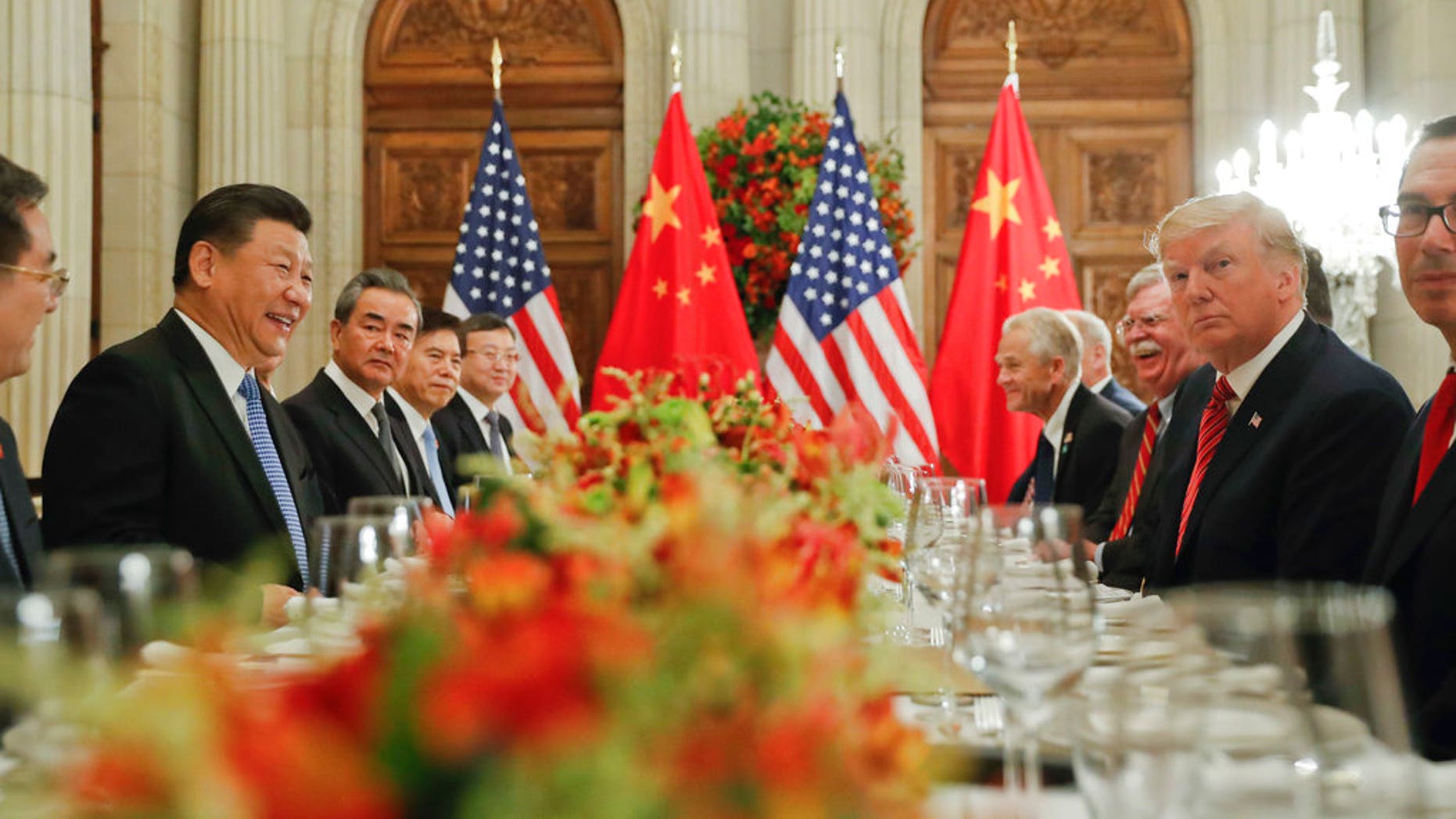
The meeting between Chinese President Xi Jinping and former Taiwan President Ma Ying-jeou in Beijing was never about the man across the table. It was a broadcast to the world. By framing unification as a historical inevitability, Xi is signaling that the era of strategic patience is shifting toward a period of active, multi-dimensional pressure. This isn't just about military drills in the strait; it is a sophisticated campaign to hollow out Taiwan’s autonomy through economic gravity and diplomatic isolation while waiting for the political fruit to ripen.
Beijing’s strategy relies on the belief that time is a Chinese ally. While the West focuses on the "2027 window"—a date often cited by intelligence officials as a possible point for military action—Xi is playing a much longer game. He is betting that the internal fractures within Taiwan’s democracy, coupled with a shifting global order, will eventually make resistance feel futile to the average citizen in Taipei.
The Weaponization of Common Heritage
Xi’s rhetoric during the meeting leaned heavily on the concept of "blood being thicker than water." This isn't flowery prose; it is a calculated psychological operation. By emphasizing a shared ethnic and cultural identity, Beijing attempts to delegitimize the current administration in Taipei as an aberration. They want to frame the Democratic Progressive Party (DPP) not as a political choice made by voters, but as a historical mistake that separates "brothers."
This narrative targets the older generation and the business elite who still hold deep ties to the mainland. It creates a domestic wedge. When Xi speaks of "inevitability," he is trying to drain the morale of the Taiwanese youth. He wants them to feel that their democratic experiment is a temporary state of affairs, a flickering candle in a room where the windows are being slowly closed.
Economic Gravity and the Silicon Shield
For years, analysts argued that Taiwan’s dominance in the semiconductor industry—specifically TSMC—provided a "Silicon Shield." The theory held that China wouldn't dare attack because it would destroy the very chips its own economy needs to survive. Beijing has flipped this script.
Instead of fearing the shield, China is working to make it irrelevant. They are pouring hundreds of billions into their own domestic chip manufacturing through the "Big Fund." Simultaneously, they use economic carrots to lure Taiwanese engineers and firms across the strait. They aren't trying to blow up the factories; they are trying to absorb the talent and the intellectual property.
- Trade Sanctions: Beijing frequently bans Taiwanese agricultural products like pineapples or grouper on "safety grounds" just before elections.
- Preferential Treatment: At the same time, they offer special economic zones for Taiwanese youth to start businesses in mainland cities.
- Supply Chain Integration: Forcing Taiwanese firms to choose between the mainland market and their political identity.
This creates a state of permanent economic anxiety. If you are a business owner in Taichung, you know that a single tweet from a politician can vanish your profit margin overnight. That is the squeeze. It is silent, it is effective, and it doesn't require a single shot to be fired.
The Gray Zone Strategy
While the headlines focus on the high-level meetings in the Great Hall of the People, the real work happens in the "Gray Zone." This refers to activities that are harmful but fall just short of provoking a conventional war.
We see this in the constant incursions of the People's Liberation Army (PLA) into Taiwan’s Air Defense Identification Zone (ADIZ). It isn't just about practice. It is about exhaustion. Every time a mainland jet crosses the median line, Taiwan must scramble its own aging fleet. This costs millions in fuel and maintenance. It wears down the pilots. It creates a sense of "crisis fatigue" in the Taiwanese public. When the alarm cries "wolf" every single day, people eventually stop looking at the door.
The maritime dimension is equally aggressive. Chinese "fishing militias" and coast guard vessels are increasingly active around Kinmen and Matsu, islands controlled by Taiwan but sitting just off the mainland coast. By asserting "law enforcement rights" in these waters, Beijing is effectively erasing the borders of Taiwan’s sovereignty inch by inch.
Diplomatic Attrition
On the global stage, the goal is total erasure. Since 2016, Beijing has successfully flipped several of Taiwan’s remaining diplomatic allies. They do this with "checkbook diplomacy," offering massive infrastructure projects that Taipei cannot match.
The objective is to make Taiwan’s "passport" feel like a membership card to a club that is being shut down. By blocking Taiwan from the World Health Organization and INTERPOL, Beijing reinforces the idea that the island is not a country, but a renegade province. This isolation is designed to make the Taiwanese people feel that their only path to international participation lies through Beijing.
The American Equation
Xi Jinping knows that the only real obstacle to "inevitability" is the United States. However, he is also watching the polarization of American politics. Beijing's analysts are betting that the U.S. commitment to "Strategic Ambiguity" will eventually crumble under the weight of domestic isolationism or a conflict elsewhere, such as in Ukraine or the Middle East.
If the U.S. appears distracted or unwilling to bear the cost of a high-intensity conflict, the "inevitability" Xi speaks of moves from a slogan to a reality. China is not looking for a fair fight; they are looking for a fait accompli. They want to reach a point where, by the time Washington decides to act, the situation on the ground is already settled.
Information Warfare and the Internal Split
The most dangerous front is the digital one. Taiwan is the most targeted country in the world for foreign-disseminated disinformation. Using social media platforms, Beijing-linked actors spread stories designed to erode trust in democratic institutions. They highlight high electricity prices, water shortages, or the alleged "danger" of buying American weapons.
The goal is to convince the Taiwanese public that their government is incompetent and that their allies are unreliable. If you can convince a population that democracy is failing them, they will be much more likely to accept an "inevitable" alternative that promises stability and prosperity.
The Hard Reality of the Strait
The meeting with Ma Ying-jeou was a performance of "peaceful development," but the backdrop is a massive military buildup. The PLA has modernized at a pace that has blindsided many Western observers. They have developed "carrier killer" missiles and a naval fleet that now outnumbers the U.S. Navy in total hulls.
Key Military Developments:
- DF-21D and DF-26 Missiles: Designed specifically to keep U.S. aircraft carriers far away from the Taiwan Strait.
- Amphibious Assault Ships: The Type 075 vessels are massive floating platforms designed to land troops and helicopters on a coastline.
- Integrated Air Defense: Creating a "bubble" that makes it extremely risky for any foreign air force to operate near the island.
Beijing is building the capacity to seize the island while simultaneously running a campaign to ensure they never have to use it. The ideal victory for Xi is one where the Taiwanese leadership signs a "peace agreement" because they feel they have no other choice.
The Failure of Current Deterrence
The current Western approach—selling a few billion dollars in weapons here and there—is a band-aid on a gaping wound. Real deterrence requires more than just hardware; it requires a structural shift in how the global economy treats Taiwan. As long as the world is addicted to Chinese manufacturing and Taiwanese chips simultaneously, Beijing holds the leverage.
If the goal is to prevent the "inevitability" Xi talks about, the strategy must move beyond military drills. It requires a hard-nosed decoupling of critical supply chains and a formal, multilateral security framework that goes beyond vague promises. Anything less is just managing the decline of a democracy.
The clock in the Great Hall of the People isn't ticking for Beijing; they believe they own the clock. They are waiting for the moment when the cost of defending Taiwan exceeds the will of its defenders. That is the cold, calculated truth behind the handshake and the talk of "inevitable" union.
Shift the focus from the calendar to the infrastructure of resistance. If Taiwan cannot secure its energy grid, diversify its trade, and harden its digital borders against the daily onslaught of disinformation, the military hardware in its hangars will eventually be irrelevant. Sovereignty is not lost in a single day of battle; it is surrendered in a thousand small concessions.