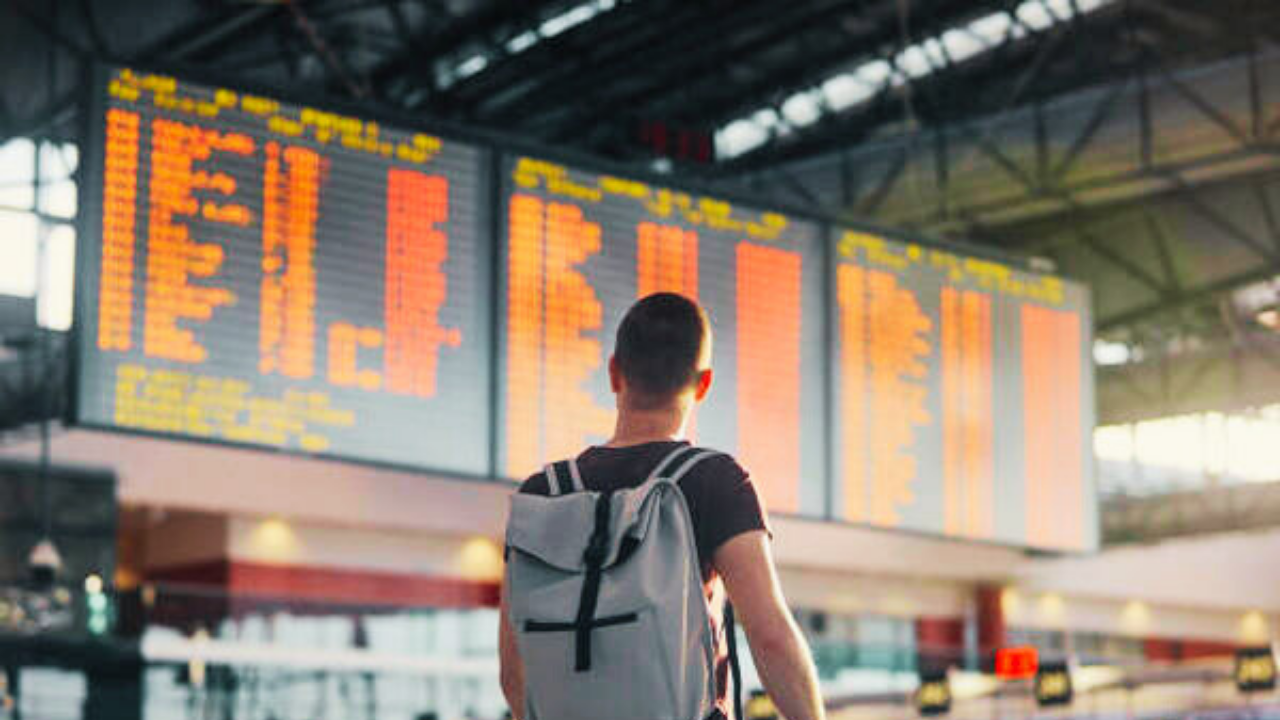
The air inside an international airport terminal has a specific, synthetic weight. It smells of expensive duty-free perfume, recycled oxygen, and the quiet, vibrating hum of collective anxiety. Most of us move through these spaces with a hyper-awareness of our own visibility. We clutch our passports like talismans. We rehearse the answers to questions we haven't been asked yet. We assume that the cameras, the biometric scanners, and the stone-faced agents at the gate see everything.
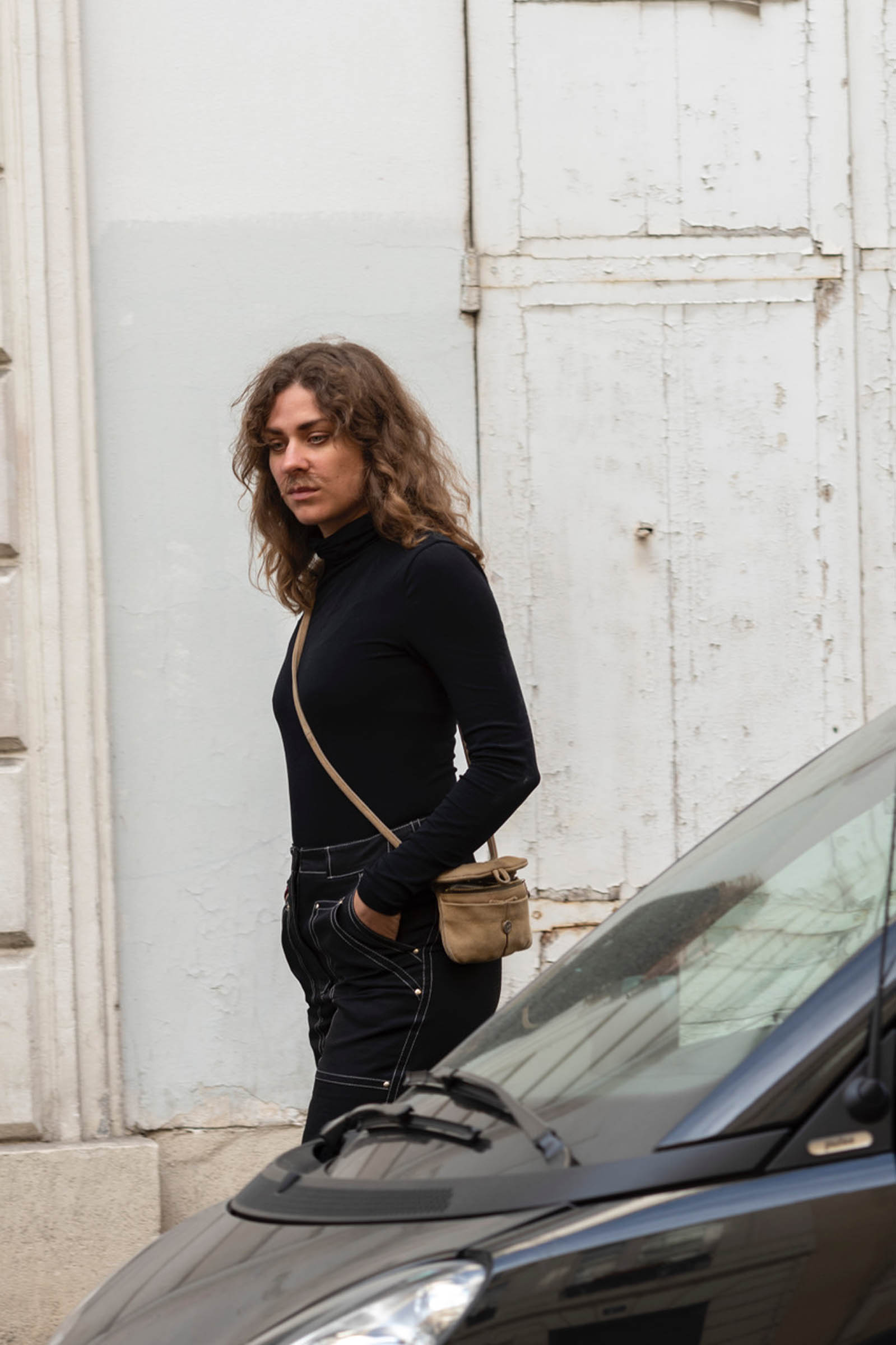
Then there is Svetlana Dali.
While the rest of the world stands in line, sweating under the glare of fluorescent lights, Dali has spent the last several months proving that the fortress of modern aviation is, in many ways, an illusion. She doesn't use a ticket. She doesn't carry a boarding pass. She simply walks.
Her latest appearance at Palm Beach International Airport wasn't a fluke. It was a masterclass in the audacity of being unremarkable. Dali managed to bypass the multi-layered security apparatus of a post-9/11 world, boarding a Delta Air Lines flight bound for Detroit without a single digital footprint to her name. It wasn't until the plane was already taxiing toward the runway that the system—a system designed to catch terrorists and contraband—realized it had been outmaneuvered by a woman with a carry-on bag and a steady gait.
The Mechanics of Invisibility
To understand how a "serial stowaway" operates, you have to stop thinking about security as a solid wall. It isn't. It is a series of overlapping nets, and every net has a gap.
Security experts often talk about the "Swiss Cheese Model." Imagine several slices of Swiss cheese stacked together. Each slice represents a layer of security: the TSA document checker, the luggage scanner, the gate agent, the flight attendant. Usually, the holes don't align. But occasionally, through a mix of human distraction and systemic fatigue, a straight line opens up.
Consider the gate agent. They are processing three hundred people in forty minutes. They are dealing with angry passengers, expired credit cards, and screaming toddlers. In that environment, a person who looks like they belong, who moves with purpose, and who perhaps slips behind a large family or mimics the actions of a distracted traveler, becomes invisible.
Dali’s method isn't about high-tech hacking. it’s about social engineering. It’s the "Clipboard Effect." If you carry a clipboard and look annoyed, you can walk into almost any restricted area in the world. In an airport, if you look like a tired traveler who has already been through the ringer, the human eye tends to glide right over you.
The Breakdown in the Sky
When the Detroit-bound flight finally stopped its taxi and returned to the gate, the confusion among the legitimate passengers was palpable. They had done everything right. They had paid their four hundred dollars. They had taken off their shoes. They had surrendered their liquids.
Police reports from the scene describe a woman who remained remarkably calm as the zip-ties were tightened. This wasn't her first time. Just weeks prior, Dali had successfully made it from New York’s JFK to Paris. Think about that distance. She crossed an ocean on a wide-body jet without a seat assignment.
The question isn't just how she got on the plane, but why the system failed so spectacularly at the point of entry. Delta Air Lines, like most major carriers, utilizes a manifest system that should, in theory, reconcile every person on the plane with a ticketed seat. If there are 160 seats and 161 people, the math should trigger an immediate alarm.
But planes are chaotic. People switch seats. Families try to sit together. Flight attendants are busy stowing bags and ensuring the galley is secure. In the gap between "boarding completed" and "doors closed," there is a window of profound vulnerability. Dali lives in that window.
The Cost of a Ghost in the Machine
We like to believe that we live in a world of absolute data. We are told that our every move is tracked, that our facial geometry is stored in a database, and that the "No Fly List" is an impenetrable barrier.
Dali’s repeated successes act as a glitch in the Matrix. She exposes a truth that the TSA and the Department of Homeland Security are loath to admit: security is largely performative. We participate in the "Security Theater" because it makes us feel safe, but the actual efficacy of these measures relies heavily on the assumption that everyone will follow the rules.
When someone simply refuses to acknowledge the rules, the theater falls apart.
There is a psychological weight to these breaches. For the average traveler, the frustration isn't just about the delay. It’s a sense of betrayal. We trade our privacy, our comfort, and our dignity for the promise of a sterile, secure environment. When a stowaway pops up in 12C, that social contract is voided.
The Pattern of the Persistent
Dali is part of a rare but fascinating subculture of travelers. She follows in the footsteps of Marilyn Hartman, the elderly woman who became a folk hero of sorts for her uncanny ability to fly across the country—and the world—without a ticket.
These individuals aren't usually motivated by malice. They aren't trying to bring down the plane. Often, there is a complex intersection of mental health struggles, a desire for escape, or a strange, compulsive need to test the boundaries of the world.
But for the authorities, the motive is irrelevant. The breach is the point.
If a woman with a handbag can get to Detroit, what else can get to Detroit? That is the unspoken fear that keeps airport administrators awake at night. Each time Dali is arrested, she is banned from airports. She is given court orders. She is photographed. And yet, she keeps appearing in the one place she is most forbidden to be.
A Failure of Technology or Humanity?
In the aftermath of the Palm Beach incident, the finger-pointing began immediately. Was it a failure of the TSA's new facial recognition pilots? Did the Delta gate agent fail to scan a boarding pass?
The truth is likely more mundane. It was a failure of attention.
We have spent billions of dollars on scanners that can see through clothes and dogs that can smell explosives, but we haven't found a way to automate the "gut feeling." A veteran gate agent might have noticed a person hovering in the shadows, but that agent is now being replaced by a self-service kiosk. We are removing the human element from the terminal, and in doing so, we are creating blind spots that a person like Svetlana Dali is perfectly suited to inhabit.
She doesn't need to hack a server. She just needs to wait for a human being to look away.
The Threshold of the Forbidden
As Dali faces new charges—trespassing, entering a restricted area, and violating previous court orders—the aviation industry is forced to look in the mirror. They are chasing a ghost who uses no tech, has no money, and possesses nothing but an iron-willed persistence.
She is a reminder that for all our talk of "seamless" travel and "integrated" security, we are still just a collection of people in a room.
The next time you are standing in that long, winding line at the airport, you will likely look at the person next to you. You’ll see their wrinkled shirt, their coffee cup, and their digital boarding pass glowing on their phone. You will feel the comfort of the process.
But somewhere in the terminal, someone is watching the gate agents. Someone is waiting for the precise moment when the crowd surges and the eyes of authority blink.
Svetlana Dali is not a ghost, but she has learned how to live like one. She exists in the margins of the manifest, a human error that refuses to be corrected, proving that the most sophisticated barriers in the world are only as strong as the person holding the door.
The door is almost always open if you know how to walk through it.