The media is currently choking on its own outrage over the "extravagance" of the proposed White House ballroom project. The standard line is predictable: it’s a vanity project, a misuse of taxpayer funds, and a symbolic middle finger to the working class. It’s an easy narrative. It’s also completely wrong.
Most critics operate on a middle-management mindset. They view the White House as an office building with a historical museum attached. They calculate ROI based on square footage and paint costs. I have consulted on high-stakes capital expenditures for decades, and I can tell you that when you are managing the most powerful brand on the planet, "frugality" is often just a fancy word for incompetence.
The Republican "rallying" around this project isn’t about interior design or catering to a specific ego. It’s about a fundamental understanding of Diplomatic Soft Power Architecture. If you think a ballroom is just a room for dancing, you’ve already lost the game.
The Poverty of Small Thinking
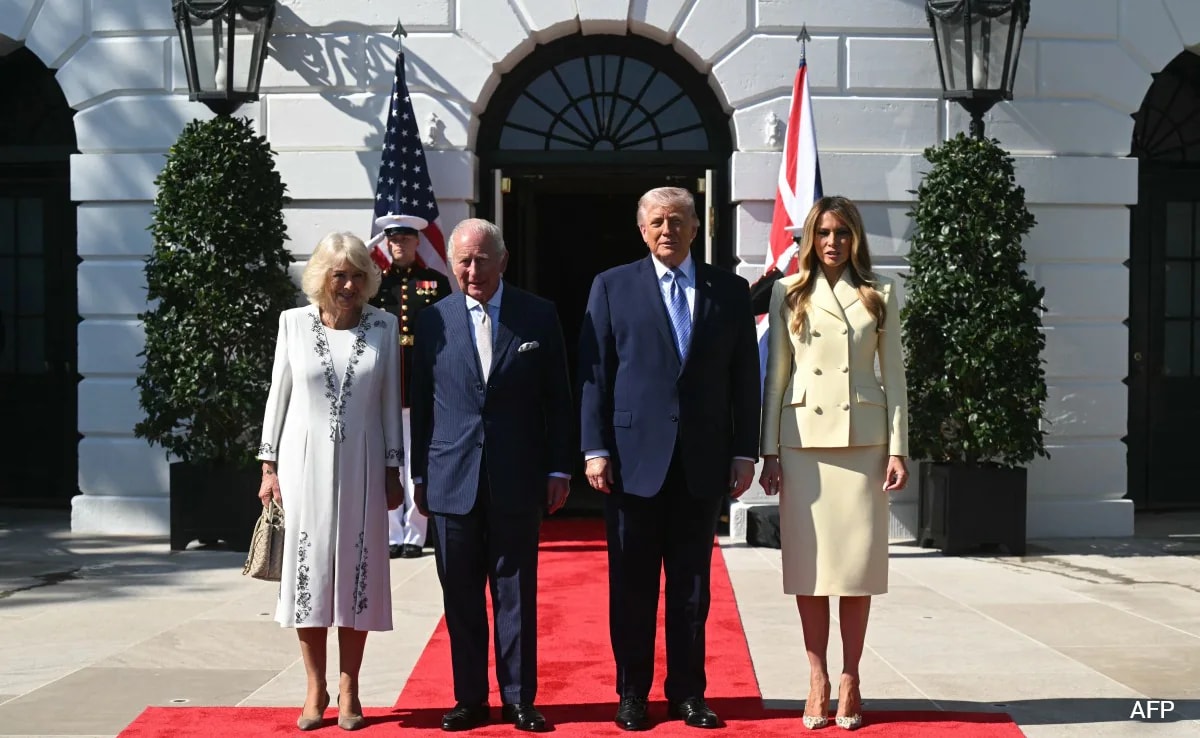
The United States currently hosts world leaders in temporary tents on the South Lawn. Read that again. The most powerful nation in human history, the architect of the global financial system, greets its peers under plastic tarps and rented scaffolding because we are too terrified of a "bad look" to build a permanent structure.
This isn't modesty; it's a security nightmare and a logistical embarrassment. Every time a State Dinner occurs, the Secret Service has to secure a temporary perimeter that is inherently more vulnerable than a permanent wing. We spend millions on "temporary" setups that are struck and rebuilt every few months. This is the definition of a "sunk cost" trap.
Let’s talk numbers. In my experience auditing government-adjacent projects, the cost of recurring temporary infrastructure over a ten-year cycle frequently exceeds the upfront cost of a permanent build. By opposing the ballroom, the "fiscal hawks" are actually advocating for a more expensive, less efficient status quo. They are choosing operational friction over capital efficiency.
The Ballroom as a Weapon of Statecraft
Diplomacy is theater. It is the projection of stability, wealth, and permanence. When a foreign adversary or a key ally walks into a room, every detail—from the acoustics to the lighting—is a subconscious signal of the host's health.
A permanent, state-of-the-art ballroom isn't a luxury; it’s a functional tool for:
- Controlled Environments: Total control over signals, eavesdropping countermeasures, and acoustics.
- Psychological Positioning: You don't negotiate from a position of strength in a tent.
- Efficiency: Shifting the lead time for global summits from months to days.
The critics focus on the "gold leaf" and the "ballroom" label because those words trigger resentment. They ignore the miles of fiber optic cable, the SCIF-grade shielding, and the hardened structural integrity that these projects actually involve. This is a command center disguised as a social hall.
Why the "Taxpayer Waste" Argument is Intellectual Laziness
The project's estimated cost is a rounding error in the federal budget. We lose more money to clerical errors in the Department of Defense in a single afternoon than this project would cost over its entire lifecycle.
The real "waste" is the opportunity cost of an aging executive mansion that cannot handle the technological demands of 2026. We are trying to run a 21st-century superpower out of a building that is functionally a 19th-century house. If this were a corporate headquarters for a Fortune 500 company, the board would have been fired years ago for failing to modernize the primary asset.
The Counter-Intuitive Truth About Modernization
The pushback is almost entirely aesthetic. If the administration called it the "Integrated Global Communications and Protocol Center," the opposition would vanish. Because it's called a "ballroom," it becomes a lightning rod for populist anger.
But here is the truth that no one in D.C. wants to admit: The White House is an asset that is currently underperforming. A modern ballroom allows for the hosting of larger trade delegations, more frequent bilateral summits, and more secure high-level summits without the massive disruption of moving the President’s entire apparatus to a hotel in New York or a resort in Florida. Moving a President is one of the most expensive logistical feats on earth. Keeping them on-site for major events saves the taxpayer tens of millions in travel, security, and lost productivity every single year.
The Risk of the Middle Ground
There is a danger in trying to "split the difference" on these projects. Usually, when the government gets cold feet, they downscale. They build something "functional" but ugly. They use cheap materials that require maintenance every three years. They fail to future-proof the technology.
I've seen it happen in the private sector. A company cuts 20% of the budget on a new facility, only to spend 200% of those savings on repairs and retrofitting within the first decade. If we are going to build it, it must be the best in the world. Anything less is a genuine waste of money.
Addressing the "People Also Ask" Nonsense
Is this just a gift to the President's ego?
Who cares? The President is temporary; the building is permanent. We don't judge the value of the Lincoln Memorial based on whether Lincoln was a "nice guy." We judge it based on its role in the national identity. This project serves the office, not the occupant.
Can't we spend this money on [Insert Social Program]?
This is the "false choice" fallacy. The federal budget isn't a zero-sum game between a room in the White House and a school in Ohio. They come from different buckets, different authorizations, and have different impacts. Refusing to fix your roof doesn't make your grocery bill any cheaper; it just means your house is rotting.
Why now?
Because the cost of labor and materials will never be lower than it is today. In five years, this project will cost 30% more. In ten years, 60% more. Procrastination is the most expensive policy in government.
Stop Apologizing for Excellence
We have become a culture that is embarrassed by greatness. We want our leaders to look "regular," to act "regular," and to host meetings in "regular" spaces. This is a race to the bottom.
The Republican support for this project isn't a sign of MAGA sycophancy; it's a rare moment of institutional clarity. It’s an admission that the United States is not a "regular" country. We are the hegemon. Our architecture should reflect that reality, not hide from it in a rented tent.
If you’re worried about the cost of a ballroom, you’re missing the forest for the gold-plated trees. The real cost is the decline of American prestige and the continued degradation of our national symbols in favor of a performative, skin-deep austerity.
Build the room. Make it grand. Stop pretending that being cheap is the same thing as being moral.
The world is watching. Do you want them to see a superpower, or a nation that can’t even afford a roof for its guests?