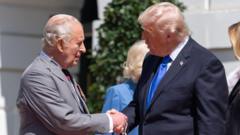
Donald Trump just handed the Scotch whisky industry a get-out-of-jail-free card. After a state visit from King Charles III, the 10% tariff on Scotch—a levy that was threatening to balloon into a 35% trade war nightmare by July 2026—has been scrapped. The mainstream press is already busy painting this as a triumph of "soft power" and royal diplomacy. They are wrong.
This isn't a victory for global trade. It is a masterclass in volatility. By allowing trade policy to be dictated by the vibes of a royal dinner rather than institutional stability, we haven't fixed the Scotch market; we have simply confirmed that it is now a hostage to whim.
The Illusion of Stability
The Scotch Whisky Association (SWA) is currently celebrating what they call a "significant boost." They point to the £4 million a week lost under the 10% regime and the 15% drop in export volumes since 2025. I have seen trade bodies do this before. They mistake a temporary stay of execution for a pardon.
When trade barriers are removed because a monarch "hardly even asked," the underlying structural issues remain untouched. The US-UK relationship hasn't been modernized; it has been medievalized. In a sane business environment, tariffs are negotiated through grueling technical sessions over years. In this environment, they are deleted via a Truth Social post because a guest was polite.
If you are a distiller planning a ten-year maturation cycle, how do you bank on this? If the next diplomatic visit goes poorly—perhaps a disagreement over the Iran conflict or a perceived slight at a summit—those tariffs can return with a single keystroke. We have traded the predictability of a 10% tax for the absolute unpredictability of an ego-driven trade policy.
The Kentucky Quid Pro Quo
The focus on the "whisky and bourbon" connection—specifically the exchange of wooden barrels—is the nuance the "royal charm" narrative ignores. Scotland buys roughly £200 million worth of used American oak barrels every year. Without them, the Scotch industry literally cannot exist under current legal definitions.
By framing this as a "favor" to the King, Trump has actually secured a protectionist win for Kentucky. This wasn't a concession to the UK; it was a subsidy for the American cooperage industry. By lowering the friction for Scotch, he ensures a steady, tax-free demand for US timber and bourbon by-products. The UK government, led by Keir Starmer and John Swinney, is taking a victory lap for a deal that was actually designed to protect the Bluegrass State’s exports.
The "Swinney" Fallacy
Scotland’s First Minister John Swinney is attempting to claim the credit, citing his "mission" to lobby the White House. This is political theater at its most transparent. Trump’s own words explicitly sidelined the politicians to credit the royals.
This creates a dangerous precedent for international business. It tells CEOs and trade ministers that formal channels—the "pivotal" (to use a word I despise) meetings and white papers—are worthless. If you want a trade exemption in 2026, don't send a trade negotiator; send a celebrity or a crown.
Why the Industry is Still in Trouble
Even with zero tariffs, the spirits industry is bleeding. Global consumption is down. 19% of Scottish distilleries are already reporting financial distress. Removing a 10% surcharge doesn't fix a 4.3% decline in global volume or the rising cost of energy and packaging in the UK.
The real threat isn't the tariff; it's the "booze-free" trend and the domestic tax burden. The UK government has increased spirits duty by over 17% in three years. While everyone is looking at the US border, the real "whisky killer" is the Treasury in London. We are cheering for the removal of a 10% US tax while ignoring a domestic tax regime that is far more punitive and far more permanent.
The Strategy for Distillers
Stop celebrating the "King’s gift." If you are running a spirit brand, your move isn't to ramp up production based on this news. Your move is to diversify.
- Hedge against the next mood swing. Assume the tariffs will return in 2028 or sooner.
- Double down on India. India saw a 15% value increase in Scotch imports last year without needing a royal visit. It is a growth market based on demographics, not diplomacy.
- Internalize the risk. Treat the current zero-tariff window as a "liquidity harvest." Use the extra margin to shore up balance sheets rather than expanding capacity.
The "Special Relationship" is now a series of transactional favors. Today, the favor went Scotland’s way. Tomorrow, the wind shifts. If your business model requires a King to fly across the Atlantic just to keep your margins in the black, you don't have a business—you have a charity case.
The industry isn't "breathing easier." It’s just holding its breath until the next tweet.
The era of institutional trade is dead. Welcome to the era of the Royal Handout. Don't spend it all in one place.