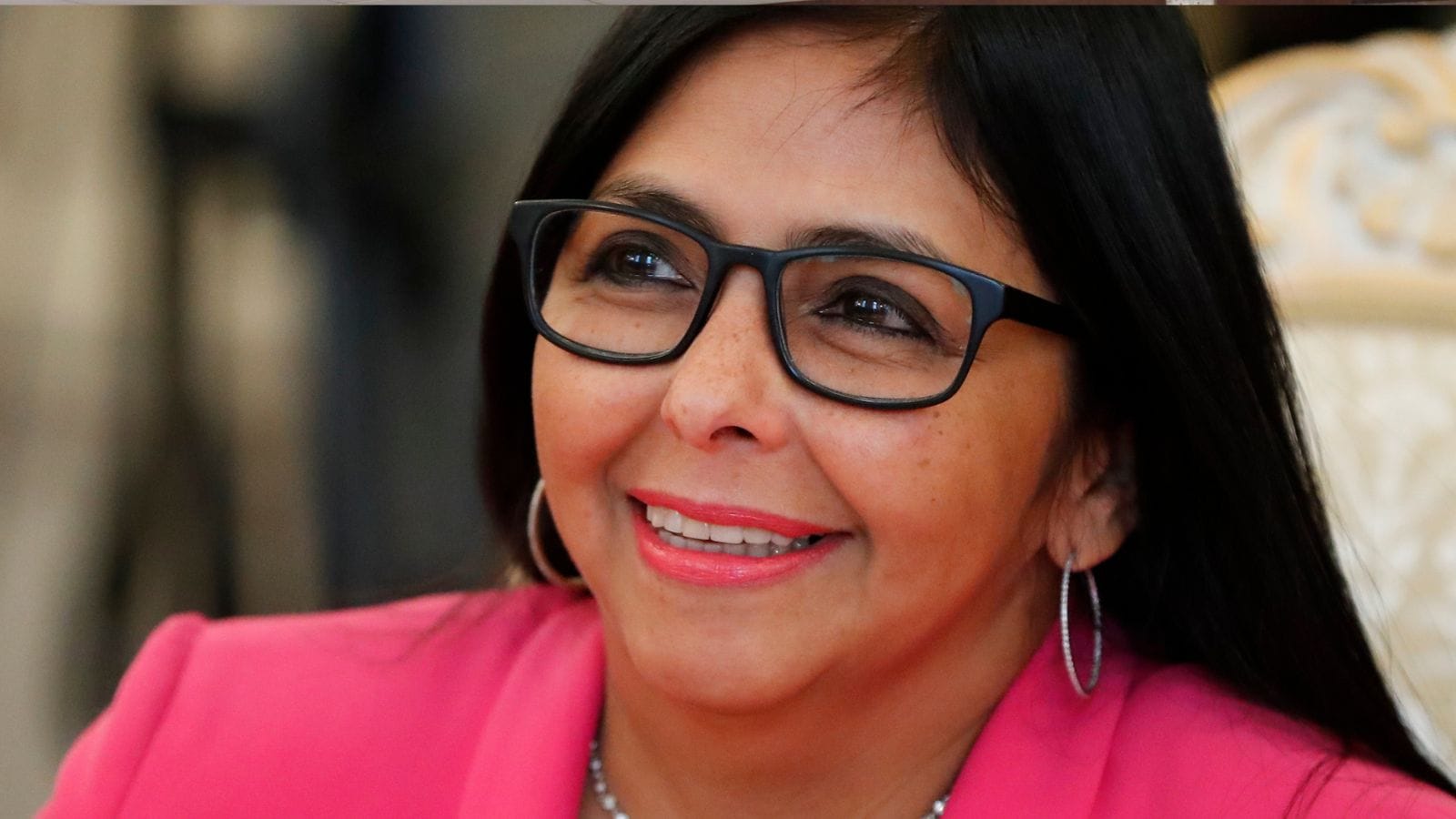
The United States just upped the ante in its long-running standoff with Caracas. It isn't just about Nicolas Maduro anymore. The Department of Justice is reportedly preparing to indict Delcy Rodriguez, the powerhouse Vice President who’s basically been running the show behind the scenes for years. This move signals a massive shift in how the U.S. handles the Venezuelan crisis. By going after the person many see as the actual brain of the administration, Washington is trying to dismantle the power structure from the top down.
It’s a high-stakes gamble. For years, the U.S. focused on Maduro as the singular villain. That didn't work. He’s still there. Now, the strategy is shifting toward the lieutenants who keep the gears turning. Rodriguez isn't just a figurehead. She’s the primary negotiator, the economic architect, and the person who bridges the gap between the old-school Chavismo and the new, more pragmatic authoritarianism. Threatening her with an indictment is a direct message to the inner circle: nobody is safe.
Why Delcy Rodriguez is the Real Target
If you’ve been following Venezuelan politics, you know Rodriguez is everywhere. She’s held almost every major post in the government. She’s been Foreign Minister, head of the National Constituent Assembly, and now Vice President. While Maduro gives the speeches, Rodriguez handles the spreadsheets and the secret meetings. She’s the one who managed to keep the economy from completely vaporizing under the weight of hyperinflation and sanctions.
Washington knows this. They see her as the "fixer." By placing her in the crosshairs of a federal indictment, the U.S. is trying to freeze her ability to travel and negotiate internationally. It’s hard to be the face of Venezuelan diplomacy when there’s an Interpol Red Notice with your name on it. This isn't just about punishment. It’s about paralysis. If Rodriguez can’t move, the Venezuelan government’s ability to bypass sanctions and find new allies becomes a lot harder.
The Mechanics of the Looming Indictment
What exactly are they looking at? Reports suggest the focus is on a mix of money laundering and public corruption. The U.S. has a long memory when it comes to the movement of state funds. We’re talking about billions of dollars that have vanished or been moved through shell companies in Turkey, the UAE, and the Caribbean.
Federal prosecutors in Miami and New York have been building these files for a decade. They don't move unless they have a mountain of evidence. They’ve flipped former insiders—generals, bankers, and bodyguards—who are now singing in exchange for a quiet life in the suburbs of Florida. These witnesses provide the paper trails that connect the Vice President’s office to illicit gold sales and oil schemes that bypass the U.S. Treasury.
Breaking the Inner Circle’s Loyalty
The real goal of this pressure isn't necessarily to get Rodriguez into a U.S. courtroom tomorrow. That’s unlikely. The goal is to create friction within the Miraflores Palace. When the U.S. starts naming names in indictments, it creates a "save yourself" atmosphere.
History shows that these types of legal threats do one of two things. They either make the regime circle the wagons and become even more radical, or they start the process of internal collapse. Washington is betting on the latter. They want the people around Maduro to see that their future involves a prison cell unless they start talking. It’s a classic squeeze play.
The Geopolitical Ripple Effect
This isn't happening in a vacuum. The U.S. is watching Russia and China very closely. Rodriguez has been the primary point of contact for Moscow. She’s the one who flew to Russia to secure grain deals and military cooperation. By labeling her a criminal in the eyes of the U.S. legal system, the State Department is making it "radioactive" for international banks to deal with her.
Even countries that don't particularly like the U.S. are often afraid of secondary sanctions. If a bank in Dubai or Singapore sees that the person signing the contract is under a U.S. indictment, they might back away. That’s the real power of the DOJ’s reach. It’s not just about law; it’s about global financial gatekeeping.
What This Means for Future Negotiations
Many people wonder if this kills any chance of a peaceful transition. It might. If the top leaders feel they have no "off-ramp" because they’re all indicted, they have every reason to fight to the death to stay in power. Why would Rodriguez negotiate a transition if the end result is a flight to Alexandria, Virginia, to stand trial?
However, the U.S. has used indictments as bargaining chips before. Sometimes, the threat of a trial is more useful than the trial itself. It’s a grim reality of international relations. Legal charges can be dropped or "suspended" if a leader agrees to step down or allow free elections. It’s messy, it’s arguably a violation of legal purity, but it’s how the world works.
Navigating the Chaos in Caracas
If you’re trying to understand where Venezuela goes from here, stop looking at the rallies. Look at the legal filings. The indictment of Delcy Rodriguez would be the most significant escalation since the "maximum pressure" campaign started years ago. It shows that the U.S. is no longer content with just sanctioning the country; they are personally targeting the architects of the current system.
The immediate impact will likely be a more defensive stance from Caracas. Expect more fiery rhetoric and perhaps a crackdown on what’s left of the domestic opposition. But beneath the surface, the anxiety is real. You can’t spend "revolutionary" money if every bank in the world has your picture on a "most wanted" list.
The next few months will be telling. Watch for shifts in Rodriguez’s travel schedule and her public appearances. If she stops traveling to neutral ground, you’ll know the threat is being taken seriously. The U.S. has turned up the heat. Now we see who gets burned.
Stay informed by monitoring the official DOJ press releases and the State Department’s daily briefings. These are the only places where the official "red lines" are actually drawn. Pay attention to the specific language used regarding "transitional justice"—that’s where the real deals are hidden.