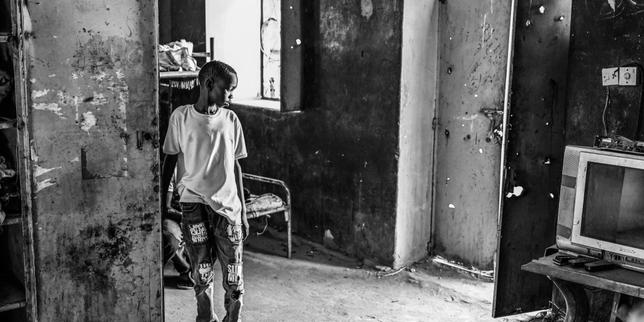
The World Press Photo awards just handed a trophy to Abdulmonam Eassa for his coverage of the civil war in Sudan. The industry is doing what it always does: patting itself on the back for "bearing witness" and celebrating the "echoes of personal history" in photojournalism. It feels noble. It looks prestigious.
It is functionally useless.
The prevailing consensus in the media is that more "personal" storytelling—having local photographers capture their own tragedies—is the antidote to the "White Savior" lens of the past. We are told that empathy, driven by the proximity of the lens to the pain, will finally force the world to care.
This is a lie. Proximity does not create policy. Empathy is a finite resource, and the current model of war photography is actually accelerating "compassion fatigue" rather than curing it. By focusing on the aesthetic of the personal struggle, we have turned a systemic geopolitical collapse into a high-end gallery exhibition.
The Empathy Trap and the Death of Action
We live in an era where images of suffering are a commodity. When Eassa speaks about his work having "personal echoes," the industry swoons. They believe that the photographer's trauma adds a layer of "authenticity" that makes the viewer more likely to engage.
The data suggests otherwise.
In psychology, the Identifiable Victim Effect shows that people respond more to the story of a single individual than to a mass tragedy. However, there is a dark corollary: when these stories are repeated endlessly without a clear avenue for intervention, the brain shuts down. We aren't being "informed." We are being desensitized by high-definition tragedy.
The "lazy consensus" of the World Press Photo crowd is that visibility equals change. It doesn't. Sudan has been "visible" for decades. From the Darfur crisis in the early 2000s to the current paramilitary carnage in Khartoum, the visual tropes remain identical: dust, grief, rubble, and the haunting eyes of the displaced.
If these images worked, the war would have ended twenty years ago. Instead, we have optimized the art of the catastrophe while the mechanics of the conflict are ignored.
The Algorithmic Erasure of Context
The modern war photograph is designed to fit a square on a social media feed. It needs to be "striking." It needs "impact."
By rewarding images that focus on raw emotion and "personal history," we are incentivizing photographers to ignore the boring, complex realities of power. You cannot photograph a shadow banking system. You cannot capture a 1/50th of a second exposure of the gold-smuggling routes that fund the RSF (Rapid Support Forces). You can't put a "personal echo" on the failure of international diplomatic sanctions.
So, the photographer shoots what is visible: the victim.
This creates a distorted reality where the war appears to be a natural disaster—a spontaneous eruption of violence—rather than a calculated business decision by competing generals. By centering the "human story," we let the architects of the slaughter off the hook. We are looking at the blood on the floor instead of the hand on the knife.
The Local Fixer Fallacy
There is a loud movement to "decolonize" photojournalism by hiring local photographers like Eassa. While this is a necessary shift in terms of labor ethics, it is being used as a shield by Western editors to outsource the moral burden of the work.
When a Western agency hires a local to film their own neighborhood burning, they aren't just getting "authentic" shots. They are getting cheaper content with less logistical liability. They are essentially saying, "We don't need to understand the politics; we just need someone who is already there to capture the crying."
True authoritativeness in journalism requires more than just being present. It requires the ability to synthesize the "why" with the "what." The current obsession with the "personal lens" is a retreat from the "analytical lens." We have replaced investigative rigor with emotional resonance.
Stop Asking for Empathy; Start Demanding Accountability
People often ask: "How can we make people care about Sudan?"
That is the wrong question. It assumes that "caring" is the missing ingredient. It isn't. The world "cared" about the viral images from the 2019 revolution. The world "cares" when a beautiful, tragic photo wins a prize.
The real question is: Why does our visual record of war focus on the powerless instead of the powerful?
If we want to disrupt this cycle, we need to stop rewarding the "aesthetic of grief." I’ve seen photo editors pass over grueling, detailed shots of the infrastructure of war because they weren't "emotional" enough. They wanted the "National Geographic" moment. They wanted the face.
Imagine a scenario where the World Press Photo category for "General News" didn't allow photos of victims. Imagine if every entry had to depict a perpetrator, a financier, or a physical manifestation of the systemic failure. It would be a much harder contest to judge. It would be a much less "beautiful" exhibition. But it might actually be useful.
The Tech Paradox: High-Def Tragedy, Low-Res Solutions
We are viewing Sudan in 4K resolution on OLED screens, yet our understanding of the conflict is lower than it was in the era of grainy black-and-white print.
The technology of the image has outpaced the technology of the narrative. We have drones that can capture a funeral from 500 feet in perfect clarity, but we don't have a media ecosystem that can explain the influence of the Wagner Group or the UAE's involvement in the region without losing the audience's attention.
The "personal story" is the easy way out. It’s the shortcut. It allows the viewer to feel a momentary pang of sadness, click a "like" or "share" button, and believe they have participated in the global discourse. It is a form of moral vanity.
The Cost of the "Golden Shot"
Let's talk about the E-E-A-T (Experience, Expertise, Authoritativeness, Trustworthiness) of the photojournalism industry. I have been in the rooms where these awards are debated. The "battle scars" of the industry are real, but they are often self-inflicted.
We reward photographers for the risks they take, which is fair. But we rarely ask if the risk was worth the result. If a photographer risks their life to get a shot of a mother mourning that looks exactly like every other shot of a mother mourning since 1974, what has been gained?
We have created a feedback loop where:
- War happens.
- Photographers capture the most "emotive" (read: tragic) angles.
- Competitions reward the most "artistic" version of that tragedy.
- The public "consumes" the tragedy as art.
- The war continues, funded by the very systems the "art" ignores.
This is not journalism. It is an orgy of professionalized voyeurism masked as "awareness."
The Pivot to Forensic Journalism
If we actually want to change the status quo, we need to kill the "Personal Echo" narrative.
We need Forensic Journalism.
Stop looking for the most photogenic victim. Start using satellite imagery to track the movement of stolen resources. Use open-source intelligence (OSINT) to map the supply chains of the weapons appearing in these photos. The most important photo of the Sudan war isn't a child in a refugee camp; it’s a shipping manifest or a blurry shot of a cargo plane on a remote airstrip.
The industry hates this. It’s not "poetic." It doesn’t win World Press Photo awards. It doesn't make for a "moving" interview about "echoes of the past."
But it’s the only thing that works.
Abdulmonam Eassa is a talented photographer. His courage is beyond question. But his work, and the way the Western media consumes it, is a symptom of a dying medium. We are trying to fight a 21st-century information war with 20th-century sentimentality.
Empathy is a luxury for the comfortable. The people of Sudan don't need our empathy; they need the world to stop financing their executioners. As long as we prefer "personal stories" to hard-nosed systemic exposure, we are just watching the fire and calling it art.
Burn the awards. Delete the "moving" captions. Look at the money.



