Elena stands in the middle of the supermarket aisle, staring at a box of imported pasta. It’s the same blue box she has bought for three years. Last month, it was $2.80. This morning, the sticker says $3.45. She looks at the shelf tag, then at the box, searching for some sign that the ingredients have changed or the weight has increased. Everything is identical. The only thing that has shifted is an invisible tide thousands of miles away, moving through the vaults of central banks and across the glowing screens of currency traders.
The dollar is slipping.
To the average observer, a "weak dollar" sounds like a headline for people in suits, a footnote in a financial journal that has little to do with the price of eggs or a morning commute. But for Elena, and for anyone trying to maintain a standard of living, it is a silent thief. It is the reason her grocery bill is creeping upward while her salary remains anchored to the floor.
Most people view inflation as a localized fire—prices going up because a company is greedy or a supply chain is broken. While those factors matter, the underlying health of the currency is the oxygen that feeds the flame. When the dollar loses its muscle against the euro, the yen, or the yuan, the world effectively becomes more expensive for every American. We are part of a global auction. When our currency weakens, our bid at that auction loses its punch.
The Invisible Toll Booth
Think of the global economy as a giant marketplace where every country brings its own specific "tokens" to trade. For decades, the American token—the dollar—was the heavy hitter. It was the gold standard of trust. Because so much of the world’s oil, metals, and grain are priced in dollars, we enjoyed a "luxury" of sorts. We could buy more with less.
Now, imagine that the tokens in your pocket start to shrink in size. They still look the same, but the merchant at the stall across the sea knows they are worth less than they were yesterday. To compensate, he asks for more tokens for the same bag of coffee beans.
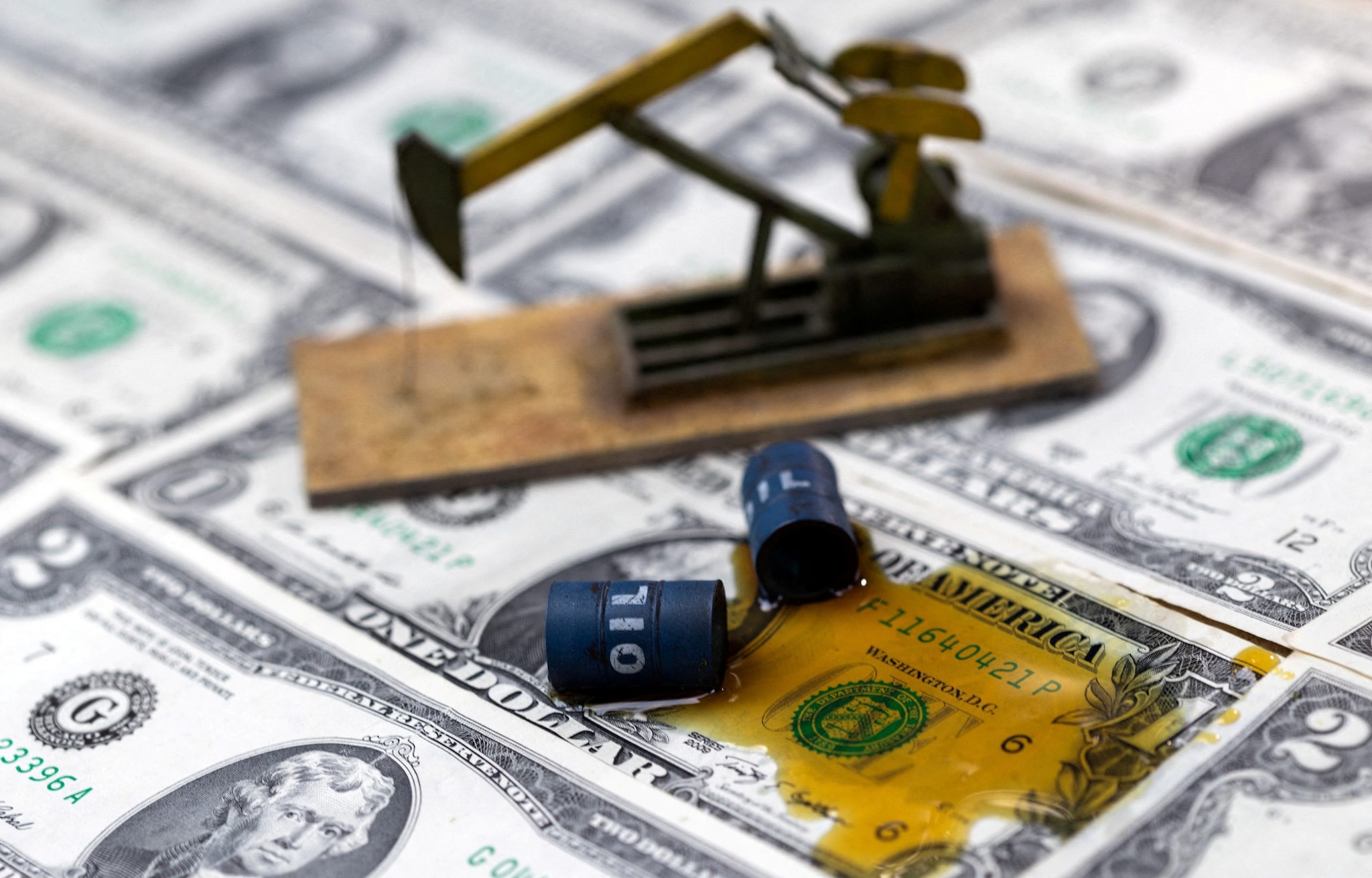
This isn't just about vacations to Paris or leather goods from Italy. It hits the gas tank first. Oil is traded globally in dollars. When the dollar weakens, oil producers—who need to maintain their own purchasing power—often see the price of crude rise to compensate for the dollar’s loss in value. You feel this at the pump. You feel it in the heating bill. You feel it in the cost of the truck that delivered the milk to Elena’s grocery store.
The pain is cumulative. It’s a series of small, sharp stings that eventually add up to a full-blown fever.
The Myth of the Export Win
Economists often talk about a weak dollar as a "boon" for American manufacturing. The logic is simple: if our dollar is weak, our goods are cheaper for foreigners to buy. A German car buyer might look at an American-made truck and see a bargain because his euros now stretch further.
But this silver lining has a dark center. We live in a world of hyper-interconnected parts. An American "made" smartphone or airplane often requires specialized components from Japan, sensors from Germany, and raw minerals from South America.
When the dollar is weak, the cost of importing those essential "ingredients" skyrockets. The manufacturer in Ohio might find it easier to sell his finished product abroad, but his profit margins are being eaten alive by the rising cost of the parts he needs to build the thing in the first place. For the worker on the assembly line, this rarely results in a massive raise. Instead, it results in "cost-cutting measures."
The "win" for exports is often a loss for the individual consumer. We are a nation of buyers. From the clothes on our backs to the chips in our laptops, we rely on a strong currency to keep those goods affordable. When that strength fades, the middle class is the first to feel the squeeze.
The Psychology of the Slow Bleed
There is a specific kind of exhaustion that comes with a weakening currency. It isn't the shock of a sudden market crash; it’s the weary realization that your hard work is buying less life than it used to.
Consider a hypothetical small business owner named Marcus. Marcus runs a local electronics repair shop. He prides himself on fair pricing. But lately, the specialized screens he orders from overseas have jumped in price by 12 percent. He can’t absorb that cost forever.
"I feel like I’m penalized for staying in place," Marcus says. He hasn't changed his business model. He hasn't become less efficient. He is simply drowning in the reality of a currency that doesn't command the respect it once did.
This creates a ripple effect of anxiety. When people see their purchasing power evaporating, they stop taking risks. They stop going out to dinner. They stop Investing in the "extras" that keep a local economy vibrant. The weak dollar isn't just a financial metric; it is a psychological weight that alters how we plan for the future.
Why the Anchor is Drifting
Why does this happen? The reasons are a complex weave of interest rates, national debt, and global confidence. When the Federal Reserve lowers interest rates to stimulate the domestic economy, it often makes holding dollars less attractive to international investors. They want the highest "rent" for their money. If they can get a better return in another currency, they move their capital.
Then there is the matter of the deficit. When a country spends far more than it earns, the world begins to wonder if the "tokens" will always be worth their face value. It’s a slow erosion of trust.
We often treat the dollar as a fixed constant, like a foot or a pound. We assume a dollar is a dollar. But a currency is more like a stock in the "Company of America." When the company looks over-leveraged or the leadership seems uncertain, the stock price—the exchange rate—drops.
The Quiet Redistribution of Wealth
There is a harsh reality to a weakening currency: it rewards debtors and punishes savers.
If you owe $100,000 on a fixed-rate mortgage and the dollar loses half its value, your debt effectively becomes easier to pay off, provided your wages eventually catch up. But if you are a retiree living on a fixed pension or a nest egg of cash, you are watching your life's work dissolve.
The $50,000 you saved for a comfortable retirement hasn't moved, but the amount of "life" that $50,000 can buy has shrunk. The trip you planned, the medical care you might need, the simple dignity of a secure home—all of it becomes more expensive. It is a redistribution of wealth from those who played by the rules and saved, to those who are heavily leveraged.
It is a tax that was never voted on. It is a policy that was never debated in the town square. It just happens, quietly, in the background of our lives.
The Global Chessboard
We cannot look at the dollar in a vacuum. Other nations are watching. For decades, the "Petrodollar" system ensured that everyone needed greenbacks to keep their lights on. But as the dollar wavers, other powers see an opening. They begin to trade in their own currencies. They diversify their reserves.
Every time a major oil deal is settled in a currency other than the dollar, a brick is removed from the foundation of our economic exceptionalism. We have long relied on the "exorbitant privilege" of being the world's reserve currency. It allowed us to run massive debts without immediate catastrophe.
If that privilege disappears, the "quiet" expense we feel now will become a roar. We aren't there yet, but the tremors are visible in the price of Elena’s pasta and Marcus’s repair parts.
Finding the Floor
Is a weak dollar a death sentence? No. Currencies ebb and flow. A period of weakness can lead to a period of correction. But the danger lies in complacency—in the belief that the dollar’s dominance is a law of nature rather than a result of disciplined policy and global trust.
To protect ourselves, we have to look past the sticker price and understand the "why." We have to recognize that the economy isn't just a series of disconnected events, but a living ecosystem where the strength of our money determines the quality of our days.
Elena eventually puts the pasta in her cart. She has to eat. But she leaves the imported olive oil on the shelf, opting for a cheaper, domestic brand she doesn't like as much. It’s a small concession. A tiny sacrifice. But multiply that by 330 million people, and you begin to see the shape of a nation that is slowly learning to live with less, all because the paper in their pockets is losing its voice in the global conversation.
The dollar isn't just money. It is a promise. And when that promise is diluted, the world notices long before we do.