Donald Trump’s attempt to play hardball with Tehran just hit a massive, expensive wall. After peace talks in Islamabad collapsed this weekend, the White House pivoted to a full-scale naval blockade of Iranian ports. It’s a move designed to starve the Islamic Republic of its last remaining trickles of oil revenue, but the immediate blowback isn't hitting Iranian bunkers—it’s hitting your wallet.
On Monday, April 13, 2026, Brent crude prices didn't just climb; they leaped. We’re seeing prices surge past $102 a barrel, an 8% jump within hours of the blockade’s official start at 10:00 a.m. EDT. While Trump claims he's holding all the cards, Iran’s parliamentary speaker, Mohammad Bagher Ghalibaf, is already taking victory laps on social media. His message to the American public was blunt: "Enjoy the current pump figures." He’s betting that American voters will care more about $5 gas than a strategic victory in the Persian Gulf. Expanding on this topic, you can also read: The Twenty One Miles That Could Break the Modern World.
The Chokepoint that Controls Your Commute
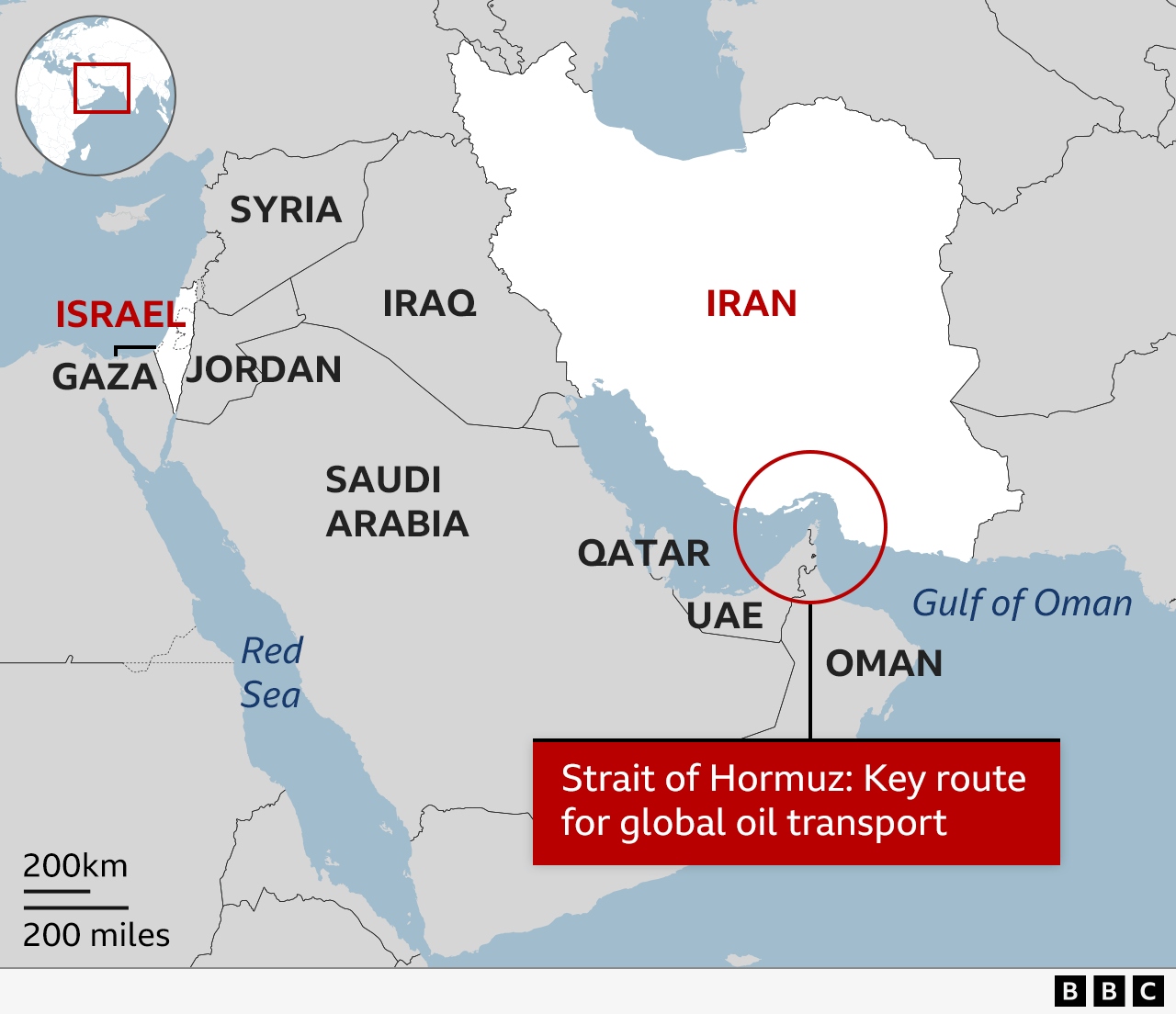
You can’t understand this conflict without looking at the geography. The Strait of Hormuz is a narrow, 24-mile-wide neck of water that acts as the jugular vein for the world’s energy supply. Roughly 21 million barrels of oil pass through here every single day. That’s 20% of the world's total consumption.
Trump’s blockade specifically targets vessels entering or leaving Iranian ports. He’s even threatened to interdict any ship in international waters that has paid a "toll" to Iran. But here’s the problem: Iran has spent the last few weeks setting up a sophisticated tolling system to allow limited traffic. By cutting this off, the U.S. is essentially removing two million barrels of Iranian export oil from an already starving market. Analysts at TIME have also weighed in on this trend.
Why the Math Favors Tehran Right Now
Tehran’s strategy is simple: make the blockade too expensive for the West to maintain. Ghalibaf even shared a mathematical warning signaling that any increase in blockade severity leads to a nonlinear, compounding surge in oil prices. Basically, if you tighten the noose 10%, the price doesn't go up 10%—it explodes.
I’ve seen plenty of geopolitical standoffs, but this one feels different because the U.S. is going it alone. Prime Minister Keir Starmer has already signaled that the U.K. won't support the blockade. France is trying to set up its own "defensive" mission to keep navigation free, separate from Trump’s offensive. When your closest allies walk away, the "impartial enforcement" the U.S. Central Command promised starts to look a lot like a solo act with a very high ticket price.
The Hidden Cost of "Winning"
Trump is confident. He told reporters, "I predict they come back and they give us everything we want." He thinks the Iranian economy, already reeling from years of sanctions, will snap. But history shows that when you corner a regime like this, they don't always surrender—they lash out.
The Iranian Revolutionary Guard has already warned that if their ports aren't safe, "no port in the region will be safe." They aren't just talking about tankers. They're talking about the massive export hubs in Saudi Arabia, the UAE, and Kuwait. If a single Iranian missile hits a Saudi loading terminal, $100 oil will look like a bargain. We’d be talking about $150 or $200 oil, a scenario that would trigger a global recession faster than any policy change ever could.
- Market Panic: Equity markets are already sinking as traders realize the Islamabad talks didn't just fail—they backfired.
- Supply Shortages: Gulf states saw their output sink in March. We're already starting from a deficit.
- Inflation Spike: High energy costs bleed into everything. Groceries, shipping, and manufacturing are all about to get more expensive.
What Happens Next
The U.S. Navy is now tasked with "seeking and interdicting" every vessel that’s paid Iran for passage. This is a logistical nightmare. The Strait is crowded, the waters are contested, and the Iranian Navy is expert at using "swarm" tactics with small, fast boats to harass larger destroyers.
If you're watching the markets, don't expect a quick cool-down. The "nostalgia for $4 gas" that Ghalibaf mocked might become a reality sooner than the White House expects. The administration is betting that the Iranian regime breaks before the American consumer does. It’s a high-stakes game of chicken where the "chicken" is a global economy that’s already on shaky ground.
Keep an eye on the "freedom of navigation" conference being co-hosted by France and the U.K. in the coming days. If they successfully create a separate, "safe" lane that ignores the U.S. blockade, Trump’s leverage evaporates. If they fail, and the Strait stays a war zone, start looking for a bike or a bus pass. The era of cheap energy just took a torpedo to the hull.
Check your local fuel prices and consider locking in heating oil or commercial fuel contracts now. The volatility we're seeing today is just the opening bell for a much longer, more expensive conflict.