The smoke hadn't even cleared in Butler, Pennsylvania, before the internet decided the truth wasn't enough. You saw it in real-time. Within minutes of the July 13, 2024, shooting, social media fractured into two warring camps of disbelief. On one side, people claimed the whole thing was a staged "photo op" to hand Donald Trump the presidency. On the other, claims surfaced that the "Deep State" had finally pulled the trigger.
It’s been over a year, and the noise hasn't stopped. Even with a mountain of evidence, a 2025 poll showed over half of Americans still think Thomas Matthew Crooks didn't act alone. Why? Because reality is often boring and messy, while a conspiracy is neat, intentional, and—most importantly—validates what we already want to believe about our "enemies."
The staged narrative and the red flag fallacy
The loudest theory early on was that the event was a "set-up." Proponents of this idea pointed to the iconic photo of Trump with his fist raised, blood streaked across his face, with the American flag perfectly framed behind him. "It’s too perfect," they argued.
But let’s look at the logistics. To stage an assassination attempt, you’d need a 20-year-old kid to graze a moving target's ear from 150 yards with an AR-15 without accidentally killing him. If Crooks moves his aim by one inch, the "staged" event becomes a very real execution. It’s a gamble no sane person—especially a billionaire with everything to lose—would ever take.
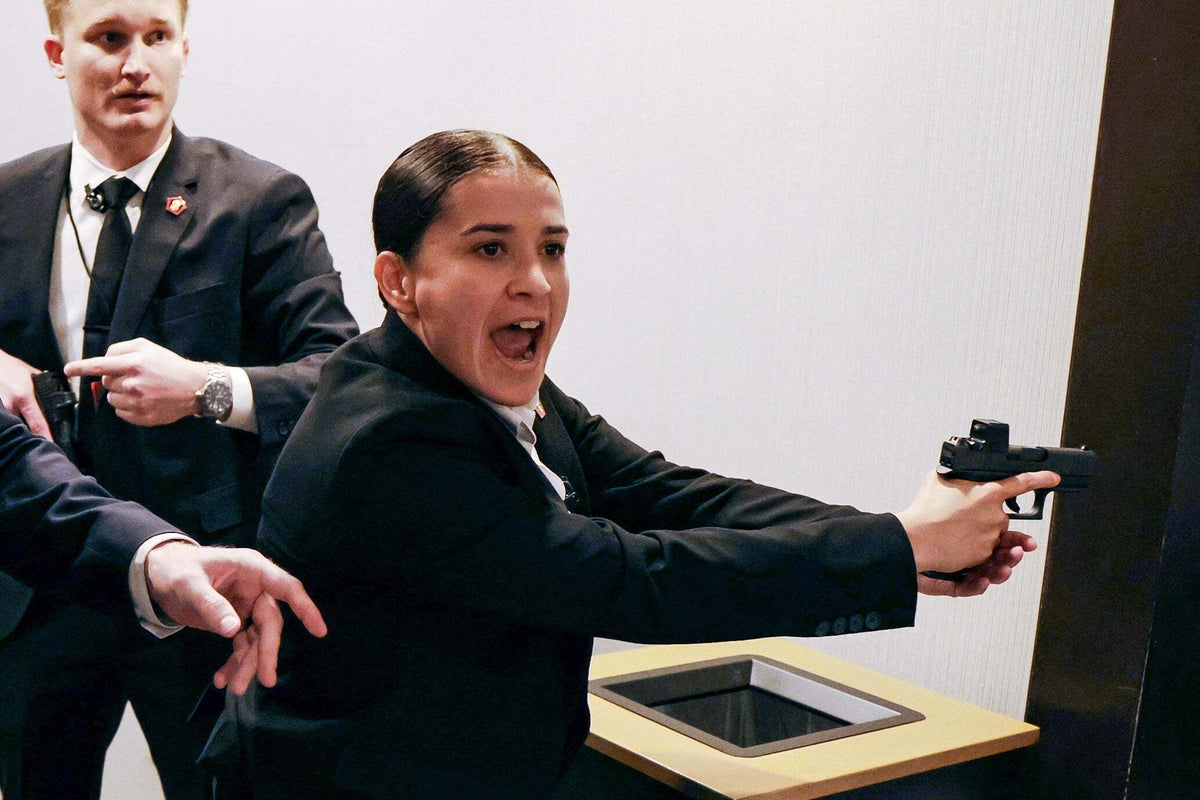
Then there were the "smiling" Secret Service agents. Viral posts used low-resolution or altered images to claim agents were smirking as they tackled Trump. High-resolution footage from the Associated Press later proved this was nonsense. The agents weren't smiling; they were baring their teeth under the physical strain of forming a human shield.
Why the Secret Service failures look like a plot
If you want to know why people don't trust the official story, don't look at the shooter. Look at the security. The "set-up" claims gained traction because the Secret Service's performance was, frankly, pathetic.
- The Roof: Crooks fired from the roof of the AGR building. It was less than 150 yards from the stage. That’s a "gimme" shot for anyone with basic rifle training.
- The Warnings: Rally-goers literally pointed at Crooks as he crawled onto the roof. They yelled at police. Nothing happened for several crucial minutes.
- The Radio Silence: We now know local police were on different radio frequencies than the Secret Service. Vital intel about a "suspicious person with a rangefinder" never made it to the detail protecting Trump.
When an elite agency fails this spectacularly, the human brain struggles to accept it as simple incompetence. We want to believe the Secret Service is a "well-oiled machine," so when they mess up this badly, we assume it must have been intentional. But the 2024 House Task Force report laid it out clearly: it wasn't a plot. It was a "cascading failure" of communication and "complacency."
The two flavors of misinformation
The theories didn't just come from one side of the aisle. They were tailor-made for whoever was clicking.
BlueAnon and the staged ear
On the left, "BlueAnon" theorists suggested the blood was a "theatrical prop" or that Trump was hit by glass from a shattered teleprompter rather than a bullet. The FBI eventually confirmed it was a bullet, and the teleprompters were found intact. The idea that a politician would invite a teenager to shoot at his head to boost poll numbers is the kind of logic that only works if you've spent too much time in an echo chamber.
The Deep State and the "Other" shooters
On the right, the narrative focused on the idea that the "system" wanted Trump gone. Some claimed there was a second shooter on a water tower, citing "acoustic analysis" from TikTok experts. Every official investigation, including ballistics and audio forensics from the FBI, confirmed all eight shots came from Crooks’s position.
The psychology of the "Set-Up"
Why do you believe what you believe? Psychology tells us that during massive, traumatic events, we experience "proportionality bias." We find it hard to accept that a "nobody" like Thomas Matthew Crooks—a quiet 20-year-old dietary aide who was bullied in high school—could change the course of world history.
We want a big cause for a big effect. A global conspiracy feels more "right" than a lonely kid with a ladder and a rifle his dad bought him.
The facts we actually have
If you're looking for the truth, stop watching grainy TikTok loops and look at the confirmed timeline:
- Preparation: Crooks visited the site days in advance. He used a drone to scout the area. He bought a five-foot ladder and 50 rounds of ammo on the morning of the hit.
- The Weapon: It was a DPMS Panther Arms AR-15. His father bought it legally in 2013 and sold it to him in 2023.
- The Motivation: This is the part that drives people crazy. The FBI found searches on Crooks's phone for both Trump and Biden, as well as the dates of the DNC. He seemed less like a political zealot and more like a mass shooter looking for a high-profile target.
How to spot the nonsense
The next time a major event happens, don't get sucked into the "set-up" vacuum. Look for these red flags in any theory you read:
- Perfect Timing: Claims that "the camera was perfectly placed" ignore that hundreds of cameras are at these events.
- Anomalies as Evidence: If a theorist points to a "strange shadow" or a "weird look" an agent gave, they're cherry-picking a single second out of hours of footage.
- Multiple Shooters with No Bodies: Where did the second shooter go? How did they vanish in a field surrounded by thousands of people and snipers?
The Butler shooting was a dark day for American security. It exposed a Secret Service that had grown lazy and a political climate so toxic that "the other side must have faked it" became a default setting for millions.
Don't let the lack of a satisfying motive drive you toward fiction. Sometimes the most dangerous people in the world are exactly who they appear to be: confused, lonely, and capable of horrific things for no "greater" reason at all. If you want to stay grounded, stick to the primary source documents from the House Task Force and the FBI's forensic summaries. They aren't as exciting as a spy novel, but they're the only things backed by evidence.