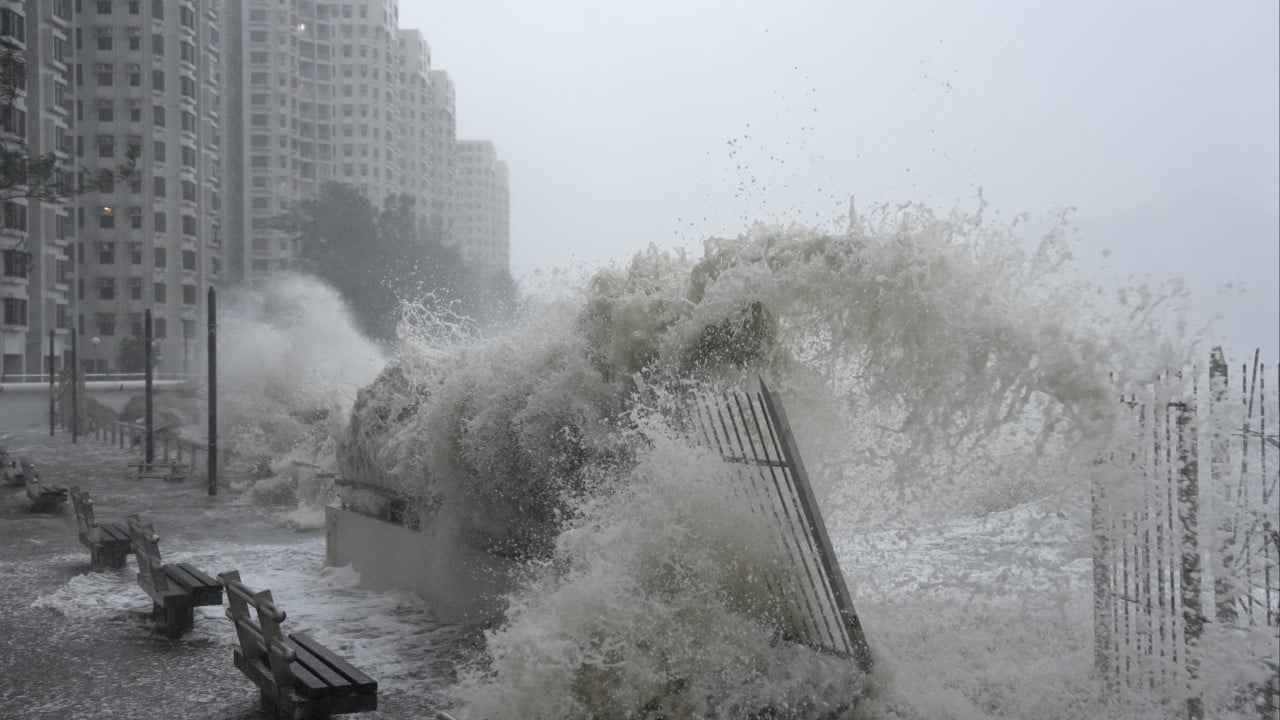
The recent "Watchdog" report urging the Hong Kong Observatory (HKO) to better explain its typhoon warning decisions is a classic example of bureaucratic overreach masquerading as public service. It assumes that more information equals better safety. It doesn't. In the high-stakes world of meteorological risk management, transparency is a trap.
Public demand for "clarity" during a T8 or T10 signal usually translates to: "Give me enough data so I can decide if I actually need to stay inside." That is a recipe for disaster. When you pull back the curtain on the HKO’s decision-making process, you don't empower the public; you invite millions of amateur meteorologists to second-guess life-saving protocols based on a Google search and a look out their window. If you enjoyed this piece, you should look at: this related article.
The Myth of the Rational Commuter
The core of the Watchdog's argument is that the HKO needs to "enhance transparency" to maintain public trust. This sounds virtuous in a boardroom. In the real world, during a shifting gale-force wind, it is delusional.
Most people do not want transparency; they want certainty. But meteorology is a science of probabilities, not certainties. When the HKO explains that a T8 wasn't issued because the "sustained wind speeds at sea level in the urban heart did not meet the 63 km/h threshold," the average person doesn't think about atmospheric pressure or the friction of skyscrapers. They think about the fact that it’s raining at their bus stop and they want to go home. For another look on this event, see the recent coverage from NPR.
If the HKO starts publishing the internal debates of its scientists—the "we think it might veer south, but the European model says north" conversations—the public will use that ambiguity to justify risky behavior. If there is a 20% chance the storm misses, people will gamble on that 20%. I have seen this "information-action gap" kill people in heavy industry. You do not give the operator a manual on how the brake might fail; you tell them to stop the machine.
Stop Treating Weather Like a Democracy
The Hong Kong Observatory is one of the few institutions left that functions on cold, hard data. By demanding they "better explain" themselves, the Watchdog is essentially asking the HKO to participate in a PR campaign.
The current system works because it is binary. The signal is up, or it is not. The moment you introduce "nuance" into public warnings, you dilute the authority of the warning itself.
Imagine a scenario where the HKO releases a detailed, transparent breakdown of why a T8 was delayed by two hours. They cite wind shear patterns and a sudden drop in central pressure. What happens? The next time a storm hits, every shop owner and office manager will look at the live radar, see a slight gap in the clouds, and decide they know better than the experts. They will keep staff on-site for "just one more hour." That is the hour when the storm surge hits.
The Data Fetish is Killing Common Sense
The "People Also Ask" sections of the internet are filled with queries like "Why didn't they call a T8 earlier?" or "Is the HKO protecting the stock market?" These questions are built on a flawed premise: that the HKO is a political body rather than a scientific one.
By caving to the Watchdog's demands for transparency, the HKO validates these conspiracy theories. It suggests that there is a secret "why" that the public deserves to know. There isn't. The "why" is physics.
We have become obsessed with the "democratization of data." We think that because we have access to the same satellite imagery as the HKO, we are entitled to the same seat at the table. We aren't. Access to data is not the same as the ability to interpret it. The HKO uses the Dvorak technique, Doppler radar arrays, and complex fluid dynamics models. Your weather app uses a simplified API.
The Cost of Explaining the Obvious
Every hour an HKO lead scientist spends crafting a "public-friendly" explanation for a decision is an hour they are not spent monitoring the most unpredictable weather systems on the planet.
We are demanding that experts pivot from being scientists to being influencers. This shift is dangerous. When the focus moves from accuracy to perception, accuracy inevitably suffers. If the HKO starts worrying about how a "failed" prediction will look in a post-event transparency report, they will become risk-averse. They will over-warn to avoid criticism, leading to "warning fatigue."
Warning fatigue is the silent killer. If you cry T8 every time the wind whistles to satisfy a demanding public, people will stop boarding up their windows. Then, when the actual "Big One" hits, they’ll be caught in the glass rain of a shattered skyline.
The Superior Path: Strategic Silence
The HKO should do the opposite of what the Watchdog suggests. They should become less transparent about the process and more authoritative about the command.
The public does not need to know about the "uncertainty" in the track of a typhoon. They need to know what to do. The HKO should strip back the jargon and the "explanations" and lean into the role of the undisputed commander of public safety.
- The logic is simple: In a crisis, the person with the megaphone shouldn't explain how the megaphone works. They should just tell you where to run.
- The risk is clear: Transparency in high-stakes forecasting creates a "choose your own adventure" safety culture.
- The solution is unpopular: Trust the experts and stop asking for the math.
The Watchdog thinks they are protecting the public’s right to know. In reality, they are dismantling the walls of the only fortress we have against the South China Sea. If the HKO starts explaining every move, they won't be a world-class meteorological service anymore; they’ll just be another government department drowning in paperwork while the wind rips the roof off.
Data belongs to the scientists. Instructions belong to the public. Keep them separate, or get ready to pay the price in blood and broken glass.