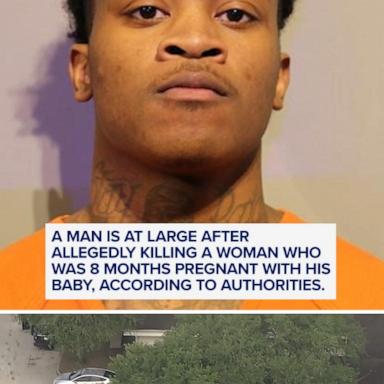
A man allegedly kills a woman pregnant with his baby and the world stops for a second to process the sheer brutality. It’s the kind of headline that makes you feel sick. You see the video clips, the grainy bodycam footage, or the somber news anchors, and you wonder how things ever got to this point. This isn't just a isolated crime report. It is a loud, jarring reminder of a specific type of violence that happens way more often than we want to admit.
When a man is accused of killing his pregnant partner, we’re looking at a intersection of domestic abuse and reproductive control. It’s dark. It’s heavy. But we need to talk about it without the sugar-coating often found in standard news cycles. Statistics from the American Journal of Public Health show that homicide is a leading cause of death for pregnant women, often outranking medical complications. That is a terrifying reality.
The Shocking Statistics of Pregnancy and Homicide
Most people assume the biggest risks during pregnancy are things like preeclampsia or gestational diabetes. Those are serious, sure. But for many women, the biggest threat is actually the person sitting across from them at the dinner table.
Research conducted by institutions like Harvard T.H. Chan School of Public Health indicates that pregnant or postpartum women are killed at a significantly higher rate than women who aren't pregnant. Why? Because pregnancy is a massive trigger for abusers. It’s a period where the woman’s attention shifts toward the baby and away from the partner’s demands. It’s a time when she might be more financially dependent or physically vulnerable. Abusers see that shift as a loss of control. They don't handle it well.
Why Domestic Violence Escalates During Pregnancy
I’ve seen this pattern in case study after case study. The violence doesn't always start with a physical blow. It starts with a comment about who she’s texting. It moves to checking her bank account. Then, the pregnancy happens.
For an abuser, a baby represents a permanent tie. It’s also a competitor for his partner's time. When you hear about a man allegedly killing a woman pregnant with his child, you're usually seeing the final, catastrophic explosion of a long-term control struggle. The "allegedly" in the headline is a legal necessity, but the patterns leading up to these arrests are often textbook.
- Increased isolation from family and friends.
- Threats regarding the custody of the unborn child.
- Physical abuse focused on the abdomen.
- Extreme jealousy regarding medical appointments.
It’s about power. It’s always about power.
The Red Flags We Often Ignore
We like to think we’d see the signs. We tell ourselves that if our friend or sister were in danger, we’d step in. But these situations are incredibly nuanced. The man in the news might have seemed "normal" to his neighbors. He might have been the guy who mowed his lawn every Saturday and waved at everyone.
The danger is often hidden behind closed doors. Professionals in the field of domestic violence advocacy point out that "lethality markers" are real. If a partner has ever choked the other, the risk of being killed increases by an astronomical percentage. If there is a gun in the house, the risk jumps again. When you add a pregnancy to that mix, you have a powder keg.
Legal Ramifications and Fetal Homicide Laws
When these cases go to court, the legal complexity increases. Depending on the jurisdiction, a man accused of such a crime might face double homicide charges. This brings up the debate around fetal homicide laws.
In many states, the law recognizes the fetus as a second victim. This means the suspect isn't just facing one life sentence, but potentially two. Critics and legal scholars often argue about when these laws should apply, but for the families of the victims, it’s about acknowledging the total loss. They didn't just lose a daughter; they lost a grandchild. They lost a future.
How the Media Handles These Tragedies
News outlets love a "Man allegedly kills woman" headline because it generates clicks. It’s sensational. But honestly, they often fail to provide the context needed to understand the "why." They treat it like a freak accident or a "crime of passion."
There is no such thing as a crime of passion when it involves systemic abuse. Calling it that gives the perpetrator an out. It suggests they just "snapped." Most of the time, they didn't snap. They made a series of choices over months or years that led to a final, violent act. We need to stop framing these stories as tragic romances gone wrong and start calling them what they are: extreme domestic terrorism.
What Can Actually Be Done
If you’re reading this and you’re worried about someone, or maybe you’re worried about yourself, don't wait for a "sign." The fact that you’re worried is the sign.
- Document everything. Even if you don't go to the police yet, keep a record of dates, times, and what happened. Keep it somewhere the partner can't find it—maybe a hidden app or a trusted friend’s house.
- Clear your browser history. If you're looking for help, make sure there's no digital trail.
- Trust your gut. If a situation feels like it's escalating, it probably is. Pregnancy doesn't make an abuser "soften up." It usually does the opposite.
The National Domestic Violence Hotline (1-800-799-SAFE) is a resource that actually works. They don't just give platitudes; they help with safety planning. That's the difference between a tragic headline and a survival story.
Moving Beyond the Headline
We can't just watch the video, shake our heads, and move on to the next viral clip. These stories are a call to action. They demand that we look at how we support pregnant women, how we identify abusers, and how we intervene before the "allegedly" becomes a conviction.
The system often fails these women. Police might treat a domestic call as a "private matter." Courts might grant bail to someone with a history of violence. We have to demand better. We have to support local shelters. We have to stop victim-blaming by asking "why didn't she leave?" and start asking "why is he violent?"
Stop looking at these news stories as entertainment. They're warnings. Every time a headline like this pops up, it's a reminder that the most dangerous place for a woman can be her own home. If you suspect someone is in trouble, say something. It’s better to be wrong and have an awkward conversation than to be right and attend a funeral. Reach out to local advocacy groups or the National Coalition Against Domestic Violence to learn how to help safely. Don't wait.