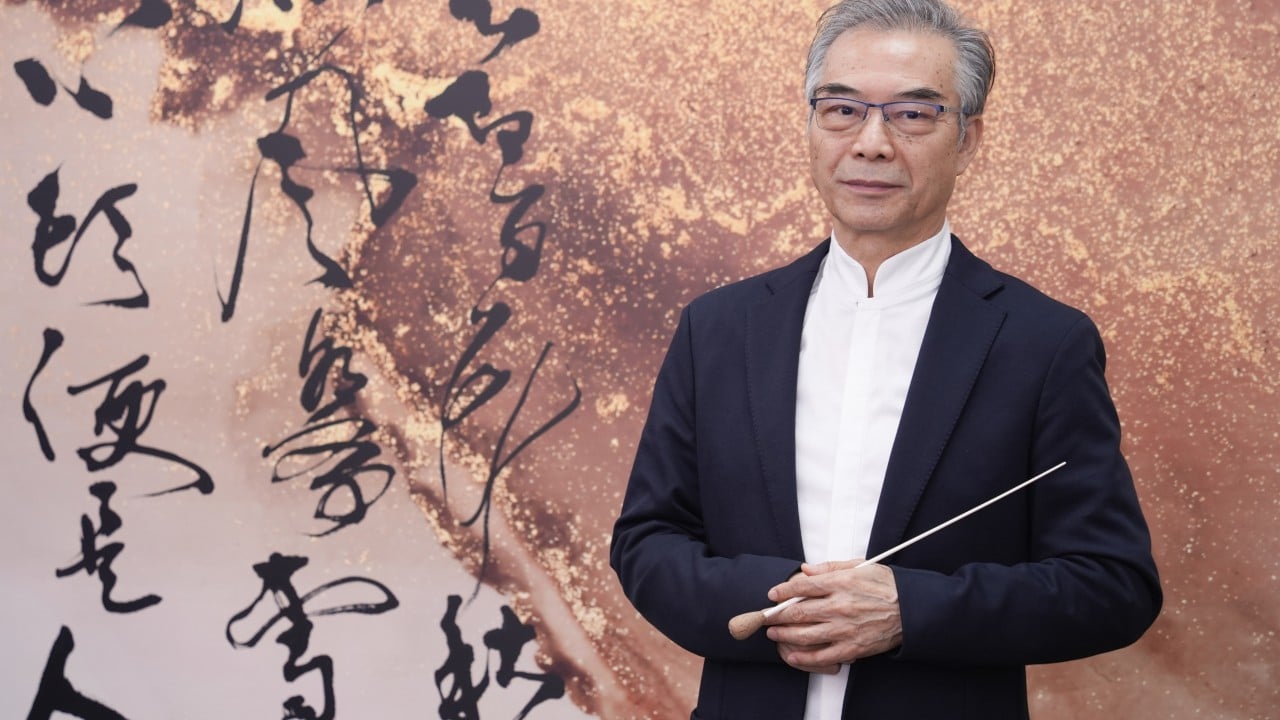
Yan Huichang isn't just retiring from the Hong Kong Chinese Orchestra. He is finishing a job that he basically defined for three entire decades. When you look at the trajectory of modern Chinese orchestral music, you can split time into two distinct eras: the period before Yan took the podium and the era he built.
Most conductors focus on interpretation. They show up, read a score, and try to get the best sound out of the players in front of them. Yan chose a harder path. He didn't just conduct the orchestra; he fundamentally changed how it functioned, how it sounded, and what it was capable of doing.
A vision built on structural reform
When Yan joined the orchestra in 1997, the group was already established. But it lacked the consistent, unified power that symphony orchestras possessed. Chinese instruments vary wildly in quality and timber. A traditional erhu might sound beautiful in a small, intimate setting but struggle to project in a concert hall full of modern western-style instrumentation.
Yan recognized this tension immediately. He didn't complain about it. Instead, he pushed for technical standardization. This wasn't a minor tweak. It was a massive, multi-year engineering project.
He oversaw the development of the Eco-Huqin series. The goal was simple but incredibly hard to execute: create instruments that maintained the authentic soul of Chinese music while providing the dynamic range and reliability of modern orchestral tools. By moving away from traditional snake skin—which is notoriously sensitive to humidity and temperature—and using synthetic materials, he stabilized the sound of the entire string section.
This meant that when the orchestra toured, they weren't battling their own equipment. They could play in London, New York, or Vienna with the same tonal consistency as any world-class philharmonic. It sounds like a small detail, but if you have ever played in an ensemble, you know that gear issues usually dictate the music. Yan removed that variable.
Merging two worlds without losing identity
There is a common mistake people make when discussing the Hong Kong Chinese Orchestra under Yan. Some assume he just Westernized it to make it palatable for international audiences. That is a massive oversimplification.
If you listen to the recordings from his early years compared to his recent work, you hear the difference. The early stuff had energy, but it often sounded like a collection of individual soloists trying to lock in. Under his direction, the ensemble became a singular instrument.
He didn't force Chinese instruments into a Western box. Instead, he took the structural principles of the symphony—the balance between sections, the layered textures, the dynamic control—and applied them to the Chinese orchestral form. He encouraged composers to write music that actually utilized this specific power.
He championed new works. He didn't just trot out the same ancient melodies. He commissioned pieces that forced the orchestra to stretch. He brought in contemporary composers who viewed the Chinese orchestra as a blank slate for modern experimentation. This is why the HKCO remains relevant today. They aren't a museum piece. They are a living, breathing group that creates new noise.
The challenge of standardizing Chinese music
We have to talk about the repertoire. One of the biggest hurdles for any national orchestra is the lack of a standardized body of work. Western orchestras have hundreds of years of symphonies to pull from. Chinese orchestral music is much younger, and for a long time, it was fractured.
Yan spent his tenure building a library. He acted as an editor, a curator, and a mentor. He worked with composers to ensure that the music being written for the HKCO was playable, effective, and technically sound. This kind of work is invisible. Nobody stands up and cheers for a conductor because they spent four hours editing a manuscript to make sure the percussion section isn't overwhelming the woodwinds. But that is exactly why the orchestra sounds the way it does.
He treated the orchestra as a living, growing entity. He didn't accept the limitations of the past. If a section of the orchestra was too quiet, he didn't just tell them to play harder. He looked at the orchestration. He looked at the instruments. He adjusted the setup.
This requires a level of patience that most musicians simply do not have. Many conductors are focused on their next gig or their next recording contract. Yan stayed in one place for thirty years. That kind of commitment is rare in the high-pressure world of professional arts. It gave him the time to plant seeds and watch them turn into a forest.
Why this shift hits the industry so hard
His departure leaves a massive hole. You can hire a new conductor. You can find someone with a great baton technique who can lead a concert and get a standing ovation. But can you find someone who understands the instrument reform project? Can you find someone who can navigate the delicate politics of balancing tradition with innovation?
The successor inherits a machine that is running at peak performance. That is both a blessing and a curse. It is a blessing because the raw material is the best in the world. It is a curse because there is nowhere to hide. If the new leader fails to maintain that level of technical precision or musical adventurousness, the difference will be obvious to anyone with ears.
We are seeing a generational shift in how we consume music. Audiences have shorter attention spans. They want spectacle. They want clarity. Yan gave the HKCO the tools to provide that without sacrificing the nuance of the traditional sounds. He proved that you don't have to dilute your culture to make it globally relevant. You just have to make sure the instruments are in tune and the arrangements are tight.
The path forward for his successor
If you are looking at the future of the HKCO, look at the foundations Yan laid. He didn't leave a set of rules; he left a philosophy. The philosophy is that you must prioritize the ensemble over the individual. You must invest in the technology of your craft. You must treat every concert as an opportunity to push the boundaries of what the Chinese orchestra can do.
Whoever steps into his shoes needs to decide if they want to maintain the status quo or push for a new evolution. The orchestra is currently the gold standard. Maintaining that status is just as hard as building it.
There is a lesson here for any organization, not just orchestras. Great leadership isn't about being the loudest person in the room. It is about understanding the mechanics of your team, fixing the bottlenecks that nobody else wants to touch, and having the endurance to stay long enough to see your vision become reality.
Yan Huichang is leaving behind an orchestra that is stable, powerful, and globally respected. That is a hell of a legacy. The question isn't whether they can replace him. They can't. The question is how they will take the foundation he poured and build something new on top of it. He did his part. Now the orchestra has to prove that it can thrive without its architect.
Don't expect the transition to be quiet. A change of this magnitude echoes for years. If you care about the future of orchestral music, watch what happens in the concert halls of Hong Kong over the next few seasons. The real work is just beginning.