The distance between the quiet, leaf-strewn streets of Chicago’s northern suburbs and the scorched deserts of the Middle East is roughly 6,000 miles. On paper, these worlds are decoupled. In reality, every precision strike launched by the United States against Iranian-backed targets triggers a local tremor that vibrates through immigrant enclaves, grocery stores, and community centers. When the Pentagon announces a new round of "defensive" maneuvers in response to regional aggression, the reaction in the American heartland isn't a celebratory cheer for national security. It is a sharp, intake of breath.
For the Iranian-American and broader Middle Eastern communities living in the northern suburbs, foreign policy isn't a theoretical exercise conducted in a Washington D.C. boardroom. It is a visceral, daily anxiety. The immediate concern is rarely about the geopolitical balance of power or the intricacies of the Strait of Hormuz. Instead, it centers on the physical safety of aging parents in Tehran, the sudden freezing of communication channels, and the inevitable rise of domestic hostility that follows every overseas explosion.
The Human Cost of Kinetic Diplomacy
When the U.S. military engages in kinetic action—military parlance for active warfare—the ripple effect is instantaneous. In the suburbs of Skokie, Niles, and Morton Grove, the first sign of a strike isn't a news alert. It is the sudden silence of a WhatsApp thread. Families lose contact with relatives as regional internet blackouts or security crackdowns take hold. This silence is a specialized form of torture. It leaves thousands of American citizens wondering if their childhood home still stands or if their cousins have been swept up in the inevitable internal security tightening that follows a U.S. attack.
The logic of escalation often ignores the civilian collateral. While military planners speak of "degrading capabilities" and "denying sanctuary," they seldom account for the psychological degradation of their own constituents. For many in these northern suburbs, the fear is twofold. They fear the bombs dropping abroad, and they fear the backlash at home. History has taught these communities that when the U.S. goes to war with a regime, the American public often struggles to distinguish between that regime and the people who fled it.
The Domestic Security Paradox
Increased military activity abroad almost always correlates with a heightened threat level for minority communities domestically. This is a documented cycle of cause and effect. As rhetoric heats up in the media, the temperature rises in suburban schools and workplaces. We see a predictable spike in surveillance, both state-sponsored and social. The "Innocent people are going to be killed" sentiment isn't just a prediction about foreign soil; it’s a warning about the erosion of safety for anyone with a specific last name or accent in the United States.
Law enforcement agencies often increase patrols around mosques and community centers during these periods. While intended to protect, this visible presence serves as a constant reminder that the community is viewed as a target. This creates a siege mentality. Families who were perfectly integrated a week prior suddenly find themselves withdrawing, keeping their children home from cultural events, and avoiding political discussions in public spaces.
Beyond the Rhetoric of Deterrence
The official line from the State Department usually revolves around "deterrence." The idea is that hitting back prevents a larger war. However, from the perspective of an analyst who has watched this cycle for decades, deterrence often looks a lot like a slow-motion slide into a broader conflict. Each strike demands a response, and each response necessitates a "proportionate" escalation.
In the northern suburbs, this isn't seen as a strategic chess match. It’s seen as a gambling addiction where the stakes are human lives. The fear isn't just about a single strike; it’s about the "what then?" What happens when the deterrence fails? What happens when the regional skirmish turns into a full-scale ground war? The people living in these suburbs know exactly what happens. They’ve seen it in Iraq. They’ve seen it in Afghanistan. They’ve seen the way "limited engagements" become multi-generational tragedies.
The Economic Shadow
The impact isn't purely emotional or physical. There is a hard economic reality to these tensions. Small businesses in the northern suburbs, particularly those involved in import-export or travel services, feel the squeeze immediately. Sanctions, while aimed at government officials, frequently cripple the ability of ordinary people to send money for a funeral or pay for a relative’s medical care. The bureaucracy of "compliance" becomes a wall that shuts down legitimate commerce, forcing people into gray markets or total financial isolation.
Consider a hypothetical example of a small carpet importer in Skokie. Under normal circumstances, they navigate a complex but manageable set of regulations. The moment a U.S. drone hits a target in Iran, those regulations tighten. Banks become skittish. Shipping lanes are diverted. Insurance premiums skyrocket. The business owner, who has nothing to do with the IRGC or regional militias, suddenly finds their livelihood on the brink of collapse because of a decision made in the Situation Room at 3:00 AM.
The Failure of Representation
One of the most striking aspects of the anxiety in the northern suburbs is the feeling of political homelessness. These residents are tax-paying, voting Americans, yet they often feel their perspectives are entirely absent from the national security debate. The mainstream political discourse is dominated by hawks who view the Middle East as a map of targets and doves who view it as a quagmire to be avoided. Neither side effectively speaks to the person who loves America but is terrified that America is about to destroy their heritage.
This lack of representation leads to a profound sense of alienation. When local representatives issue cookie-cutter statements supporting "our allies" and "decisive action," they are often ignoring a significant portion of their own district that is currently in mourning or in a state of panic. This isn't just a failure of empathy; it’s a failure of governance. A representative’s job is to understand the specific vulnerabilities of their constituency, and in the northern suburbs, those vulnerabilities are tied directly to the flight paths of U.S. bombers.
The Generational Divide
The fear is not uniform across all age groups. Older immigrants, who remember the 1979 revolution or the Iran-Iraq war, often react with a hardened, fatalistic resignation. They have seen this movie before. They know how to stock up on rice and how to use VPNs to bypass state firewalls. They expect the worst because the worst has happened to them repeatedly.
The younger generation, the American-born children of these immigrants, reacts differently. They are more likely to be angry than resigned. They see the contradiction between the democratic values they were taught in Illinois public schools and the unilateral military actions taken by their government. This creates a unique form of identity crisis. They are forced to reconcile their identity as Americans with the fact that their government is actively targeting the land of their ancestors. This tension doesn't just dissipate when the news cycle moves on; it settles into the bones of the community, influencing future voting patterns and social cohesion.
The Media’s Role in the Escalation
We must also look at how the media’s framing of these attacks contributes to suburban fear. The coverage is almost always clinical. We see grainy black-and-white footage of a building exploding. We hear "experts" in sharp suits talk about "strategic leverage." We rarely see the aftermath in the streets of a residential neighborhood in Isfahan or the frantic phone calls being made from a kitchen in Glenview.
By stripping the humanity away from the targets, the media makes it easier for the general public to support escalation, which in turn increases the isolation felt by those who have a personal connection to the region. This clinical detachment is a choice. It is a narrative strategy that prioritizes the "state" over the "citizen." For the people in the northern suburbs, this detachment feels like a betrayal. They are watching their neighbors watch the news with indifference, while their own world is falling apart.
The Mirage of Precision
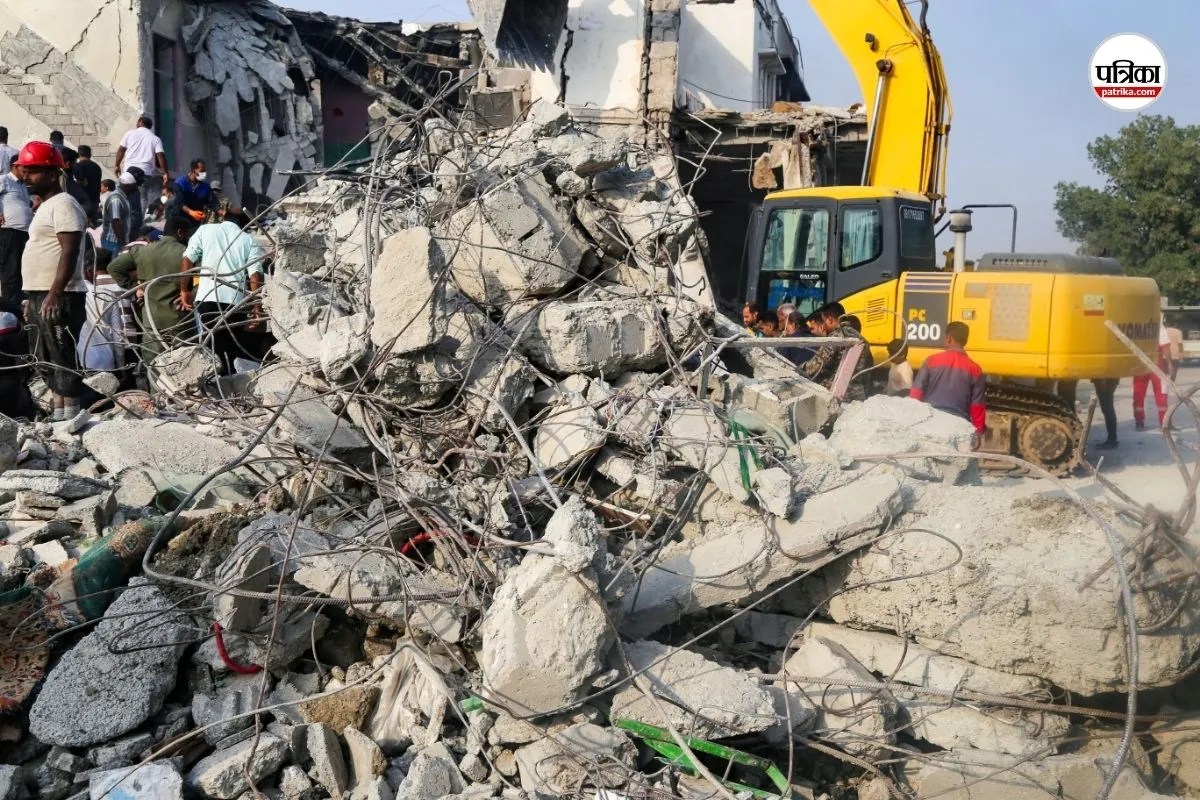
The term "precision strike" is one of the great linguistic deceptions of modern warfare. While the technology has undoubtedly improved, the idea that you can drop a bomb in a densely populated region without causing "collateral damage" is a myth. Collateral damage is a sterile way of saying "dead civilians."
In the immigrant communities of Chicago, this isn't a secret. People know that the "military facility" being targeted is often adjacent to a school or a clinic. They know that the "low-level operative" killed in a strike had a family that will now be radicalized by grief. The "precision" of the strike doesn't account for the shattered lives left behind. When a suburban resident says "innocent people are gonna be killed," they aren't being hysterical. They are being accurate. They are acknowledging the reality that military planners prefer to ignore: every bomb has a footprint that extends far beyond the blast radius.
The Lingering Trauma of the "War on Terror"
To understand the current fear, one must understand the scar tissue left by the last twenty years. The northern suburbs are home to many who fled the fallout of the 2003 invasion of Iraq and the subsequent destabilization of the region. For these individuals, the current tension with Iran feels like a terrifying sequel.
They remember the "Special Registration" programs, the FBI interviews, and the sudden coldness from neighbors. The trauma of being "the enemy within" is never far from the surface. When the U.S. attacks Iran, it isn't just a military action; it is a signal that the cycle of suspicion is starting again. The fear of being targeted by a foreign bomb is matched only by the fear of being targeted by a local hate crime.
The Breakdown of Community Trust
This environment of fear actively undermines the work done by local leaders to build inclusive, resilient communities. Years of outreach and dialogue can be undone by a single weekend of airstrikes. Trust is fragile. It requires a belief that the state views you as a full citizen worthy of protection. When that same state engages in actions that put your family at risk and heighten your domestic vulnerability, that trust evaporates.
In the northern suburbs, we see this breakdown in the way people interact with local government. There is a growing hesitation to report crimes, to participate in public forums, or to engage with law enforcement. The "us vs. them" narrative pushed by national politicians eventually trickles down to the local level, turning neighbors into strangers and citizens into suspects.
The Inevitability of the Blowback
The United States government operates on the assumption that it can compartmentalize its foreign policy. It believes it can drop bombs in the Middle East and maintain a peaceful, cohesive society at home. This is a delusion. We are a globalized nation, and our "abroad" is increasingly "at home."
The northern suburbs of Chicago are a testament to this reality. You cannot strike Tehran without hitting Skokie. You cannot threaten war in the Persian Gulf without threatening the peace in Morton Grove. The blowback is not just a future possibility; it is a present reality for thousands of Americans.
The fear expressed by these communities is not a lack of patriotism. It is a plea for a foreign policy that recognizes the humanity of all people, including those who happen to live in the crosshairs of "strategic interests." Until the people making the decisions in Washington spend a day in the living rooms of the northern suburbs, listening to the silence of the WhatsApp threads and the quiet sobbing of parents, they will continue to make the same catastrophic mistakes.
The next time a spokesperson stands behind a podium and talks about "minimal casualties" and "surgical precision," remember the families in the suburbs who are waiting for a phone call that may never come. Their fear is the most honest assessment of our foreign policy we have. It is a warning that we ignore at our own peril.
Demand an accounting of the domestic cost of every overseas intervention.