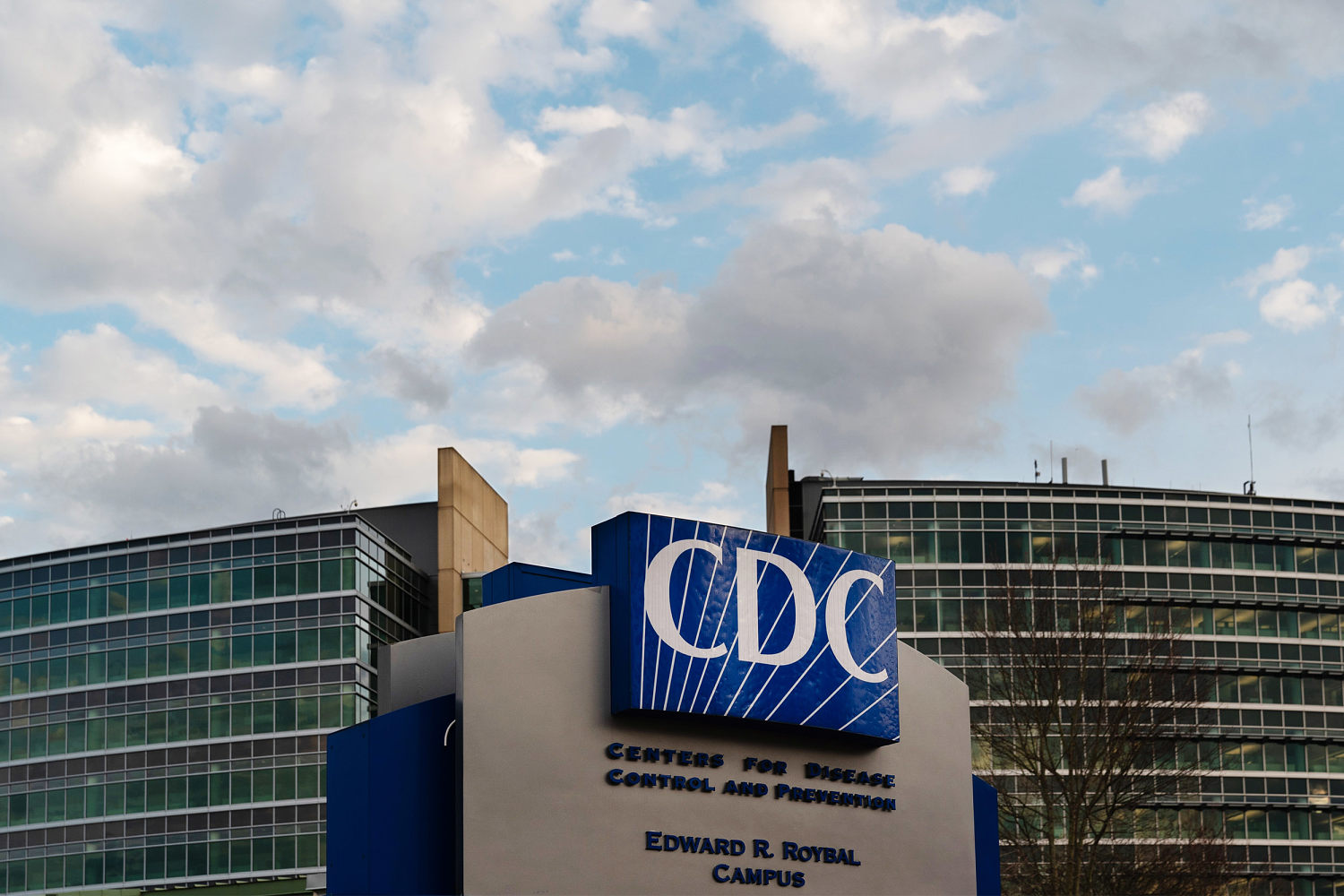
The recommendation of a former deputy surgeon general to lead the Centers for Disease Control and Prevention (CDC) signals a shift from purely academic or research-oriented leadership toward operational crisis management and inter-agency diplomacy. Selecting a director for the CDC is not merely a personnel decision; it is an exercise in resource allocation and the recalibration of a massive federal bureaucracy that has faced significant trust erosion and structural criticism. This appointment operates at the intersection of three specific pressure points: political insulation, operational reform, and the restoration of technical authority.
The Tri-Lens Evaluation of Public Health Leadership
To understand why a former deputy surgeon general fits the current requirements of the CDC, one must analyze the role through a tripartite framework of institutional needs. For a different view, consider: this related article.
1. Operational Continuity and Inter-agency Integration
A deputy surgeon general operates within the Commissioned Corps, a structure defined by hierarchy, rapid mobilization, and direct reporting lines to the Department of Health and Human Services (HHS). This background suggests a prioritization of the CDC’s role as a responder rather than just a chronicler of disease. The CDC has historically struggled with "functional silos," where data collection and policy recommendation move at different velocities. A leader trained in the Surgeon General’s office understands the friction between scientific nuance and the necessity of clear, singular public directives.
2. The Political Neutralization Variable
The CDC Director position is subject to intense scrutiny regarding the independence of scientific guidance from executive branch influence. A candidate with a history in the non-partisan Commissioned Corps provides a layer of "institutional armor." This reduces the perceived risk of partisan capture, which is essential for re-establishing the agency’s credibility with a skeptical public and a divided Congress. Similar coverage on the subject has been published by Mayo Clinic.
3. The Reform Mandate
Internal reviews have consistently highlighted the need for the CDC to move faster. The agency’s culture, often described as peer-review-centric, frequently clashes with the real-time demands of a pandemic or a localized outbreak. A candidate from the Surgeon General’s lineage brings a "deployment mindset" that views data as a tool for immediate action rather than an end in itself.
Structural Bottlenecks in CDC Efficacy
The recommendation of new leadership must address the fundamental bottlenecks that have hampered the agency’s performance over the last decade. These are not failures of individual will but rather architectural flaws in how the CDC interacts with state and local health departments.
The Data Fragmentary Trap
The United States lacks a centralized, mandatory reporting system for most pathogens. Instead, the CDC relies on a voluntary "pull" mechanism from thousands of independent jurisdictions. This creates a lag in data acquisition that renders predictive modeling difficult. The new director faces a technical debt problem: modernizing a patchwork of legacy systems without infringing on the jurisdictional autonomy of the states.
The Communication-Action Gap
There is a distinct tension between scientific accuracy and public utility.
- Scientific Accuracy: Requires nuance, confidence intervals, and the acknowledgment of evolving data.
- Public Utility: Requires binary instructions (e.g., "Wear a mask" or "Do not wear a mask").
When the CDC attempts to blend these two, the result is often a diluted message that satisfies neither the scientific community nor the general public. A leader from the Surgeon General’s office, which is primarily a communications and advocacy branch, is theoretically better equipped to manage this trade-off by separating the technical data repository from the public-facing guidance.
The Economic and Geopolitical Stakes of the Appointment
Public health is a core component of national security and economic stability. The appointment of a CDC director is a signal to global markets and international health bodies (like the WHO) regarding the United States' commitment to global health security.
Biosecurity as Infrastructure
The CDC acts as the early warning system for biological threats, whether natural or man-made. A failure in early detection leads to exponential costs in the form of business closures, supply chain disruptions, and healthcare system surges. The director’s primary function is to minimize the "time-to-detection" variable. Every day saved in identifying a novel pathogen equates to billions of dollars in preserved GDP.
The Global Reference Laboratory Standard
The CDC’s influence extends beyond U.S. borders through its role as a reference laboratory for the world. If the agency loses its "gold standard" status, the global response to outbreaks becomes fragmented. Leadership must ensure that the CDC’s laboratory capacities remain superior to emerging competitors in the European Union and Asia to maintain U.S. soft power in the scientific domain.
Probabilistic Outcomes of the Nomination
Based on the profile of a former deputy surgeon general, we can forecast several strategic shifts in the agency's trajectory:
- Centralization of Messaging: Expect a move away from individual department heads speaking to the press. Instead, a unified communications desk will likely be established to prevent the contradictory guidance seen in previous years.
- Focus on Workforce Development: The Commissioned Corps model emphasizes training and readiness. The new director will likely push for a more "militarized" public health workforce that can be deployed to hotspots, mirroring the Disaster Medical Assistant Teams (DMAT) but specialized for infectious disease.
- Regulatory Streamlining: There will be an effort to reduce the internal "red tape" associated with clearing scientific papers for publication, prioritizing the release of "good enough" data during emergencies over perfect data months later.
Potential Points of Failure
No leadership change can solve structural deficits overnight. The proposed director will face three immediate risks:
- Congressional Obstruction: If the appointment is seen as a move to bypass traditional scientific heavyweights in favor of a "loyalist" bureaucrat, the confirmation process (or budget hearings) will become a theatre of conflict.
- Internal Brain Drain: The CDC’s rank-and-file consists of career scientists who value academic rigor. A shift toward a more operational, command-and-control style may lead to the departure of top-tier research talent who feel their expertise is being sidelined for "optics."
- The Funding Chasm: The CDC’s budget is often reactive. It spikes during crises and withers during periods of stability. Without a permanent, non-discretionary funding stream for pandemic preparedness, any director is essentially managing a series of temporary fixes.
Strategic Path Forward
The selection of a former deputy surgeon general suggests the administration has identified "coordination" as the CDC’s primary weakness. To capitalize on this, the incoming director must execute a three-step integration plan:
First, establish a formal liaison office between the CDC and the private sector (pharmaceuticals, logistics, and data tech) that operates outside of emergency declarations. This ensures that the pipes are laid before the water is needed.
Second, re-verify the agency's "Scientific Integrity Policy." This must be a transparent, public-facing document that outlines exactly how scientific data is protected from political editing. This is the only way to recover the trust of the scientific community.
Third, pivot the agency’s focus toward "Pathogen Agnostic" surveillance. Instead of looking for specific known threats, the agency must invest in genomic sequencing and wastewater monitoring that detects any biological anomaly in the environment. This moves the CDC from a reactive posture to a predictive one, fundamentally changing the cost-benefit analysis of public health intervention.