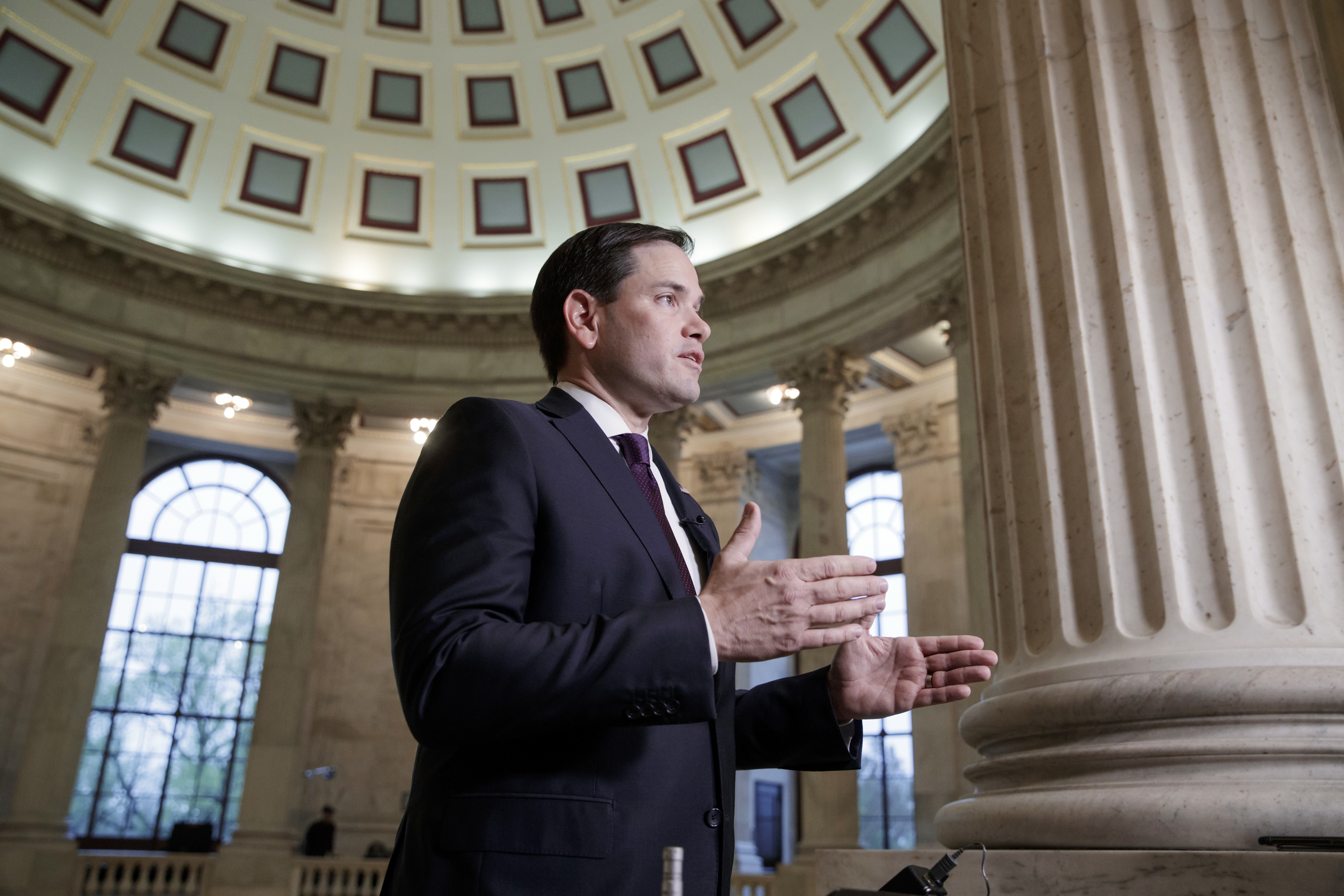
The proposed appointment of Roelf Meyer as South Africa’s ambassador to the United States represents a calculated pivot from ideological diplomacy to transactional pragmatism. This maneuver by President Cyril Ramaphosa addresses a critical structural decay in the South Africa-US bilateral relationship, which has recently been characterized by friction over the African Growth and Opportunity Act (AGOA) and diverging geopolitical alignments. By deploying the primary architect of the 1994 democratic transition, the Government of National Unity (GNU) is attempting to stabilize its most vital economic corridor through "negotiated settlement" logic rather than traditional statecraft.
The Three Pillars of the Meyer Selection
The logic behind selecting Meyer is not rooted in his diplomatic resume, which is non-existent, but in his unique historical equity and his alignment with the "meritocratic" faction of the South African state. The move functions across three distinct strategic layers:
- The Institutional Credibility Buffer: Meyer possesses a rare form of political capital in Washington D.C.—bipartisan recognition. As the National Party’s chief negotiator who worked alongside Cyril Ramaphosa to dismantle apartheid, his persona serves as a living reminder of South African exceptionalism. This is a tactical counter-narrative to the recent perception of South Africa as a Russian-aligned or "anti-Western" outlier.
- The Business-State Synthesis: Unlike a career diplomat or an ANC stalwart, Meyer’s recent decades have been defined by private sector engagement and the "In Transformation Initiative." His appointment signals that the primary objective of the mission is the preservation of trade preferences and the attraction of Foreign Direct Investment (FDI), rather than the pursuit of multilateral ideological reform.
- GNU Stability Insurance: Selecting a figure from outside the ANC’s core revolutionary structure—specifically one with deep roots in the reformist Afrikaner tradition—solidifies the internal logic of the current coalition government. It demonstrates to the Democratic Alliance (DA) and international markets that the GNU is willing to outsource critical functions to technocratic or historical figures who prioritize stability over party loyalty.
The Cost Function of South African Diplomacy
To understand why Meyer is being moved into this role, one must quantify the current risks facing the South African exchequer. The relationship with the United States is currently underwritten by two massive variables: AGOA eligibility and the "grey-listing" status of South African financial institutions.
The primary mechanism of South African economic growth remains its ability to export high-value manufactured goods—specifically automobiles and agricultural products—duty-free to the US market. The cost of losing AGOA access is not merely a percentage drop in GDP; it is a systemic threat to the industrial base of the Eastern Cape and Gauteng.
The US legislative environment, particularly the U.S.-South Africa Bilateral Relations Review Act, created a bottleneck. Washington’s skepticism regarding Pretoria’s stance on the Russia-Ukraine conflict and the ICJ case against Israel has moved from rhetorical disagreement to potential legislative sanction. Meyer’s appointment is a direct attempt to de-risk this environment. He is not being sent to change US policy; he is being sent to change the perception of risk associated with South Africa.
Structural Bottlenecks in the Washington Mission
Despite Meyer’s historical stature, the mission faces inherent structural limitations that no single individual can resolve. These constraints define the probability of his success:
- The Non-Aligned Friction: South Africa’s commitment to "Active Non-Alignment" often translates to policy volatility in the eyes of the US State Department. Meyer will be forced to defend voting records at the UN that contradict the pro-trade messaging he is expected to deliver to the Department of Commerce.
- The Multi-Polar Tension: As a member of BRICS+, South Africa is deepening ties with Beijing and Moscow. The US-China "de-risking" strategy forces middle powers like South Africa into a binary choice on telecommunications infrastructure and mineral supply chains. Meyer will have to navigate the "Resource Nationalism" vs. "Open Markets" paradox.
- Congressional Fragmentation: The US Congress is no longer a monolith on African affairs. Meyer will find that the traditional "Africa Lobby" has been superseded by specialized committees focusing on the Great Power Competition. His success depends on his ability to frame South Africa not as an "African leader," but as a "Strategic Mineral Partner."
The Architecture of the Transition
Meyer’s effectiveness will be measured by his ability to operationalize the "Ramaphosa Doctrine"—a strategy that seeks to maximize Western capital inflows while maintaining Eastern geopolitical autonomy. This requires a shift from "Public Diplomacy" to "Corridor Diplomacy."
The first phase of this strategy involves the re-certification of South Africa’s eligibility under AGOA before the 2025 deadline. Meyer will likely utilize a "Sectoral Carve-out" approach, arguing that South African industrial capacity is essential for the US’s own supply chain diversification, particularly in the transition to Electric Vehicles (EVs).
The second phase involves the "Just Energy Transition Investment Plan" (JETP). South Africa requires billions of dollars to transition away from coal. The US is a primary donor, but the flow of capital has been constrained by concerns over corruption and the operational inefficiency of Eskom. Meyer’s background in institutional reform makes him a credible interlocutor for the US Treasury, potentially bypassing the bureaucratic stasis of the South African Department of International Relations and Cooperation (DIRCO).
Identifying the Probability of Success
If we apply a weighted scoring model to Meyer’s potential impact, we see a high probability of success in "Atmospherics" but a lower probability in "Policy Reversal."
- Access (High): Meyer will likely gain immediate access to high-ranking officials who remember the 1994 transition. This "Legacy Access" is a powerful tool for short-term crisis management.
- Trade Continuity (Medium-High): The momentum for the GNU is currently positive in Western capitals. Meyer’s appointment reinforces the narrative of a "New Dawn" version 2.0, which may be enough to secure a multi-year AGOA extension.
- Geopolitical Realignment (Low): Meyer cannot change the ANC’s foundational foreign policy. The friction regarding the Middle East and Russia will persist, as these are driven by internal ANC dynamics and the influential "Securocrat" wing of the state.
The Strategic Play for 2026 and Beyond
The appointment of Roelf Meyer is a signal that the South African presidency has recognized the limits of "Liberation Movement Diplomacy." By choosing a negotiator over a politician, Ramaphosa is admitting that the US-South Africa relationship is currently a "frozen conflict" that needs a settlement, not a debate.
For investors and analysts, the Meyer era in Washington will be defined by a focus on "Commercial De-risking." The strategic recommendation for the South African mission is to decouple trade discussions from geopolitical disagreements. Meyer must convince his American counterparts that South Africa’s internal coalition (the GNU) is the only viable bulwark against more radical, populist elements that would be truly hostile to US interests.
The final strategic move for Pretoria is the formalization of a "Strategic Trade Framework" that exists independently of the annual AGOA review. This would provide the long-term certainty that the private sector requires. Meyer is the only figure with the domestic and international standing to propose such a radical shift in how South Africa manages its most important Western relationship. His mission is not to represent the South African state, but to re-sell the idea of the South African state to a skeptical global hegemon.