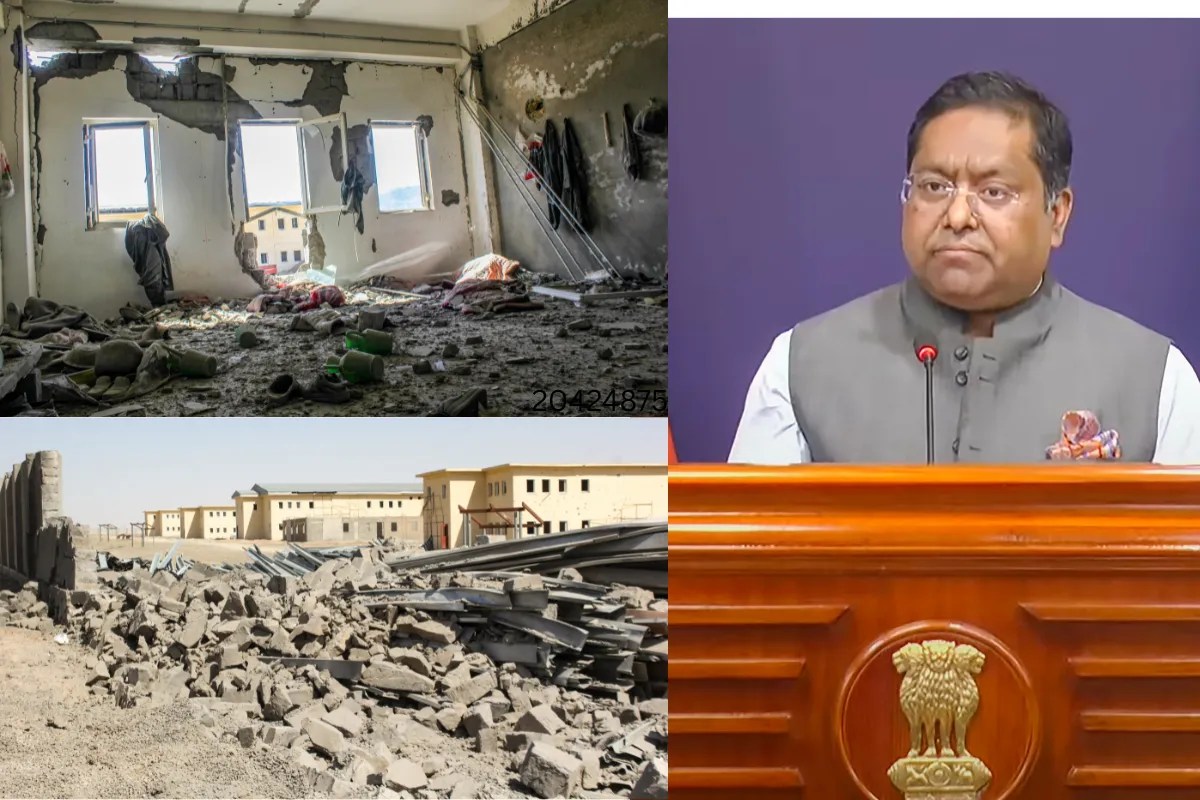
The recent deployment of Pakistani aerial assets into Afghan sovereign airspace represents more than a localized skirmish; it is a breakdown of the "strategic depth" doctrine that has governed Rawalpindi’s western border policy for four decades. By shifting from proxy-based influence to direct kinetic intervention, Pakistan has signaled an inability to contain the Tehrik-i-Taliban Pakistan (TTP) through diplomatic or leveraged means. This escalation fundamentally alters the security architecture of South Asia, forcing a realignment of regional powers, specifically India and the Central Asian republics, who must now account for a permanently unstable Afghan-Pakistani frontier.
The Triad of Kinetic Failure
To understand why aerial strikes were utilized despite the predictable diplomatic fallout, one must analyze the three failure points in Pakistan's current counter-terrorism framework.
1. The Erosion of Leverage
Historically, the Pakistani security establishment maintained a distinction between the "Good Taliban" (the Afghan Taliban/IEA) and the "Bad Taliban" (TTP). The foundational logic assumed that an IEA-led Kabul would act as a constraint on TTP activities. This has proven to be a catastrophic miscalculation. The IEA’s refusal to disarm their ideological kin—the TTP—stems from a shared Deobandi identity and a logistical reliance on the TTP during the twenty-year insurgency against NATO forces. The use of airstrikes is an admission that the back-channel negotiations and economic pressure applied to the IEA have failed to yield results.
2. The Intelligence-Kinetic Gap
The TTP has successfully transitioned from a centralized insurgent group to a decentralized network of autonomous cells. Traditional ground operations in the Durand Line’s mountainous terrain incur high casualty rates and significant logistical footprints. Aerial strikes, while surgically intended, often rely on human intelligence (HUMINT) that is increasingly compromised. When strikes result in civilian casualties—specifically women and children, as reported in Khost and Paktika—the resulting "martyrdom" narrative provides the TTP with a recruitment surge that far outweighs the tactical value of any eliminated high-value targets (HVTs).
3. The Economic Constraint of Warfare
Pakistan is currently operating under severe fiscal constraints, necessitated by IMF restructuring requirements. Sustained ground offensives (such as Zarb-e-Azb) are capital-intensive and require long-term occupation. Aerial incursions represent a "low-cost, high-visibility" alternative designed to satisfy domestic demands for action without the massive overhead of a full-scale military campaign. However, this ignores the long-term economic cost of a hostile neighbor that can disrupt trade corridors essential for Pakistan's Central Asian "Transit Trade" ambitions.
India’s Strategic Pivot: From Passive Observer to Active Stakeholder
The Indian Ministry of External Affairs’ (MEA) unusually prompt response in support of Afghan sovereignty marks a departure from traditional "wait-and-see" diplomacy. This shift is driven by three specific strategic imperatives.
The Legitimacy Exchange
By supporting the Afghan position, India is effectively bypassing the ideological friction it has with the IEA to address the shared threat of regional instability. New Delhi’s stance validates the IEA’s claim to territorial integrity, which in turn facilitates a more functional relationship regarding the development of the Chabahar Port and other regional connectivity projects that bypass Pakistan.
Counter-Encirclement Tactics
The escalation allows India to highlight Pakistan’s role as an aggressor on its western front, complicating Islamabad’s narrative on the Kashmir issue. In international forums, India can now frame Pakistan’s actions as a violation of the very "sovereign borders" principle that Pakistan frequently cites in other contexts. This diplomatic maneuver creates a "reverse encirclement" where Pakistan finds itself dealing with two hostile borders simultaneously.
The TTP-ISKP Variable
India’s primary concern is the potential for a power vacuum. If Pakistan’s strikes weaken the IEA’s grip on the border regions, it creates an opening for the Islamic State Khorasan Province (ISKP). Unlike the TTP, which is focused on the Pakistani state, ISKP has globalized objectives that directly threaten Indian interests. Supporting Afghan stability is, for India, a defensive measure against the proliferation of more radical, non-state actors that would thrive in the chaos of a hot border.
The Mechanics of Border Violation and International Law
The justification of "pre-emptive self-defense" cited by Islamabad finds little resonance in established international law (Jus ad bellum). Under Article 2(4) of the UN Charter, the use of force against the territorial integrity of another state is prohibited unless sanctioned by the Security Council or conducted in self-defense against an armed attack.
Pakistan’s challenge lies in the definition of an "armed attack." While TTP raids originate from Afghan soil, attributing these directly to the Afghan state is a high legal hurdle. By failing to provide a dossier of "actionable intelligence" to the IEA before the strikes—or at least a public record of such a transfer—Pakistan has positioned itself as the primary violator of regional norms. This legal vulnerability is what India and other regional actors are currently exploiting to isolate Islamabad diplomatically.
Technical Specifications of the Escalation
The choice of hardware in these strikes reveals much about the intended psychological impact. The use of multi-role combat aircraft rather than just unmanned aerial vehicles (UAVs) suggests a desire to demonstrate "total dominance" of the airspace.
- Platform Versatility: The deployment of Wing Loong II drones or similar Chinese-origin platforms allows for persistence over the target area, but the use of manned jets (JF-17 or F-16) is a signal to the IEA that Pakistan is willing to escalate to high-intensity conflict.
- Precision vs. Collateral Damage: The rugged terrain of Khost and Paktika necessitates the use of laser-guided munitions. Any deviation in these strikes points to either a failure in the targeting cycle (intelligence) or a deliberate choice to use "dumb" bombs to maximize the shock effect, albeit at the cost of civilian lives.
- Electronic Warfare (EW): Reports suggest that communications in the border regions were suppressed during the strikes. This indicates a sophisticated coordination level intended to prevent the TTP from relocating assets in real-time.
The Strategic Bottleneck: No Exit Strategy
The fundamental flaw in the current Pakistani strategy is the absence of a "Phase Two." Kinetic strikes can degrade TTP capabilities temporarily, but they cannot address the underlying drivers of the insurgency:
- Grievance Cycles: Each civilian casualty in the border regions reinforces the TTP’s narrative of the Pakistani state as an "oppressor" aligned with foreign interests.
- Sovereignty Paradox: The more Pakistan strikes inside Afghanistan, the more the IEA is forced to support the TTP to maintain its own domestic credibility as the "protector of Afghans."
- Refugee Weaponization: The ongoing deportation of Afghan refugees from Pakistan adds a layer of humanitarian crisis that the IEA can use to justify retaliatory border skirmishes or the closing of vital trade crossings like Torkham and Chaman.
Probable Vector: The Buffer Zone Model
Given the failure of both diplomacy and sporadic strikes, the Pakistani military is likely to move toward the creation of a "Security Buffer Zone." This would involve:
- Intensified Fencing: Completion of the border fence with integrated seismic sensors and automated turret systems.
- Depth Strikes: A transition from one-off retaliatory strikes to a sustained "attrition-by-air" campaign targeting TTP infrastructure (training camps, depots) deep within Afghan territory.
- Proxy Re-activation: Attempting to cultivate alternative factions within the Afghan landscape to challenge the IEA’s monopoly on power, a move that would almost certainly trigger a full-scale civil war.
The strategic recommendation for regional stakeholders is to prepare for a "Permanent Gray Zone" on the Durand Line. This involves diversifying supply chains to avoid the Af-Pak transit routes and increasing intelligence surveillance of the spillover effects into the broader South Asian region. Pakistan has entered a cycle of diminishing returns; every strike buys a week of security at the cost of a year of regional enmity.
For India, the optimal play remains the "Asymmetric Support" model: providing the IEA with non-kinetic technical assistance (intelligence sharing on ISKP, humanitarian aid, and infrastructure investment) to maximize the distance between Kabul and Islamabad. This effectively traps Pakistan in a perpetual two-front security dilemma without India having to fire a single shot.