Is it safe to fly over the Middle East right now? Honestly, the answer depends entirely on who you're flying with and where exactly you're headed. If you’re looking for a simple "yes" or "no," you’re not going to find it. The reality of 2026 is that the sky isn’t just a highway anymore; it’s a shifting puzzle of geopolitical tension and rapid-fire decisions by airline dispatchers.
The recent escalation between the U.S., Israel, and Iran has turned the central Middle East corridor into a massive no-go zone. We aren't just talking about avoiding a single country. We're looking at a complete restructuring of how planes move between Europe and Asia.
What’s happening in the sky right now
If you look at a flight tracker like FlightRadar24, the first thing you’ll notice is a giant hole over Iran and Iraq. It’s eerie. Thousands of flights that used to zip across the Persian Gulf are now being squeezed into narrow corridors over Egypt, Saudi Arabia, and Turkey.
This isn't just about "staying away from the fire." It’s about the sheer density of air traffic. When you take all the planes that used to fly through five different countries and shove them into one or two available paths, you get delays. You get higher fuel costs. And yeah, you get a lot of stressed-out pilots.
The European Union Aviation Safety Agency (EASA) and the FAA haven't been subtle. Their latest bulletins (like CZIB 2026-03-R1) basically tell airlines: stay out. They’re worried about more than just a stray missile. The real nightmare for the industry is misidentification—the tragic scenario where a civilian plane is mistaken for a military threat by an itchy-trigger-finger air defense system.
The hubs are hurting
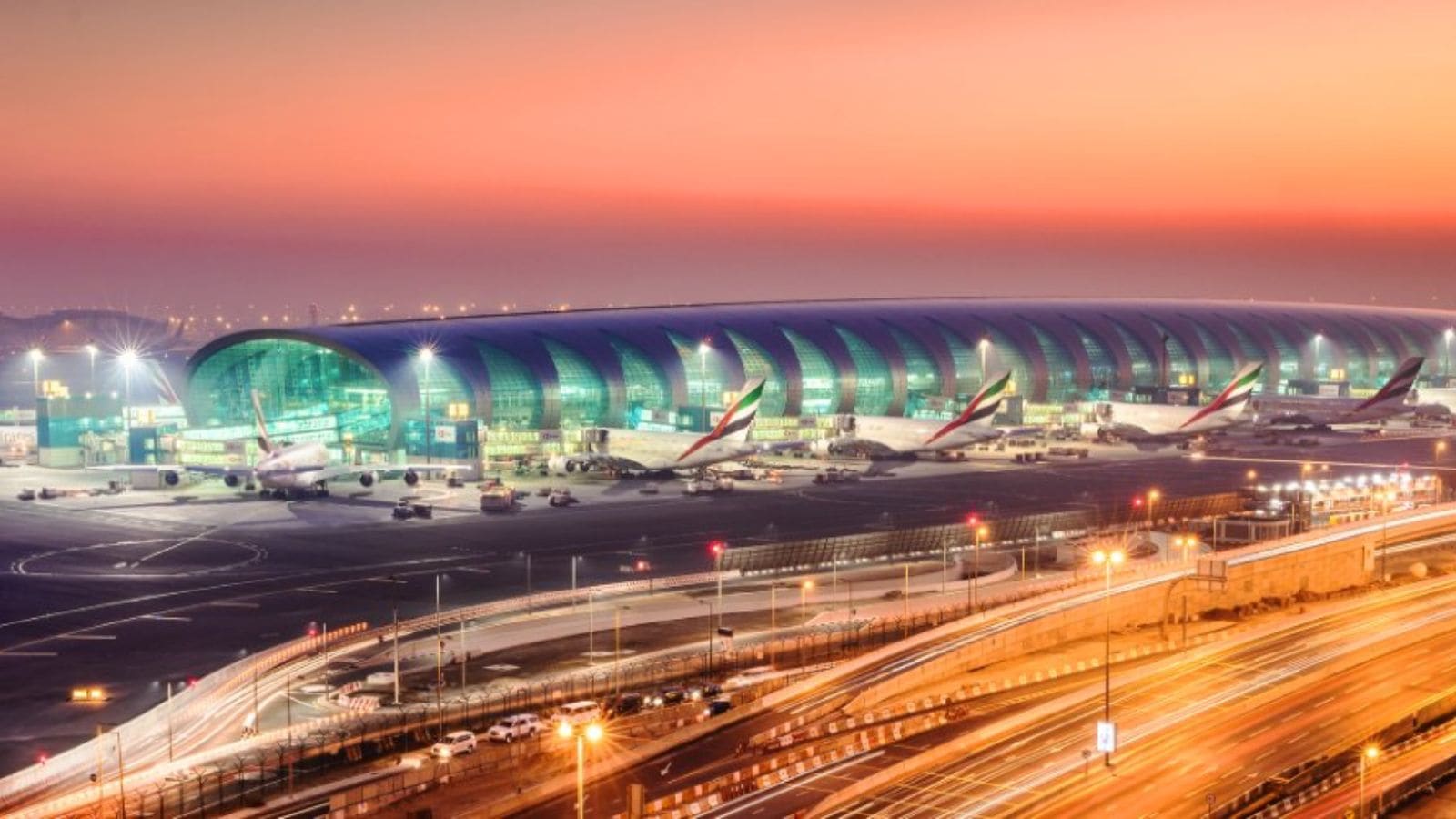
For years, Dubai (DXB), Doha (DOH), and Abu Dhabi (AUH) were the invincible crossroads of the world. That changed last week. Drone strikes near major Gulf airports and the resulting debris from interceptions have forced these hubs into a defensive crouch.
Dubai International, usually the busiest place on Earth for international travelers, has seen its schedule shredded. While some repositioning and repatriation flights are starting to move again, "normal" is a long way off.
- Dubai (DXB): Operating at limited capacity. Many international carriers have suspended service entirely.
- Doha (DOH): Significant disruptions as Qatar Airways reroutes almost every long-haul flight.
- Abu Dhabi (AUH): Heavily impacted by recent security incidents; expect extreme delays.
If you have a layover in these cities, don't just check your app. Call the airline. Better yet, check if your carrier is actually still flying there. Many Western airlines, including Lufthansa and Air France, have nixed these routes for the time being.
How airlines manage the danger
You might think airlines are being reckless, but they’re actually incredibly risk-averse. They don't just "wing it." Every flight plan is a result of a complex calculation involving government intelligence, private security firms like Osprey or MedAire, and real-time NOTAMs (Notices to Air Missions).
Airlines like Emirates and Qatar Airways have a lot more skin in the game than a carrier based in New York or London. Their entire business model is built on these hubs. That means they’ll push to keep flying as long as it's even remotely viable, often using "safe corridors" negotiated with neighboring countries.
The Western carriers? They’ll bail the second the risk profile ticks up. That’s why you see United or British Airways canceling flights while regional carriers are still trying to push through. It’s not that one is "safer" than the other; they just have different thresholds for what they’re willing to tolerate.
The hidden tech threat: GPS spoofing
Here’s something the news won't tell you: the biggest risk isn't always a missile. It’s electronic warfare. Pilots across the Middle East are reporting a massive spike in GPS spoofing.
This isn't just a loss of signal. Spoofing actually tricks the plane’s navigation system into thinking it’s somewhere it isn't. I’ve talked to crews who’ve had their "Inertial Reference System" go haywire because the fake GPS data was so convincing. When a plane thinks it’s drifted miles off course, it might accidentally steer into restricted or hostile airspace. That’s how tragedies happen.
Aviation experts are now training pilots to go "old school"—relying on ground-based radio beacons and manual cross-checking. If you're on a flight and it feels like the crew is being extra cautious about staying on their line, this is why.
Should you cancel your trip?
I’m not going to tell you what to do with your money, but let's be real about the logistics. If your flight is canceled because of "war" or "civil unrest," you’re often in a legal gray zone for refunds.
Most "Conditions of Carriage" (that tiny text you never read) have an "extraordinary circumstances" clause. Basically, if a government closes the airspace, the airline isn't strictly "at fault." They might give you a credit, but getting cash back can be like pulling teeth.
- Check your insurance: Most standard policies don't cover "act of war" unless you bought a specific "Cancel for Any Reason" (CFAR) rider.
- Look at the bypass routes: If you're flying from Europe to Southeast Asia, look for flights that go over the "Northern Bypass" (Caucasus and Afghanistan) or the "Southern Bypass" (Egypt and Saudi). They take longer, but they avoid the heart of the conflict.
- Stay in "Safe" zones: Currently, Egypt and Turkey are holding steady. Their airports are open, and their airspace is considered significantly lower risk.
The reality check
Is air travel safe? Statistically, yes. Even in a conflict zone, the layers of redundancy in modern aviation are insane. But "safe" doesn't mean "convenient." You’re looking at longer flight times—sometimes adding two hours of circling just to find a gap in the traffic—and skyrocketing ticket prices as fuel costs hit $85 a barrel.
If you don't need to be in the Gulf right now, don't go. If you’re just transiting, look for an alternative hub like Istanbul or Singapore. The "wait and see" approach is usually frustrating, but in 2026, it’s the only one that makes sense.
Keep your notifications on, keep your passport handy, and don't expect a smooth ride. The sky is a mess, and it’s going to stay that way for a while.
Check your flight status directly through the airline's official portal rather than third-party booking sites, as those systems often lag during rapid airspace closures. If you're currently in the region, register with your embassy's traveler enrollment program to get direct security updates.