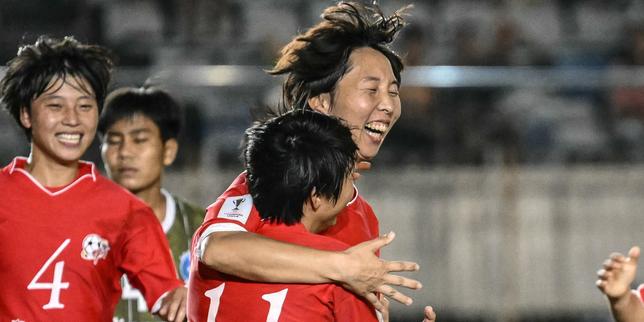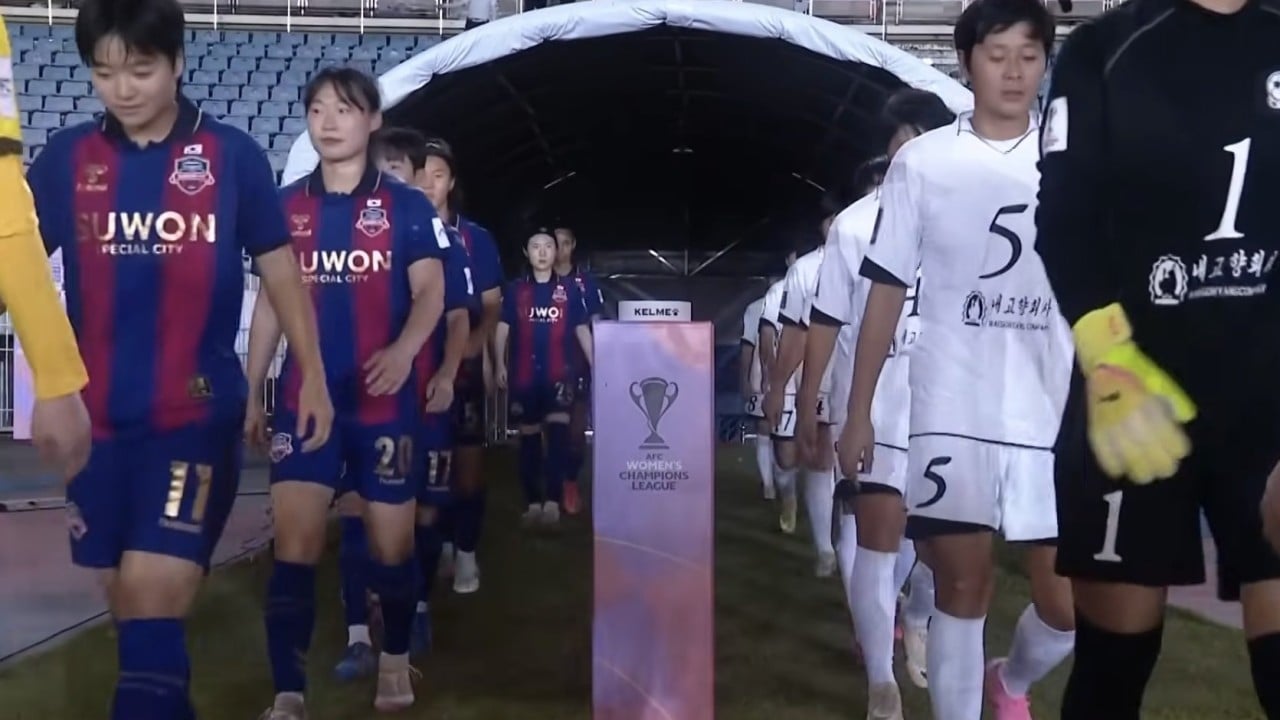
The headlines are already written, and they are nauseatingly predictable. "Sport transcends borders." "A bridge to peace." "The power of the pitch." Every time a North Korean squad crosses the DMZ to play a tournament in South Korea, the media industrial complex dusts off the same tired script. They treat a soccer match like a diplomatic breakthrough.
They are wrong.
Let’s be clear: this isn’t about soccer, and it certainly isn't about "peace." When the North Korean women’s national team steps onto a pitch in South Korea, you aren't watching an athletic competition. You are watching a highly choreographed, state-sanctioned exercise in soft power that serves the regime in Pyongyang far more than it serves the cause of reunification or the players themselves.
I have spent years analyzing the intersection of East Asian security and international athletics. I’ve seen the same cycle repeat from the 2018 Pyeongchang Winter Olympics to the various Asian Cups. The "lazy consensus" suggests that these exchanges soften hostilities. The reality is that they provide a momentary PR mask for a nuclear-armed state while the underlying tensions remain not just stagnant, but actively deteriorating.
The Myth of the "Unified" Spirit
The most persistent lie in sports reporting is that these matches "humanize" the "other side."
In reality, the North Korean team is the most isolated athletic entity on the planet. They don't trade jerseys. They don't mingle in the Olympic Village. They don't give candid post-match interviews about their training regimens. They travel with "handlers" whose primary job is to ensure zero authentic human connection occurs between their athletes and the South Korean public.
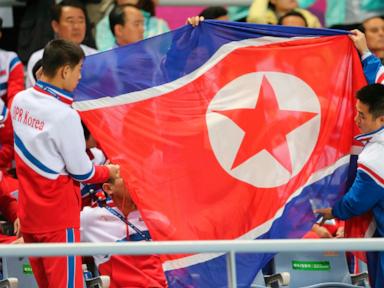
When the media focuses on the spectacle of the cheering squads or the rare sight of the North Korean flag flying in a South Korean stadium, they ignore the mechanical reality of the situation. Every pass, every goal, and every tactical substitution is a data point for a regime that views sports as "war without the shooting."
To call this "diplomacy" is to fundamentally misunderstand what diplomacy is. Diplomacy requires negotiation, concessions, and a path toward a resolution. A soccer match in Seoul provides none of those. It provides a photo op. It gives the illusion of progress without the hard work of actual policy change.
The Performance of the "Red Flowers"
We need to talk about the players, but not in the patronizing way the mainstream press does. The North Korean women’s team is, objectively, a powerhouse. They have historically dominated the AFC and performed with clinical precision on the world stage. But they aren’t "shattering glass ceilings" in the way Western commentators like to imagine.
In Pyongyang’s eyes, these women are assets. They are the "Red Flowers" of the revolution. Their success is used domestically to validate the superiority of the Kim Jong Un system. When they win in Seoul, it’s proof of ideological dominance. When they lose, they disappear from the airwaves.
By framing their participation as a "warm gesture," South Korean organizers and international fans are inadvertently participating in a propaganda win for the North. We are validating a system that uses elite athletes as human shields against international criticism. I’ve spoken with defectors who describe the immense pressure these athletes face; a loss isn't just a bad day at the office—it’s a potential political liability for their families.
Why the South Keeps Playing the Game
Why does Seoul keep hosting? Why does the Korea Football Association (KFA) bend over backward to facilitate these high-tension visits?
It’s about the "Peace Dividend" optics.
Successive administrations in Seoul have used sports as a low-risk way to signal to their domestic base that they are "doing something" about the North. It’s easier to organize a soccer tournament than it is to dismantle a nuclear program or resolve the Northern Limit Line maritime disputes.
But this is a dangerous game of diminishing returns. The South Korean public, particularly the younger generation, is increasingly cynical about these "unity" displays. They don't see long-lost brothers and sisters; they see a neighboring state that launches missiles on Tuesday and sends a soccer team on Friday. The cognitive dissonance is reaching a breaking point.
Dismantling the "People Also Ask" Delusions
Does sports diplomacy actually work?
Historically, almost never in a vacuum. People love to cite "Ping-Pong Diplomacy" between the US and China in 1971. They forget that the secret meetings between Henry Kissinger and Zhou Enlai were already happening. The table tennis was the result of diplomatic shifts, not the cause. In the case of the Two Koreas, the soccer matches are often used to distract from the fact that official communication channels are completely severed.
Are the North Korean players allowed to stay in South Korea?
Defection during these events is virtually impossible. The security surrounding the team is a multi-layered cage. There are the South Korean police, the tournament security, and then the North’s own internal security agents who monitor the players 24/7. To suggest that these tournaments offer a "glimpse of freedom" for the players is a cruel fantasy.
Should we boycott these matches?
No. Boycotts are the lazy man’s activism. But we should stop pretending they are anything other than what they are: high-stakes theater. We should watch the matches for the tactical proficiency of the athletes, but we must strip away the sentimentalist veneer that obscures the grim reality of the Peninsula.
The High Cost of Sentimentalism
The downside of my contrarian view? It’s cold. It lacks the "feel-good" factor that sells newspapers and keeps sponsors happy. If we accept that these matches don't help peace, we have to face the uncomfortable truth that we are no closer to a solution than we were thirty years ago.
But the danger of the "sports diplomacy" narrative is that it creates a false sense of security. It allows the international community to check a box and say, "Look, they're playing soccer, things can't be that bad." Meanwhile, the centrifuges keep spinning, and the human rights abuses in the North’s political prison camps continue unabated.
When you watch the North Korean women’s team play in South Korea, don't look for "unity" in the stands. Look at the sidelines. Look at the handlers. Look at the massive security detail required to keep two groups of people who speak the same language from actually talking to one another.
Stop asking if this tournament will lead to peace. It won’t. Start asking why we are so desperate to believe in a fairy tale that we’re willing to ignore the barbed wire clearly visible in the background of every action shot.
The pitch is 105 meters long, but the gap between the two states remains infinite. No amount of goals will bridge it.
Turn off the commentary. Ignore the "peace" scarves. Watch the game for the brutal, tactical, state-sponsored grind that it is.
Anything else is just participating in the charade.