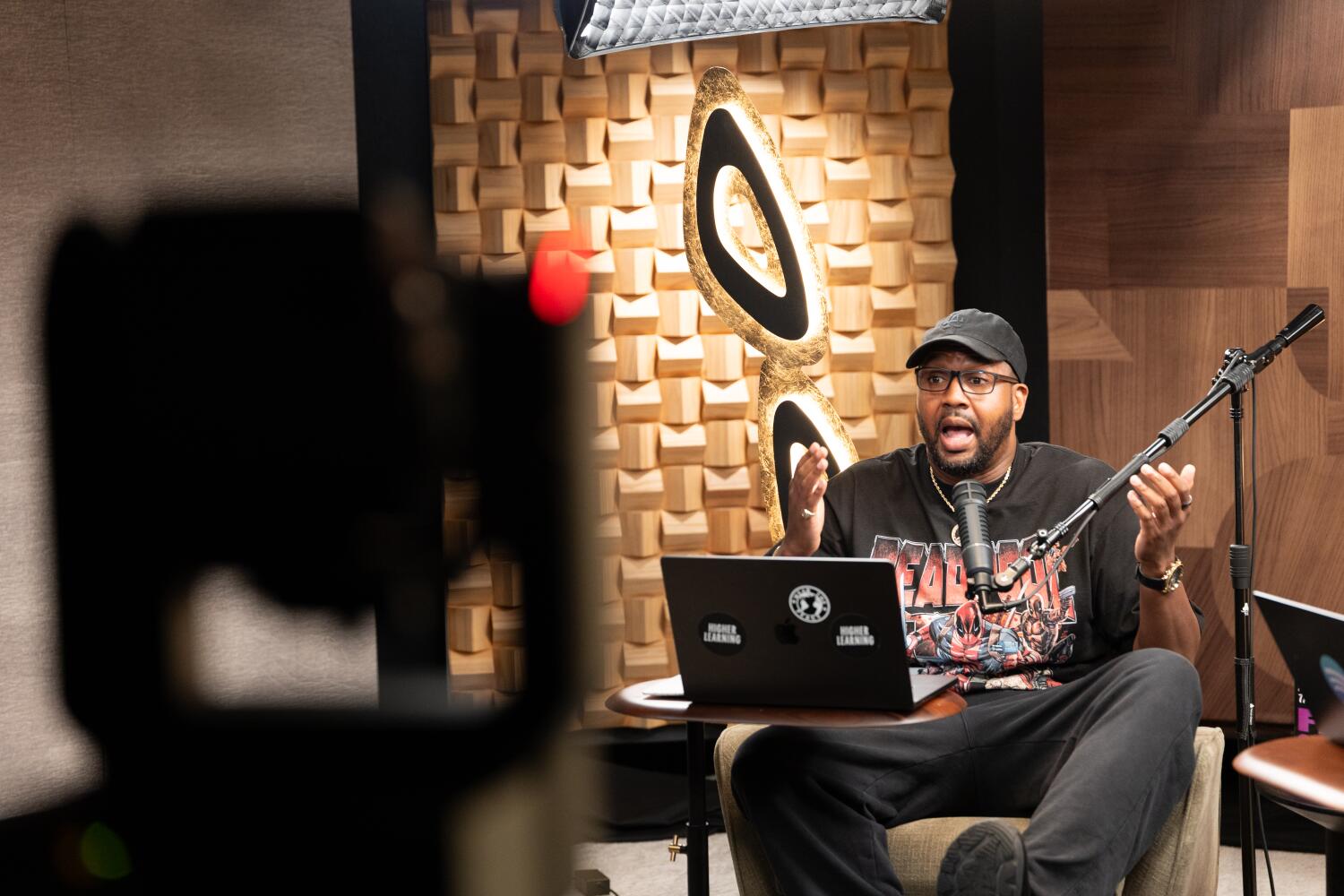
Spotify is spending a fortune to turn your headphones into a TV screen.
The streaming giant is doubling down on video podcasts, pouring capital into Hollywood studio spaces, signing massive video-centric talent deals, and betting the farm that you want to stare at your phone while listening to two people talk. They want you to believe this is the natural evolution of audio. They want Wall Street to believe it is the key to unlocking YouTube-level ad revenues.
It is a delusion.
The rush into video podcasts is not an innovative leap forward. It is a fundamental misunderstanding of why the medium of audio succeeded in the first place. By trying to beat YouTube at its own game, Spotify is abandoning its core competitive advantage and entering a war it is structurally unequipped to win.
The Linear Blindspot: Why Audio Won
Audio did not explode over the last fifteen years because it was waiting for pictures. It exploded because it was the only medium that accommodated the friction points of modern life.
You cannot watch a video while driving a car. You cannot watch a video while mowing the lawn, folding laundry, or running on a treadmill. Audio won because it is a secondary-activity medium. It claims the massive blocks of time throughout the day where a user's eyes are occupied but their mind is underutilized.
When you force video into that equation, the utility flips.
If a podcast requires a screen to be understood, it ceases to be a podcast. It becomes a poorly produced, low-budget television show. The moment a user has to look at the screen to see the visual gag, the chart, or the guest's facial expression, the passive utility is broken.
Spotify’s executive suite seems to think they are expanding the pie. In reality, they are shrinking their own surface area. They are asking users to switch from a passive, high-frequency habit to an active, low-frequency habit.
The Math Behind the Delusion
Let’s dismantle the economic argument. The consensus view inside Spotify’s communication machine is that video unlocks premium video ad formats, which command higher CPMs (cost per mille) than standard audio spots.
On paper, the spreadsheet looks beautiful:
- Audio CPMs generally hover between $18 and $25.
- Premium digital video CPMs can easily fetch $35 to $45+.
But spreadsheets do not account for user behavior or production realities.
First, consider production inflation. A high-end audio podcast requires a couple of decent microphones, a quiet room, and an editor using basic software. The capital expenditure is minimal. To produce a video podcast that does not look like a hostage video, you need a multi-camera setup, professional lighting grids, a switching studio, color grading, and a highly specialized post-production team.
I have seen media companies burn through millions of dollars trying to scale video production infrastructures, only to realize the incremental lift in ad revenue is completely swallowed by the overhead.
Second, consider the "backgrounding" problem. Spotify is banking on video ad impressions. But what happens when a user starts a video podcast, locks their phone, and puts it in their pocket? The video stream continues to pull bandwidth, but the visual ad asset is hitting absolute zero eyeballs. Advertisers are not stupid. They track viewability metrics. The moment brands realize they are paying premium video CPMs for audio impressions, the ad-tech house of cards collapses.
YouTube Already Won the War
Spotify is building expensive brick-and-mortar studios in Los Angeles to court creators. It is a classic legacy-media play wrapped in tech-company packaging. Meanwhile, they are ignoring the reality that their biggest competitor does not need studios to win.
YouTube is already the dominant platform for video podcasts, and it achieved this without spending a dime on Hollywood real estate.
The structural advantages YouTube possesses are insurmountable for a music-first app:
- The Recommendation Engine: YouTube’s algorithm is built on visual click-through rates (CTR) and watch time. It has two decades of optimization data designed to keep eyes glued to screens. Spotify's algorithmic DNA is built on audio sequencing—predicting what song you want to hear after the current one finishes.
- The Infrastructure Ecosystem: YouTube is native to every smart TV on earth. It is built into the living room ecosystem. Spotify is fundamentally a mobile and desktop background application.
- The Creator Monitization Loop: YouTube’s Partner Program handles the programmatic monetization automatically, splitting ad revenue transparently. Spotify is still trying to stitch together a fragmented marketplace of programmatic audio, direct sales, and platform-exclusive minimum guarantees.
When Spotify signs a massive creator to a video contract, they are trying to buy an audience. But audience loyalty to a specific personality is notoriously difficult to port across platforms. Joe Rogan’s move to Spotify proved that while a hardcore subset of listeners will migrate, a massive chunk of casual visual viewers simply stayed on YouTube, consuming clips and finding alternative content that fit their native viewing habits.
The Pitfalls of Platform Identity Crises
Companies fail when they forget what problem they solve for the consumer. Netflix failed when it tried to enter gaming without understanding the mechanics of player retention. Quick-commerce apps failed when they realized consumers valued low prices over getting a bag of chips delivered in eight minutes.
Spotify solves the problem of ambient audio companionship. It is the soundtrack to your life.
By cluttering the interface with video feeds, auto-playing clips, and TikTok-style discovery feeds, they are degrading the core user experience. They are turning a clean, functional utility into a chaotic visual casino.
Imagine a scenario where you open your banking app to check your balance, and you are forced to watch a 15-second video clip of a financial influencer before you can see your savings account. That is the exact friction Spotify is introducing into the audio discovery process.
The Real Growth Engine They Are Ignoring
If Spotify wants to expand its margins and justify its valuation, the answer is not pretending to be Netflix or YouTube. The answer lies in doubling down on the unique mechanics of audio.
They should be pioneering hyper-targeted, dynamic audio ad insertion that rivals the precision of Meta's pixel. They should be building robust, native subscription tools that allow mid-tier creators to easily paywall premium audio content directly within the app, taking a clean platform cut. They should be mastering localization, using AI translation tools to allow a top-tier English podcast to be consumed natively in Spanish, Portuguese, and Japanese with the creator's exact voice inflection.
Instead, they are buying cameras. They are building soundstages. They are playing a 2012 digital media playbook in 2026.
Every dollar spent on a Hollywood studio is a dollar not spent on refining the core audio infrastructure. It is a distraction born of board-room envy. They look at YouTube's multi-billion dollar ad revenues and think the secret sauce is the video codec. It isn't. The secret sauce is the ecosystem.
Spotify is entering a knife fight with an expensive, shiny spoon. By the time they realize that people use their app to listen, not to watch, YouTube will have eaten their lunch, and Hollywood will be left with a collection of beautifully designed, empty studios.