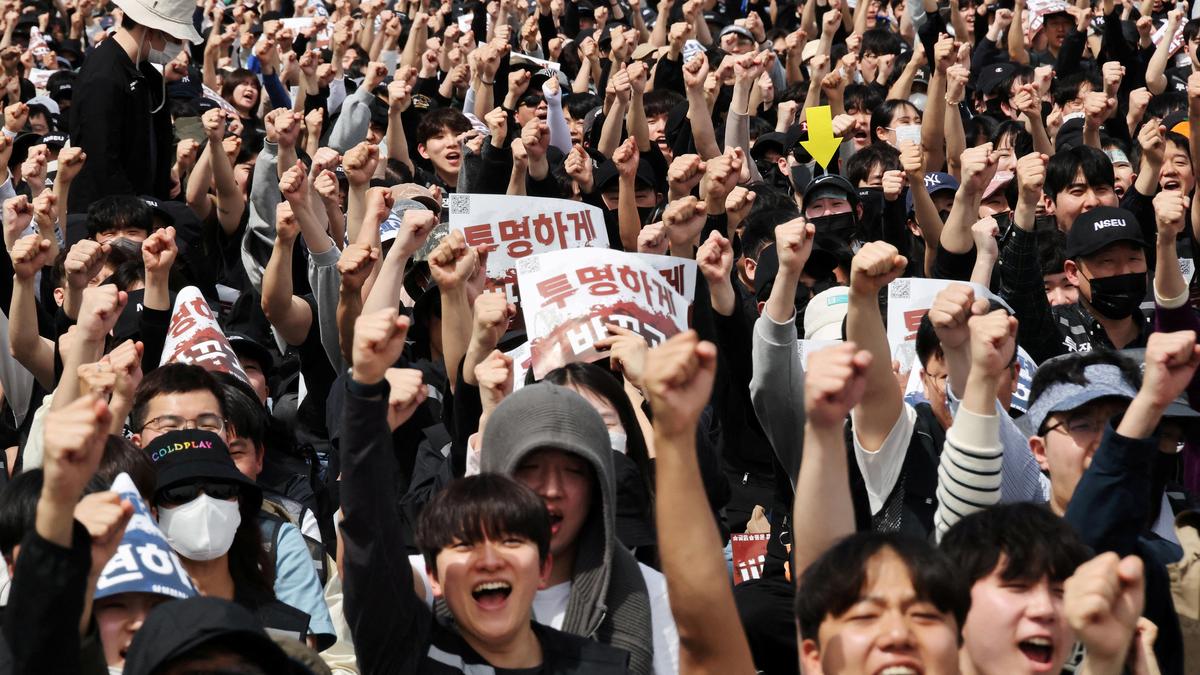
You can't overstate how much South Korea relies on Samsung Electronics. When the tech giant faces a massive labor crisis, it isn't just a corporate headache. It's a national emergency. Right now, the South Korean government is staring down a planned 18-day general strike by Samsung's largest labor union, set to kick off on May 21, 2026. The state's response has been swift, aggressive, and incredibly telling. Prime Minister Kim Min-seok just issued a blunt public warning, stating that the government will deploy every single available measure—including the rarely used weapon of emergency arbitration—to block the walkout.
This isn't empty political posturing. The government is terrified of what happens if the assembly lines go dark.
A single day of downtime at Samsung’s semiconductor plants will trigger immediate, direct losses of up to 1 trillion won, which is roughly $668 million. But the actual nightmare scenario is much worse. If those ultra-precise semiconductor manufacturing lines freeze, you can't just flip a switch to turn them back on. The resulting disruption can ruin wafer batches and cause months of total inactivity. Prime Minister Kim warned that total economic fallout could balloon to a staggering 100 trillion won if the strike forces the disposal of sensitive chipmaking materials. For an economy heavily reliant on high-tech exports, that's a self-inflicted wound the country simply can't afford.
What Most People Get Wrong About The Samsung Labor Dispute
If you're looking at this from afar, you might assume this is a standard fight over basic hourly wages. It isn't. The real battleground centers on performance-based bonuses tied directly to the massive boom in artificial intelligence chips.
The union, which represents more than 46,000 workers, wants fixed performance bonuses equal to 15 percent of the company's operating profit. Samsung management has pushed back, and the two sides have spent months locked in a bitter standoff. Marathon 17-hour negotiation sessions earlier in May completely fell apart. The core issue is that workers feel they've been left behind while the company rides the massive global wave of AI hardware demand. They want guaranteed cuts of that lucrative pie, not discretionary corporate handouts.
The standoff has grown so intense that even Samsung Electronics Chairman Lee Jae-yong had to make a rare, highly public apology. He bowed deeply to customers and the public, acknowledging the global anxiety caused by the internal breakdown. When the top billionaire executive of South Korea’s most powerful conglomerate is publicly bowing in apology, you know the situation has moved past a simple HR dispute.
The Nuclear Option of Korean Labor Law
So, what exactly is this "emergency arbitration" tool the government keeps threatening to use?
Under South Korea's Labor Relations Adjustment Act, the labor minister has the authority to invoke an emergency adjustment measure. If a labor dispute is deemed a severe threat to the national economy or public safety, the state can step in and force a timeout.
Once the government pulls this trigger, all industrial action must stop instantly. The union is legally barred from striking for 30 days. During that month-long freeze, the National Labor Relations Commission steps in to conduct mandatory mediation and binding arbitration.
To understand how extreme this step is, look at history. Emergency arbitration has only been used four times in the entire history of modern South Korea. It is a nuclear option, usually reserved for critical public utilities or national transport crises. The fact that the government is openly preparing to use it against a private electronics workforce shows you exactly how the state views Samsung. In the eyes of Seoul, Samsung's chip factories are just as vital to the nation's survival as water, electricity, or national defense.
The Global Semiconductor Trap
The timing of this dispute couldn't be worse for South Korea. The global semiconductor industry is locked in a fierce, fast-moving race to dominate the supply chain for advanced AI memory chips, specifically High Bandwidth Memory (HBM). Samsung is already facing brutal competition from domestic rival SK Hynix and global giants like TSMC.
In chip manufacturing, market share is incredibly fragile. If Samsung loses its momentum due to an 18-day shutdown, global tech clients will instantly pivot to competitors to secure their supply chains. Prime Minister Kim laid it out clearly during his national address, noting that once a competitive edge in this sector is lost, it becomes nearly impossible to win back. The strike wouldn't just hurt Samsung's bottom line this quarter; it could permanently shrink South Korea's footprint in the global tech hierarchy.
Furthermore, the economic pain would immediately ripple downward. Samsung doesn't operate in a vacuum. It relies on a massive web of over 1,700 domestic component suppliers and partner companies. A prolonged shutdown at the main factories would trigger a catastrophic domino effect, forcing smaller suppliers to halt operations, freeze hiring, and potentially lay off thousands of workers across the country.
The High Stakes Negotiation Monday
The government has explicitly labeled the upcoming mediation talks on Monday, May 18, as the absolute last chance to avoid a disaster. To show they're serious about changing the narrative, Samsung management even replaced its chief negotiator right before the deadline, signaling a desperate willingness to salvage the talks.
If you are tracking this situation, look for these specific indicators on Monday to see where the chips will fall:
- A compromise on bonus structures: Watch if management offers a guaranteed floor for AI-related profit sharing instead of arbitrary merit bonuses.
- The union's willingness to stagger action: See if the union scales back the threat of an outright 18-day total shutdown to smaller, rolling walkouts.
- The government's trigger finger: If Monday's talks break down without a clear path forward, expect the Ministry of Employment and Labor to formally announce the emergency arbitration order almost immediately to block the May 21 strike date.
The reality is that neither side can afford to blink, yet both sides stand to lose everything if they don't. For global tech markets, the stability of the memory chip supply chain hinges entirely on what happens in a Seoul negotiation room over the next 24 hours.