Six years.
That is long enough for a toddler to become a student. It is long enough for a new house to start showing its first cracks. It is long enough for the sharp, jagged edges of a collective trauma to be sanded down by the mundane chores of Tuesday mornings and Thursday nights. We have scrubbed the "Six Feet Apart" stickers off the grocery store floors. We have tucked the cloth masks into the back of junk drawers, right next to the dead batteries and the tangled charging cables.
But if you look closely at the people standing in line for coffee or sitting in traffic, you can see it. It is in the way we avoid eye contact with a coughing stranger. It is in the exhaustion of a healthcare system that never truly caught its breath. Most of all, it is in the unanswered questions that hang over the country like a low, gray fog.
We are living in the Great Postponement. We traded a reckoning for a return to "normal," but normal is a ghost.
The Girl in the Glass Room
Think of Sarah. Sarah is not a statistic, though she represents thousands. In 2020, she was a charge nurse in a city that sounded like a war zone every night at 7:00 PM when people banged pots and pans. She remembers the smell of the industrial-grade disinfectant that stripped the skin off her knuckles. She remembers the weight of the iPads she held up so dying grandfathers could say goodbye to pixelated faces.
Today, Sarah works in an insurance office. She cannot step foot in a hospital without her heart hammering against her ribs like a trapped bird. When she reads the news, she sees debates about school board policies and economic recovery. She does not see an acknowledgment of the moral injury she carries.
The country moved on, but it did not move through. To move through something requires an audit of the soul. It requires asking: Who were we when the lights went out? And who did we let down when we were afraid?
The Ledger of Lost Things
The cold facts are still there, waiting in the ledger. We lost more than a million lives in this country alone. That is a city the size of Austin, Texas, simply erased. Yet, the official inquiries remain stalled in partisan mud. We argue about the origin of the spark while the house is still smoldering.
We know the data points. We know that the wealth gap widened into a canyon. We know that the educational development of an entire generation was stunted, not just by closed doors, but by the sheer, crushing weight of uncertainty. But facts without a narrative are just noise. Without a formal reckoning—a commission with teeth, a national day of mourning that actually sticks, a massive reinvestment in the public health infrastructure we ignored for decades—those facts will just drift away.
Logic dictates that if a bridge collapses, we inspect the steel. We find out who signed off on the blueprints. We ensure the next bridge holds. When the societal bridge collapsed in 2020, we just swam to the other side and started walking as if we weren't soaking wet.
Consider the "Excess Death" statistics that demographers track. These aren't just COVID deaths; these are the heart attacks that happened because people were too scared to go to the ER. These are the "deaths of despair" fueled by isolation. These are the missing pieces of our social fabric. If we do not account for them now, we are building our future on a foundation of hollowed-out space.
The Myth of the Clean Slate
There is a powerful temptation to believe in the clean slate. We want to believe that once the emergency declarations ended, the debt was settled. But the debt of a pandemic is paid in interest for a generation.
The small business owner who took out a predatory loan to keep the lights on in 2021 is filing for bankruptcy in 2026. The child who missed third grade reading milestones is now struggling with high school chemistry. The elderly woman who lost her social circle during the lockdowns hasn't left her apartment in three weeks.
These are the invisible stakes. We talk about the economy as if it is a series of green and red lines on a screen. The economy is actually a web of human relationships. When you tear that web, you can’t just tape it back together. You have to re-weave it.
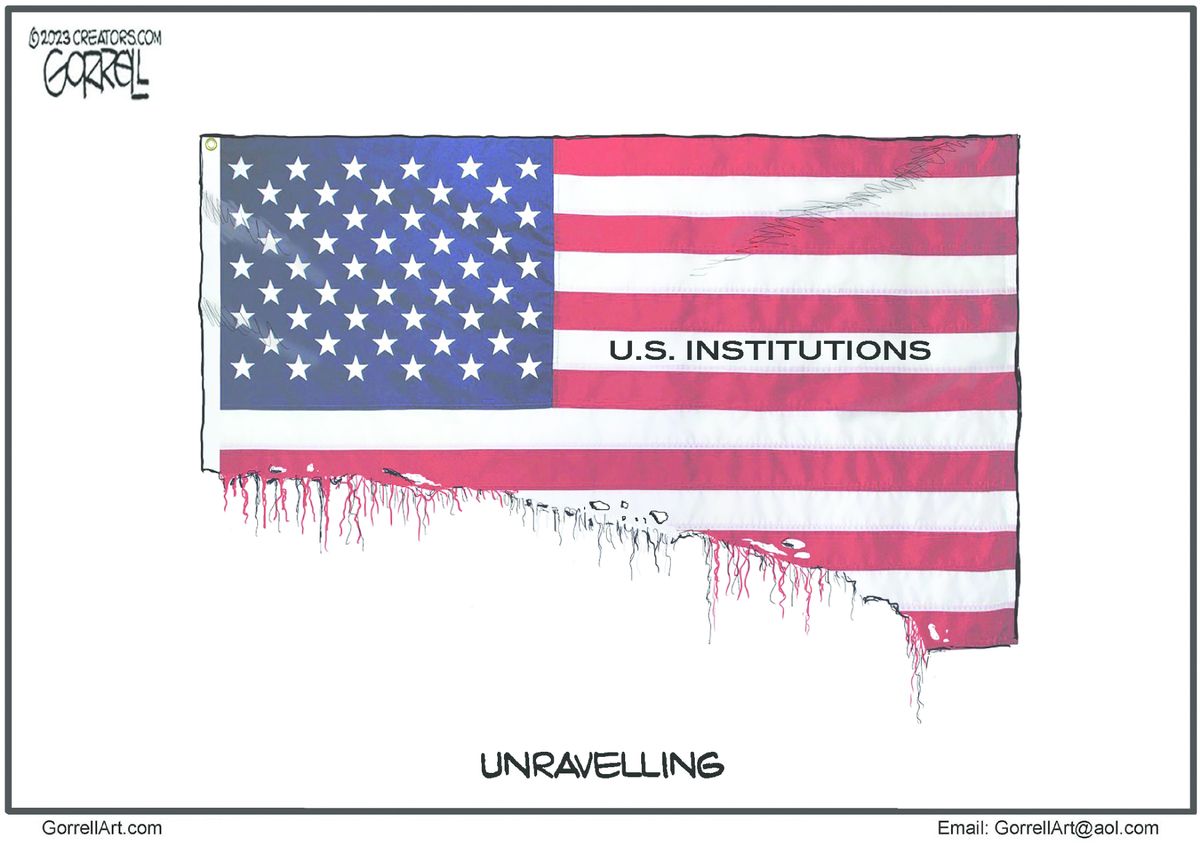
We are currently failing the re-weaving. We are choosing collective amnesia because the alternative—looking at our failures in nursing home care, our crumbling mental health resources, and our inability to agree on basic reality—is too painful.
The Architecture of Accountability
What does a reckoning actually look like? It isn't a witch hunt. It isn't a series of shouting matches on cable news.
A true reckoning is an architectural project. It is the process of looking at the blueprint of our society and identifying the load-bearing walls that failed.
- The Infrastructure of Trust: We learned that a ventilator is useless if the person needing it doesn't trust the person operating it. We spent billions on tech and pennies on the human connection required to make that tech work.
- The Definition of "Essential": We spent months calling grocery clerks and delivery drivers "heroes." Then, the moment the masks came off, we went back to treating them as invisible. A reckoning would mean a fundamental shift in how we value labor that keeps us alive.
- The Grief Deficit: You cannot suppress the grief of a million families and expect a stable society. Unprocessed grief turns into anger. It turns into cynicism. It turns into the jagged political landscape we navigate today.
The Ghost in the Machine
It is easy to blame "the government" or "the media" or "the others." It is much harder to admit that we were all part of a machine that broke.
I remember walking through a park in the autumn of 2020. I saw a man sitting on a bench, crying into his hands. I didn't stop. I was afraid of the air he was breathing. I was afraid of the complexity of his pain. I told myself I was being "safe." Looking back, I realize I was being small.
That smallness has become a national habit. We are smaller now. We are more defensive. We are more prone to believe that the worst is just around the corner, yet we refuse to pack a bag.
The "COVID reckoning" isn't about finding a single villain. It is about admitting that the "normal" we are so desperate to get back to was the very thing that made us so vulnerable in the first place. We were efficient, but we weren't resilient. We were connected by fiber-optic cables, but we were isolated by our own anxieties.
The Sound of the Unsaid
If you listen to the silence in our public discourse, you can hear the things we aren't saying.
We aren't saying that we are tired.
We aren't saying that we are scared it will happen again.
We aren't saying that we don't know how to forgive each other for the arguments we had over Thanksgiving tables four years ago.
We are waiting for a permission slip to feel these things. We are waiting for a leader, a poet, or a commission to tell us that it’s okay to still be hurting. But no one is coming to give us that permission.
Six years.
The toddler is in school. The house has its cracks. The stickers are gone.
The reckoning isn't something that happens to us. It is something we choose to do. It is the act of sitting down at the kitchen table, looking at the empty chair, and finally, finally, speaking the truth about how it got there.
Until then, we are just holding our breath, waiting for a siren that has already faded into the distance, leaving us in a quiet that feels less like peace and more like an unfinished sentence.
The window is closing. History doesn't wait for us to be ready. It only records whether we stood up or stayed seated when the music stopped.
Would you like me to research the specific legislative status of the various COVID-19 national commissions currently proposed in Congress to see where the actual "reckoning" stands today?