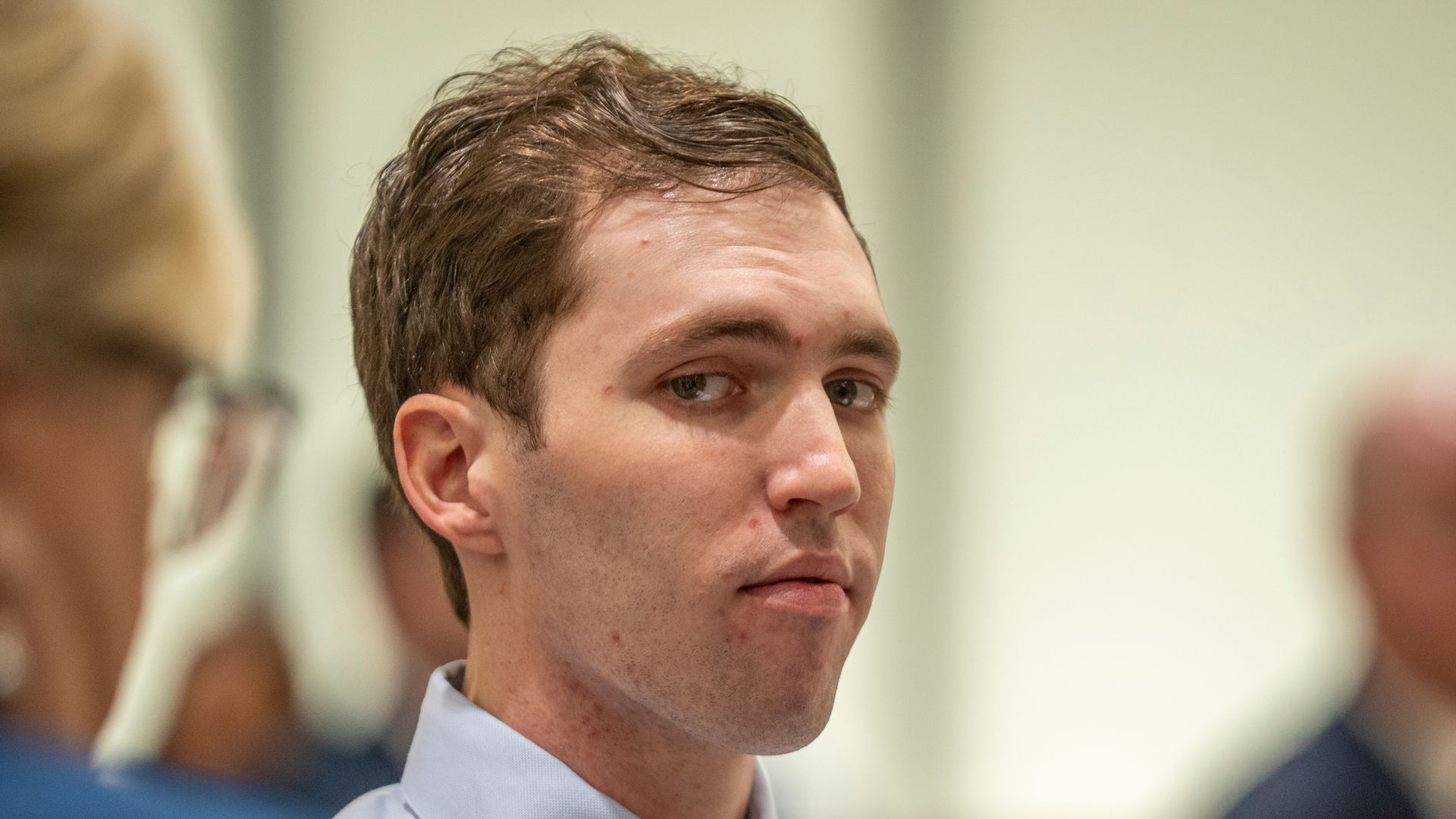
The defense team representing the man accused of killing political commentator Charlie Kirk is moving to pull the plug on public visibility. In a high-stakes motion filed this week, attorneys for the suspect asked a judge to bar all cameras and recording devices from the courtroom during the upcoming trial. While the defense argues that a media circus will poison the jury pool and strip their client of a fair trial, the legal maneuver hits at the very foundation of the First Amendment and the public's right to witness the machinery of justice in action.
This isn't just about a single trial or a high-profile victim. It is a calculated strike against the concept of the "open courtroom." In an era where public trust in the judiciary is cratering, the move to shutter the windows of the court represents a significant risk to civil transparency.
The Shield of Prejudicial Publicity
The defense’s core argument rests on the Sixth Amendment. They claim that the intense, polarized nature of the victim’s public profile makes it impossible to find twelve impartial jurors if those jurors know their every facial expression and reaction will be broadcast to millions. They are betting on the idea that "the camera changes the room."
Legal teams often view cameras as a catalyst for performative justice. When a lens is present, witnesses may become more nervous or, conversely, more prone to grandstanding. Prosecutors might sharpen their rhetoric for the evening news rather than the jury box. For the man in the dock, the defense argues that the permanent digital stain of being filmed during a murder trial—even if acquitted—constitutes a form of extrajudicial punishment.
However, the "prejudice" argument is a double-edged sword. Courts have long held that the mere presence of cameras does not inherently violate a defendant's rights. In fact, many legal scholars argue that transparency protects the defendant by ensuring the judge and prosecution adhere strictly to the rules of law under the watchful eye of the electorate.
Why the Prosecution Wants the Lights On
The state usually resists these bans, though not always for the sake of the evening news cycle. For the prosecution, a televised trial serves as a public record of the evidence. In a case involving a figure as divisive as Charlie Kirk, the "why" behind the crime is as significant as the "who." If the public is barred from seeing the evidence in real-time, the vacuum will be filled by speculation, conspiracy theories, and partisan spin from both sides of the aisle.
The public interest in this case is not merely morbid curiosity. Kirk was a central figure in the modern American political movement. His death, and the subsequent trial of his alleged killer, carries immense weight regarding political violence and the state of civil discourse. To hide the trial behind closed doors is to invite a narrative that the system is hiding something.
The Judicial Balancing Act
Judges are caught in a logistical and ethical vice. On one hand, they must protect the integrity of the record. On the other, they are the gatekeepers of the First Amendment. The "Estes v. Texas" and "Chandler v. Florida" precedents established that states can permit cameras, but they don't have to. This leaves a massive amount of discretionary power in the hands of a single individual in a black robe.
If the judge grants the motion to ban cameras, they must provide a specific, factual basis for why this trial is uniquely susceptible to disruption. They cannot simply cite "general discomfort" or a "desire for privacy." They must prove that the presence of a lens would tangibly degrade the quality of justice.
The Problem with Digital Secrecy
We live in a world where information cannot be contained. Even if the judge bans cameras, the trial will be live-tweeted. Bloggers will sit in the gallery and provide blow-by-blow accounts. Sketch artists will capture the defendant’s likeness.
By banning professional video, the court actually relinquishes control over the narrative. Instead of a clear, high-definition feed of the actual testimony, the public gets filtered, second-hand interpretations. This often leads to more misinformation, not less. When the camera is off, the "court of public opinion" relies on the loudest voices in the room rather than the actual evidence presented at the bar.
The Invisible Cost of a Closed Trial
There is a psychological component to the open trial that often goes unmentioned in legal briefs. It provides a sense of "community catharsis." When a violent crime occurs, particularly one that targets a public figure, the community feels a collective wound. Seeing the process of law—the cross-examinations, the physical evidence, the testimony of experts—allows the public to process the event.
Closing the trial stunts this process. It turns the legal system into a "black box" where a defendant goes in and a verdict comes out, with the middle part obscured. For a case with the gravity of the Kirk murder, this opacity is a recipe for long-term social friction.
Tracking the Strategy of the Defense
The defense isn't just worried about the jury in the room; they are worried about the jury of the future. If this case goes to an appeal, they want to be able to point to the "media circus" as a reason the original conviction should be overturned. By filing this motion now, they are "preserving the record." Even if the judge denies the request, the defense has successfully planted the flag. They can later argue that they warned the court about the dangers of publicity, and the court ignored them.
It is a classic "win-win" for a defense attorney. If the cameras are banned, they get the quiet, controlled environment they want. If the cameras stay, they have a ready-made ground for an appeal if the verdict goes against them.
The Technicality of Fairness
There is a persistent myth that cameras are "distracting." Modern courtroom cameras are often small, silent, and mounted to walls. They do not require the blinding floodlights or the tangled cables of the 1950s. The "distraction" argument is largely a relic of a different technological era.
What is actually distracting is the knowledge that the world is watching. But that is exactly what the law intended. The Sixth Amendment guarantees a "public" trial, not a "private" one. This wasn't just for the defendant's benefit; it was to ensure the government couldn't disappear people into a star chamber.
The Impending Ruling
The judge’s decision on this motion will set the tone for the entire proceeding. If the motion is granted, it signals a trial defined by control and caution. If it is denied, it signals a trial defined by transparency and the harsh light of public scrutiny.
The defense is currently arguing that their client's life hangs in the balance and that a camera is a weight on the scale. The prosecution argues that the scale must be visible to everyone to be trusted.
The decision won't just impact the man sitting at the defense table. It will determine whether the public is allowed to see justice being done, or if they have to take the court's word for it. In a case that has already divided the country, taking the court's word for it may not be enough. The gavel is about to fall on the public's right to watch.