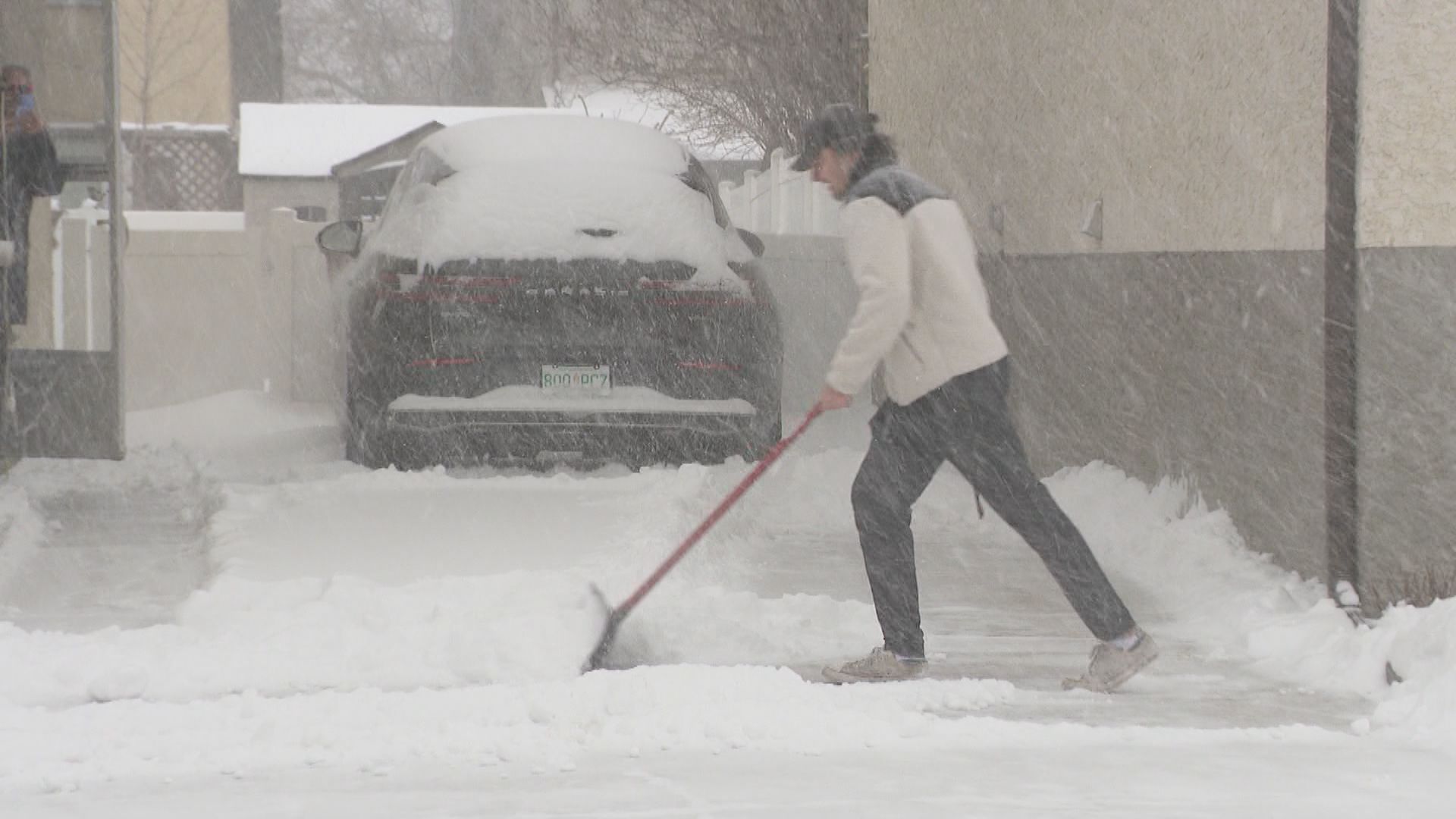
Stop crying about the April "snowstorm" in Saskatchewan.
Every time a low-pressure system crawls across the 49th parallel in the spring, the media treats it like a freak occurrence, a "disruption," or a tragedy for the local economy. They frame it as a battle between man and nature, where man is currently losing because a few highways are closed and some patio openings are delayed.
This narrative is lazy. It’s boring. Most importantly, it’s wrong.
An April snowstorm in the prairies isn't a disaster; it’s a strategic reserve of moisture for the most productive agricultural soil on the planet. If you’re complaining about shoveling your driveway in April, you’re missing the forest for the frozen trees. You’re prioritizing your 15-minute commute over the multi-billion dollar backbone of the provincial economy.
The Moisture Myth and the "Late Start" Fallacy
Mainstream news outlets love to interview "frustrated" commuters. They never seem to interview the soil.
In Saskatchewan, we live and die by the moisture profile. We are coming off years of cyclical drought in regions like the southwest and west-central areas. When the sky dumps twenty centimeters of heavy, wet snow in April, that isn't "bad weather." That is a liquid gold deposit being made into the soil's bank account.
The "lazy consensus" suggests that a late snowstorm delays seeding and therefore ruins the season. This is amateur-hour logic. Modern precision agriculture—the kind practiced by the massive operations in the Regina Plains and the Rosetown area—has narrowed the seeding window significantly. High-speed planters and air drills can put thousands of acres in the ground in a fraction of the time it took twenty years ago.
A "late" start with high subsoil moisture beats an "early" start in a dust bowl every single time.
I’ve watched producers panic-buy seed in March only to see their crops wither by July because they caught an early heat wave without a moisture base. The "storm" people are currently lamenting is actually the insurance policy against a scorched August.
The Infrastructure Performance Art
We need to talk about the performative outrage surrounding road closures.
Whenever the Trans-Canada or Highway 11 shuts down for twelve hours, the "disruption to the supply chain" rhetoric ramps up. Let’s be real: If your supply chain is so fragile that a one-day blizzard in a sub-arctic climate breaks it, you didn't have a supply chain. You had a hope and a prayer.
Saskatchewan’s logistics industry is built for this. The "disruption" is a feature, not a bug. It forces a rhythm of maintenance and safety that keeps the overall system resilient.
The real cost isn't the snow; it's the lack of psychological resilience in the modern workforce. We’ve become so addicted to the "just-in-time" delivery of everything from Amazon packages to lattes that we view a standard meteorological event as a systemic failure. It’s not a failure. It’s the prairie tax. You pay it in April so you can have a trillion-dollar view in August.
Stop Treating the Prairies Like Toronto
The biggest issue with the coverage of Saskatchewan snowstorms is that it’s written through a lens of urban fragility.
In a city like Toronto or Vancouver, ten centimeters of snow is a legitimate crisis because their infrastructure is designed for a temperate climate and their drivers have the situational awareness of a goldfish. In Saskatchewan, we have the heavy equipment, the salt reserves, and the collective muscle memory to handle this.
When the media uses words like "pummeled" or "blanketed," they are trying to evoke sympathy for a population that doesn't need it. This isn't a hurricane in the Gulf Coast. This is Tuesday in a province where the temperature can swing sixty degrees in a week.
The "disaster" framing actually hurts the province. It makes the region look volatile and inhospitable to outside investment. In reality, Saskatchewan’s ability to remain operational and productive despite these swings is its greatest selling point. We are the ultimate "stress-test" jurisdiction.
The Economic Inverse: Why You Should Want the Storm
Let’s look at the cold, hard numbers.
$$M = (S \times D) - E$$
In this simplified model for prairie agricultural potential, $M$ (Moisture) is the product of $S$ (Snowfall) and $D$ (Density), minus $E$ (Evaporation).
An April storm has high $D$ (wet, heavy snow) and low $E$ because the ground isn't yet baked by the summer sun. A January storm might look more dramatic, but the snow is light and blows into the ditches, providing zero benefit to the fields.
- January Snow: Blows away.
- April Snow: Soaks in.
If you are an investor in Canadian agribusiness, you shouldn't be looking at the weather radar with dread; you should be looking at it with a calculator. Every inch of "nuisance" snow on the ground in April correlates to a reduction in the risk profile for the upcoming harvest.
The Logistics of Resilience
People ask: "Why can't we keep the roads open 24/7?"
The honest, brutal answer: Because it’s a waste of money.
The cost of maintaining a fleet of plows capable of keeping Highway 1 clear during a whiteout is exponentially higher than the economic loss of closing the road for six hours. It’s a classic case of diminishing returns. The "unconventional advice" for the province? Close the roads sooner.
Stop trying to fight the storm. Lean into it.
Shut the province down for 24 hours, let the moisture sink into the dirt, and stop the pointless accidents caused by people who think their AWD crossover makes them invincible. The hyper-focus on "staying open" is a vanity metric. True efficiency is knowing when to pause so the recovery is faster.
The Seasonal Affective Disorder of the Masses
There is a psychological component to this that nobody admits: People are just cranky because they wanted it to be spring.
We’ve outsourced our happiness to the thermometer. Because the calendar says April, we feel entitled to double-digit temperatures and dry pavement. Nature doesn't care about your calendar.
The "controversial truth" is that if you live in Saskatchewan and you’re surprised by a snowstorm in April, you are the problem. You are living in a state of geographical denial. This isn't "climate change" or "extreme weather." It’s the geography you signed up for.
Instead of writing articles about "digging out," we should be writing articles about "filling up." Filling the sloughs, filling the dugouts, and filling the subsoil.
The next time you see a "Breaking News" alert about a prairie blizzard, don't look for the shovel. Look for the crop insurance adjusters—they’re the only ones breathing a sigh of relief.
Stop complaining about the white stuff. It's the only thing keeping this province from becoming a desert.
Buy a better coat and get back to work.