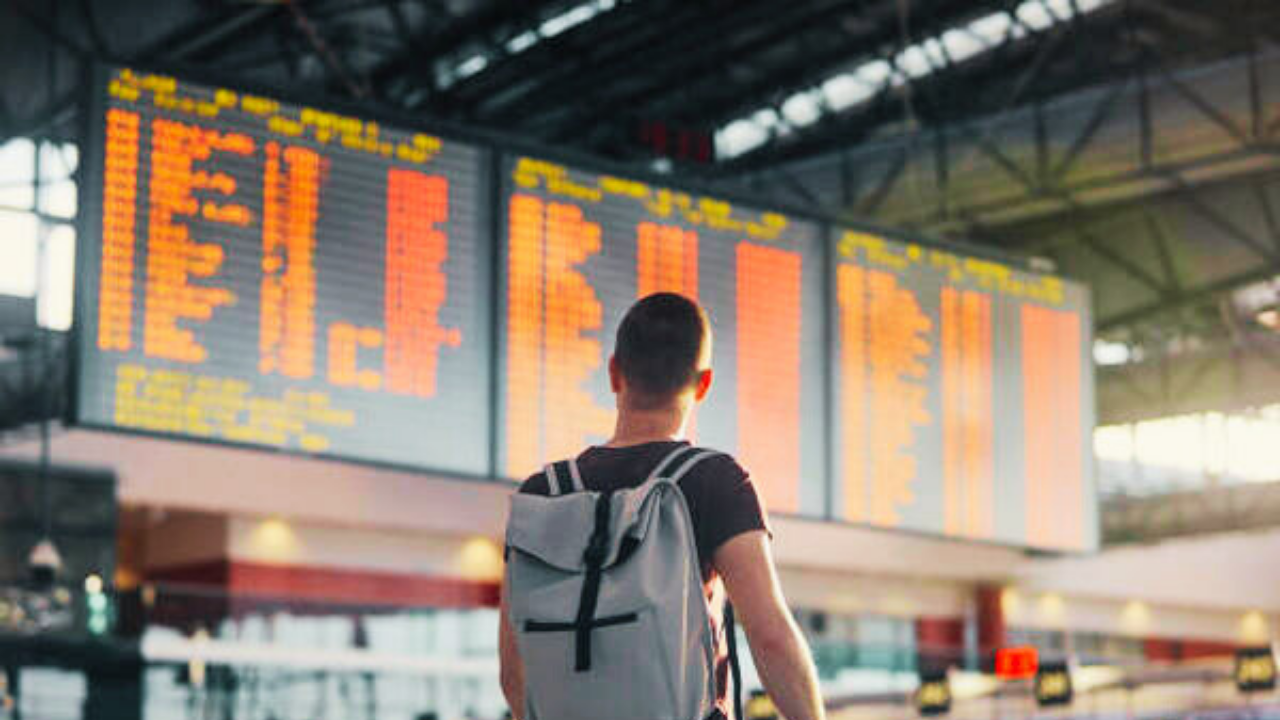
The coffee in Terminal 3 always tastes like burnt plastic and broken promises, but at 3:00 AM, you drink it anyway. Elias sat on a cold metal bench, clutching a lukewarm paper cup, watching the flight board flicker. Every few seconds, a mechanical click-clack echoed through the hall as another destination turned red.
Tehran. Canceled.
Tel Aviv. Canceled.
Amman. Delayed.
Beirut. Canceled.
Elias wasn't a war correspondent or a diplomat. He was a software consultant from Chicago who had saved for three years to take his daughter to see the ruins of Petra. He had done everything right. He bought the "Premium Plus" travel insurance. He checked the box for trip cancellation. He felt shielded by a digital certificate sitting in his inbox, a PDF promise that his $8,000 investment was safe from the chaos of the world.
He was wrong.
Most travelers view insurance as a universal "undo" button. We imagine that if a missile flies or a runway is shuttered by a drone strike, the insurance company simply opens its coffers and restores us to our previous state. But insurance is not a safety net; it is a contract written in the cold, precise language of probability and exclusion. When the sky turns red over the Middle East, the fine print becomes the only reality that matters.
The Ghost in the Policy
The first thing Elias learned, while shivering under the industrial air conditioning, was that "disruption" is not a synonym for "coverage."
Most standard travel insurance policies are built to handle personal catastrophes: a broken leg, a sudden death in the family, a house fire back home. They are remarkably poorly equipped to handle geopolitics. When Iran launched a wave of drones and missiles, triggering a cascade of airspace closures across the region, thousands of travelers like Elias hit a wall.
The wall has a name: The "Act of War" exclusion.
Almost every basic policy contains a clause that absolves the insurer of responsibility if your trip is ruined by war, insurrection, or "hostile acts" by a sovereign power. It sounds straightforward until you are the one standing at a check-in desk. If the airline cancels your flight because the government closed the airspace, is that an "Act of War"? Or is it a "Security Closure"? The difference between those two phrases is the difference between a full refund and a total loss.
Insurance companies often argue that if a government closes its own sky, it is a regulatory action, not a covered "travel delay." If the airline cancels the flight, the insurer expects the airline to pay. If the airline claims force majeure—an extraordinary event beyond their control—they might only offer a voucher. Suddenly, the traveler is caught in a high-stakes game of hot potato where no one wants to hold the bill.
The Fine Print of Fear
Consider the psychological weight of a looming conflict.
Imagine you are scheduled to fly into a region where the news cycle is dominated by talk of "imminent retaliation." You don't want to go. You are scared. You call your insurance provider to cancel because the situation has become objectively more dangerous than when you booked.
They will likely tell you no.
Standard insurance does not cover "fear of travel." Unless the U.S. State Department issues a Level 4 "Do Not Travel" advisory after you purchased your policy, simply feeling unsafe isn't enough to trigger a claim. Even then, many policies exclude "civil unrest" or "political instability" if it was already a known factor at the time of purchase.
To the insurer, the world is a map of calculated risks. If you book a trip to a volatile region, they assume you have baked that volatility into your plans. They are insuring your health and your luggage, not your peace of mind.
The Cancel for Any Reason Mirage
Elias thought he had a secret weapon: "Cancel for Any Reason" (CFAR) coverage. It is the holy grail of the industry, often costing 40% to 50% more than a standard plan.
But CFAR is a fickle friend.
First, it usually only pays back 50% to 75% of your non-refundable costs. You are voluntarily taking a massive financial hit just to stay home. Second, you typically have to exercise that right at least 48 hours before your departure. If the missiles start flying 12 hours before your wheels up, your CFAR window has already slammed shut.
Elias looked at his daughter, who was asleep with her head on a backpack. He realized that his "premium" protection was effectively a sieve. It caught the big rocks—the heart attacks and the lost suitcases—but let the entire Middle Eastern crisis slip right through the mesh.
The Logistics of a Closed Sky
When airspace closes, it creates a kinetic ripple effect that spans the globe. A flight from London to Singapore that usually flies over Iraq suddenly has to reroute, adding three hours of fuel and time. Crews timed out. Connections were missed in Dubai and Doha.
For the traveler, this is where the "Travel Delay" benefit supposedly kicks in. Most policies offer $150 to $200 a day for meals and hotels if you are delayed for more than six or twelve hours.
Try finding a hotel room near Istanbul or Dubai when 50,000 other people have just been dumped into the terminal at the same time. Try doing it on $200.
The math of catastrophe never adds up in the traveler's favor. The insurance company isn't there to make you comfortable; they are there to provide a microscopic stipend that barely covers a terminal sandwich and a chair in a crowded airport lounge.
The Invisible Stakes
We live in an era where the distance between a quiet dinner at home and a geopolitical crisis is the length of a push notification.
We have been conditioned to believe that everything is insurable. We believe that if we pay a premium, we have outsourced our risk. But the reality of travel in 2026 is that some risks cannot be moved off the balance sheet. When a nation-state decides to close its borders or defend its skies, the individual traveler becomes a rounding error in a much larger equation.
The real cost isn't just the $8,000 Elias spent. It’s the three years of anticipation, the research into Nabataean history, the excitement of a child seeing the world, all evaporated in a flurry of "terms and conditions."
If you are planning to cross borders in a fractured world, you have to stop reading the marketing brochures and start reading the exclusions. You have to look for "Change of Heart" waivers. You have to check if your policy specifically mentions "Terrorism" vs. "War." You have to ask what happens if the airspace closes but the flight isn't "canceled," only "diverted."
The Terminal at Dawn
As the sun began to bleed over the runway, turning the tarmac a dull, bruised purple, the intercom crackled to life.
A voice, weary and stripped of its professional veneer, announced that there would be no more flights to the region for at least seventy-two hours. The crowd didn't shout. They didn't moan. There was only the collective sound of thousands of people opening their laptops to begin the grueling, soul-crushing process of filing claims that would likely be denied.
Elias stood up and shouldered his bags. He looked at the red text on the board one last time. He wasn't going to Petra. He was going to spend the next six months arguing with a claims adjuster in an office park in Delaware about the technical definition of a "kinetic event."
He realized then that the most expensive part of his trip wasn't the airfare or the insurance premium. It was the illusion of certainty. In a world of shifting borders and screaming skies, the only thing you truly own is the ground beneath your feet at this very moment. Everything else is just a line of code in a database, waiting for someone to find a reason to delete it.