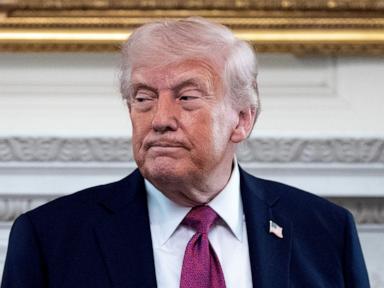
Washington and Tehran almost sat in the same room. It didn't happen. Most people think these diplomatic collapses are about big, soaring ideals or ancient grudges. Sometimes they are. But more often, they fail because of bad timing, internal ego trips, and a fundamental lack of trust that no amount of fancy catering can fix.
The recent breakdown in direct communication between the United States and Iran wasn't a freak accident. It was the result of a specific set of pressures that made sitting down at the table feel like a political death sentence for everyone involved. If you want to understand why these two powers can't even look each other in the eye, you have to look past the official press releases. You have to look at the domestic fires burning in both capitals.
The Domestic Trap in Tehran
Hardliners in Iran don't want a deal. It's that simple. For the conservative factions within the Iranian government, any image of an Iranian official shaking hands with an American is a gift to their rivals. They view direct talks not as diplomacy, but as a sign of weakness.
The Iranian leadership is currently balancing a massive internal crisis. They're dealing with a struggling economy and a population that is increasingly frustrated with the status quo. In that environment, the Supreme Leader and the Revolutionary Guard feel they need to project strength. If they go to the table now, they look like they've been forced there by sanctions. They'd rather let the country suffer a bit more than admit that Western pressure is working.
There’s also the issue of the "Pre-Condition Loop." Iran often demands that the U.S. lift specific sanctions before a meeting even starts. The U.S. views the meeting as the place where you discuss lifting sanctions. It’s a classic chicken-and-egg problem that kills the vibe before the first plane even leaves the tarmac.
Washington and the Election Year Fever
On the other side of the Atlantic, the Biden administration faces its own set of handcuffs. We're in a political climate where any perceived "softness" on Iran is exploited by the opposition. It's a high-risk, low-reward play for the White House.
If they sit down with Iran and don't get an immediate, massive win—like a full halt to uranium enrichment or the release of every single prisoner—the headlines the next day will be brutal. The administration knows this. They aren't going to risk a diplomatic photo-op that looks like a capitulation during a heated election cycle.
Congressional pressure is real. Even within the Democratic party, there's a lot of skepticism about whether Iran is a reliable partner. The memory of the 2015 JCPOA and its subsequent collapse looms large. Nobody wants to be the person who got played twice.
The Shadow of Regional Proxies
You can't talk about Iran and the U.S. without talking about the rest of the Middle East. It’s impossible. While diplomats might want to talk about nuclear centrifuges, the reality on the ground is dictated by missiles and drones in Yemen, Iraq, and Syria.
Every time a regional proxy group launches an attack, the political space for talks shrinks. If a pro-Iran militia hits a U.S. base on a Tuesday, the U.S. President cannot be seen smiling at an Iranian diplomat on a Wednesday. The optics are impossible. Iran uses these groups as "leverage," but in reality, they often act as spoilers. They create a "noise" that drowns out the quiet work of diplomacy.
Israel also plays a massive role here. Their intelligence services and political leaders are constantly sounding the alarm. They don't just watch from the sidelines; they actively lobby against direct engagement that doesn't include their specific security concerns. This adds another layer of complexity that makes a simple one-on-one talk feel like a 50-person committee meeting.
Technical Barriers and Missing Channels
Sometimes it’s not even about the big stuff. It’s about the plumbing. Because the U.S. and Iran haven't had formal diplomatic relations since 1980, they don't have the "hotlines" that other rivals have. They rely on intermediaries like Qatar, Oman, or Switzerland.
Think about how hard it is to resolve a conflict with a friend through a third person. Things get lost in translation. Tone is hard to convey. By the time a message gets from the State Department to the Swiss embassy, then to Tehran, and finally to the relevant decision-makers, the moment has often passed.
The lack of a direct line means that every small misunderstanding can escalate into a major crisis. Without face-to-face contact, you can't read body language. You can't have those "off the record" chats in the hallway that actually get deals done. You’re stuck in a loop of formal, cold, and often performative public statements.
The Nuclear Clock Is Ticking
The most dangerous part of this failure is the math. While the talks stall, the centrifuges keep spinning. Iran's breakout time—the time it would take to produce enough material for a weapon—is now measured in days or weeks, not years.
This creates a sense of "now or never" that actually makes diplomacy harder, not easier. It puts the U.S. in a position where they feel they have to make demands that Iran finds insulting, and it puts Iran in a position where they feel their nuclear program is their only real shield.
The technical experts know how to fix the JCPOA. They have the blueprints. But the politicians can't find a way to let them do their jobs. It’s a tragic gap between what is technically possible and what is politically survivable.
Misreading the Room
Both sides are guilty of thinking they have more time than they actually do. Iran thinks the U.S. is a declining power that will eventually just give up and leave the region. The U.S. thinks that if they just turn the "maximum pressure" dial a little higher, the Iranian government will collapse or crawl to the table.
Both are wrong.
Iran’s government has proven to be incredibly resilient against sanctions. They’ve built a "resistance economy" that, while painful for the people, keeps the elites in power. Meanwhile, the U.S. isn't going anywhere. Even if they pivot to Asia, they’ll always have a hand in the Middle East because of oil, allies, and counter-terrorism.
This mutual miscalculation keeps both parties from making the first move. They're waiting for the other side to blink. And while they wait, the risk of an accidental war increases every single day.
Moving Past the Stalemate
If you're looking for a silver lining, there isn't a big one. But there are small steps that actually work. Direct talks failed because they were treated as a "grand bargain" attempt. Small, quiet wins on prisoner swaps or localized de-escalation are the only things moving the needle right now.
Forget the big summits for a while. They aren't coming. The path forward isn't a dramatic handshake on a world stage. It's a series of boring, technical meetings in neutral cities that no one hears about until weeks later.
Pay attention to the intermediaries. When the Qatari or Omani foreign ministers start flying back and forth frequently, that’s when the real work is happening. The big, public face-to-face talks are the end of the process, not the beginning. Right now, we aren't even at the beginning of the end. We're still trying to figure out how to talk about talking.
If you're following this, stop looking for a "peace deal" headline. Look for "technical understandings" or "de-escalation frameworks." Those are the boring terms that actually prevent a war.


