Two U.S. Navy EA-18G Growler electronic warfare jets collided midair on May 17, 2026, during the Gunfighter Skies Air Show at Mountain Home Air Force Base in Idaho. The standard narrative focuses on a miraculous survival. All four crew members successfully ejected and are in stable condition, turning what could have been a historic tragedy into a dramatic evening news segment. But celebrating a successful ejection misses the structural crisis hiding in plain sight. This high-stakes incident highlights a deeper problem within military aviation, where the demand for public relations spectacle constantly clashes with operational risk management.
While the public marvels at the fireball and the billowing black smoke, safety investigators are focusing on the brutal reality of low-altitude formation flight. This was not a mechanical failure. It was a failure of the microscopic margins that govern close-range aerial demonstrations. When multi-million-dollar frontline combat aircraft are used as promotional tools, the line between an impressive display and an unmitigated disaster shrinks to a fraction of a second.
The Mechanics of a Low Altitude Disaster
The two aircraft involved were assigned to Electronic Attack Squadron (VAQ) 129, based out of Whidbey Island, Washington. These are not nimble, lightweight stunt planes. The EA-18G Growler is a heavy, complex variant of the F/A-18 Super Hornet, packed with sophisticated electronic warfare systems and weighing upwards of 33,000 pounds empty.
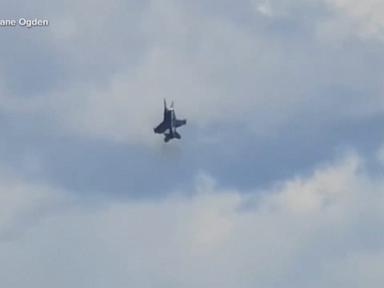
During the second day of the Idaho air show, these two massive jets were performing close-formation maneuvers. Witness videos show the aircraft becoming entangled roughly two miles from the base, sparking and then plunging toward the ground before exploding on impact.
Experienced military aviators know that the environment of an air show introduces unique hazards that do not exist during standard training or combat missions. The planes were flying at low altitude and relatively slow speeds when the collision happened.
In tactical combat scenarios, altitude is life. If an aircraft experiences an issue or a pilot loses situational awareness at 15,000 feet, they have time to diagnose, correct, or recover. At an air show, maneuvers are performed just hundreds of feet above the deck to maximize the visual impact for the crowd below.
When two heavy jets fly in tight formation at low altitudes, they generate massive aerodynamic forces. The wingtip vortices and wake turbulence from a lead aircraft can easily upset the flight path of a trailing jet. If a wingman drifts just a few feet out of position, the localized pressure fields can draw the aircraft together faster than human reflexes can counteract.
Once the metal touched, the aircraft became uncontrollable. The crew had only moments to act.
The Microscopic Margin of Ejection
The survival of all four crew members is an extraordinary testament to modern escape systems, but it required an immense amount of luck. The EA-18G uses the Martin-Baker MK14 zero-zero ejection seat, designed to safely extract a crew member from zero altitude and zero airspeed. However, functioning within design parameters on paper is entirely different from executing in the chaotic middle of a midair collision.
When a jet enters a low-altitude spiral or roll after a collision, the vector of the ejection seat changes drastically. If an aircraft is banked sixty degrees or upside down when the ejection handle is pulled, the seat fires toward the horizon or directly into the ground rather than up into the sky.
The air crew in Idaho managed to clear the fracturing airframes just before the final plunge. Aviation experts note that the margin for error was almost nonexistent. A delay of even a single second by any of the crew members would have resulted in fatalities.
The successful deployment of four parachutes saved lives, but it does not erase the loss of two frontline tactical assets. Each EA-18G Growler carries a price tag of approximately $67 million. Beyond the $134 million taxpayers lost in a matter of seconds, these specialized electronic attack assets are finite. The Navy cannot simply order replacements off a commercial assembly line to fill the sudden void in the fleet.
The Illusion of Risk Elimination
Air shows serve a dual purpose for the military. They are powerful recruiting mechanisms and high-visibility public relations exercises designed to showcase American air power. Yet, the pressure to deliver a thrilling performance frequently pushes the envelope of safety.
The military utilizes strict regulations, detailed pre-flight briefings, and extensive rehearsal schedules to mitigate risks. Every maneuver is choreographed down to the second and the foot.
This meticulous preparation creates an illusion of complete control. The reality is that no amount of planning can eliminate the inherent volatility of flying heavy combat jets in close proximity at low altitudes.
Consider a hypothetical example where two civilian vehicles travel down a highway at seventy miles per hour, separated by only three feet. No matter how professional the drivers are, any sudden gust of wind, minor mechanical twitch, or momentary lapse in focus will result in a collision. Now, scale that speed up to three hundred miles per hour and move it into three dimensions. That is the environment of a military flight demonstration.
The Idaho crash is not an isolated anomaly. It is part of a persistent historical pattern. In 2018, the same Gunfighter Skies event suffered a fatal accident involving a hang glider. Major military demonstration teams like the Blue Angels and the Thunderbirds—who were scheduled to headline the Mountain Home event—have lost numerous aircraft and pilots over the decades during routine performances and practices.
When things go wrong at an air show, they go wrong instantly. The immediate lockdown of Mountain Home Air Force Base and the cancellation of the remaining schedule were necessary crisis management steps, but the broader question remains unanswered. Are these public demonstrations worth the loss of strategic hardware and the immense risk to personnel?
Redefining the Air Show Paradigm
The investigation into the Idaho collision will likely take months to conclude. A board of officers will analyze flight data recorders, radar tracks, and bystander video to determine whether pilot error, aerodynamic interference, or a mechanical anomaly caused the initial contact. But the true underlying cause is already clear. The institutional appetite for high-risk public entertainment remains unchecked.
To prevent these costly and dangerous incidents, the military must reconsider how it demonstrates its capabilities to the civilian public.
One potential solution is a strict increase in the minimum altitude floors for all non-dedicated demonstration teams. While the Blue Angels and Thunderbirds undergo specialized, year-round training solely for air shows, operational fleet squadrons like VAQ-129 are combat units first. Forcing operational crews to perform tight, low-altitude formation work for a crowd introduces unnecessary variables into their flight profiles.
Raising the altitude limits would reduce the visual spectacle for the audience, but it would dramatically increase the recovery window for pilots when a maneuver goes sideways. It would ensure that if a collision does occur, the crew has the time and space required to eject without relying entirely on a stroke of luck.
The United States military faces a shrinking fleet and a tense global security environment. In this context, risking highly specialized electronic warfare platforms and irreplaceable, combat-trained aviators for weekend entertainment is increasingly difficult to justify.
The four airmen from Whidbey Island walked away from the fireball in Idaho, but the system that put them there remains unchanged. Until the Pentagon prioritizes asset preservation over public relations spectacles, the next midair collision is not a matter of if, but when.