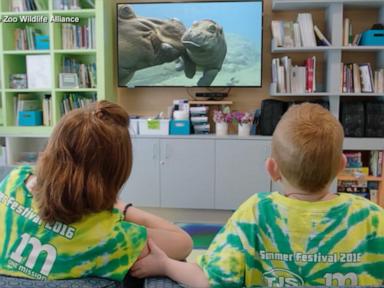
The deployment of 24/7 live-streamed zoological content into pediatric hospital rooms is not merely an act of corporate philanthropy; it is a strategic intervention in the patient’s environment designed to mitigate the physiological and psychological costs of hospitalization. Clinical isolation and the sterile sensory environment of a hospital create a "sensory vacuum" that often accelerates patient stress, elevates cortisol levels, and contributes to ICU delirium. By introducing a continuous feed of naturalistic stimuli, healthcare providers are implementing a form of passive digital therapy that leverages evolutionary biology to improve patient outcomes.
The Mechanics of Environmental Restoration
The efficacy of nature-based video content rests on the Biophilia Hypothesis, which suggests that human beings possess an innate tendency to seek connections with nature and other forms of life. In a high-stress medical setting, the "Attention Restoration Theory" (ART) provides a framework for understanding why a zoo stream outperforms standard broadcast television.
- Directed Attention Fatigue: Medical patients must constantly process complex information—diagnoses, schedules, and pain management—which exhausts their cognitive resources.
- Soft Fascination: Unlike the high-cut, narrative-driven intensity of typical entertainment, a live stream of an animal enclosure provides "soft fascination." This type of stimuli captures attention without requiring conscious effort, allowing the patient's cognitive functions to recover.
The structural difference between a curated documentary and a 24/7 live feed is critical. The live feed offers an unscripted, non-repeating loop that mimics the unpredictability of the natural world, preventing the "habituation effect" where a patient becomes bored or desensitized to static imagery.
Three Pillars of Digital Nature Intervention
To evaluate the impact of these programs, one must look past the sentimentality of "seeing animals" and analyze the three specific vectors of impact:
1. Physiological Down-Regulation
The primary objective is the reduction of the Sympathetic Nervous System (SNS) activation. Continuous exposure to naturalistic movement and organic color palettes (greens, blues, and earth tones) has been shown to lower heart rate variability and blood pressure. This creates a biological buffer, making the patient more resilient to the spikes in stress caused by medical procedures or alarms.
2. Cognitive Distraction and Pain Modulation
The brain has a limited bandwidth for processing signals. By occupying a significant portion of the visual and auditory cortex with "low-stakes" biological data (e.g., a hippopotamus swimming or a panda eating), the gate control theory of pain suggests that the brain’s perception of physical discomfort is dampened. The digital stream acts as a non-pharmacological analgesic.
3. Temporal Anchoring
Long-term hospitalization often results in the loss of circadian rhythm and a sense of time. A 24/7 stream provides a "temporal anchor." When a child sees the zoo lights dim at night or the morning feeding rituals begin, it synchronizes their internal clock with the outside world, reducing the risk of hospital-induced disorientation.
Technical Infrastructure and Scaling Constraints
Implementing a high-fidelity, 24/7 stream across a hospital network involves a specific set of technical bottlenecks that determine the quality of the therapeutic intervention.
The "Quality of Experience" (QoE) is the bottleneck for therapeutic value. If the stream buffers, pixelates, or loses sync, the sudden interruption acts as a jarring stimulus that can trigger a stress response, negating the restorative benefits. Hospitals must solve for:
- Latency vs. Stability: While low latency is vital for gaming, stability is the priority here. A deep buffer is preferred to ensure that network fluctuations do not result in a black screen.
- Bandwidth Partitioning: Medical facilities operate on highly congested networks. The zoo stream must be siloed from critical medical data (telemetry, EHR access) to ensure that patient monitoring is never compromised by a high-definition video feed.
- Edge Computing Delivery: To minimize the load on the external internet gateway, many leading institutions utilize local caching servers that store chunks of the stream, ensuring a "fail-safe" loop is available if the primary connection drops.
The Economic Function of Passive Therapy
From a hospital administration perspective, the "Zoo Stream" model represents an optimization of the cost-per-patient-outcome. Traditional interventions—such as pet therapy (bringing physical animals into the ward)—carry significant overhead:
- Infection Control: Physical animals introduce allergens and pathogens, requiring rigorous cleaning protocols.
- Labor Intensity: Pet therapy requires handlers and scheduled appointments, limiting the "dose" a patient receives.
- Liability: The risk of a bite or scratch creates a high insurance barrier.
A digital stream removes these variables. It provides a "limitless dose" of nature with zero infection risk and negligible marginal cost once the hardware is installed. The Return on Investment (ROI) is realized through shortened recovery times and reduced sedative requirements, both of which are high-cost drivers in pediatric care.
Limitations and Critical Failure Points
The strategy is not a universal solution. Several variables can degrade the effectiveness of the digital nature intervention:
- The Anthropomorphic Trap: If the stream focuses too heavily on "cute" interactions rather than natural behaviors, it shifts from restorative soft fascination to active entertainment. This increases cognitive load rather than decreasing it.
- Audio Pollution: Many zoo streams are visual-only. Without the accompanying bio-acoustic soundscape—water flowing, bird calls, wind—the immersion is broken. Conversely, poor-quality audio with high-frequency noise can become an irritant.
- Visual Fatigue: 24/7 exposure is not the goal. The intervention must be modular, allowing patients to opt-out or change environments to prevent "digital claustrophobia."
Strategic Integration of Bio-Digital Content
Future iterations of this program should move beyond simple passive observation. The next logical step for pediatric centers is the integration of Interactive Ecological Observation.
This involves providing patients with the ability to control camera angles or access "Data Overlays" that explain the biological behaviors they are witnessing. This shifts the patient from a passive recipient of care into an active observer, fostering a sense of agency that is frequently lost in the hospital system. By gamifying the observation—tasking a child with "tracking" a specific animal’s movements throughout the day—hospitals can stimulate higher-order cognitive functions that are essential for neurodevelopmental health during long-term stays.
The most effective deployment strategy requires a tiered approach:
- Phase I: Ambient Integration: Continuous, low-volume background stream in common areas to lower baseline facility stress.
- Phase II: Targeted Bedside Delivery: High-definition, personalized feeds in patient rooms with bio-acoustic soundscapes.
- Phase III: Collaborative Data Analysis: Linking the stream to educational modules where patients can learn about the species they are watching, turning the hospital room into a temporary laboratory.
Hospitals should move toward a "Prescription Content" model. Rather than providing a general channel, a physician or child-life specialist might prescribe "60 minutes of low-movement aquatic footage" for a patient with high anxiety, or "active primate social interactions" for a patient needing cognitive stimulation. This precision-targeted approach transforms the zoo stream from a "nice-to-have" amenity into a documented component of the clinical pathway.