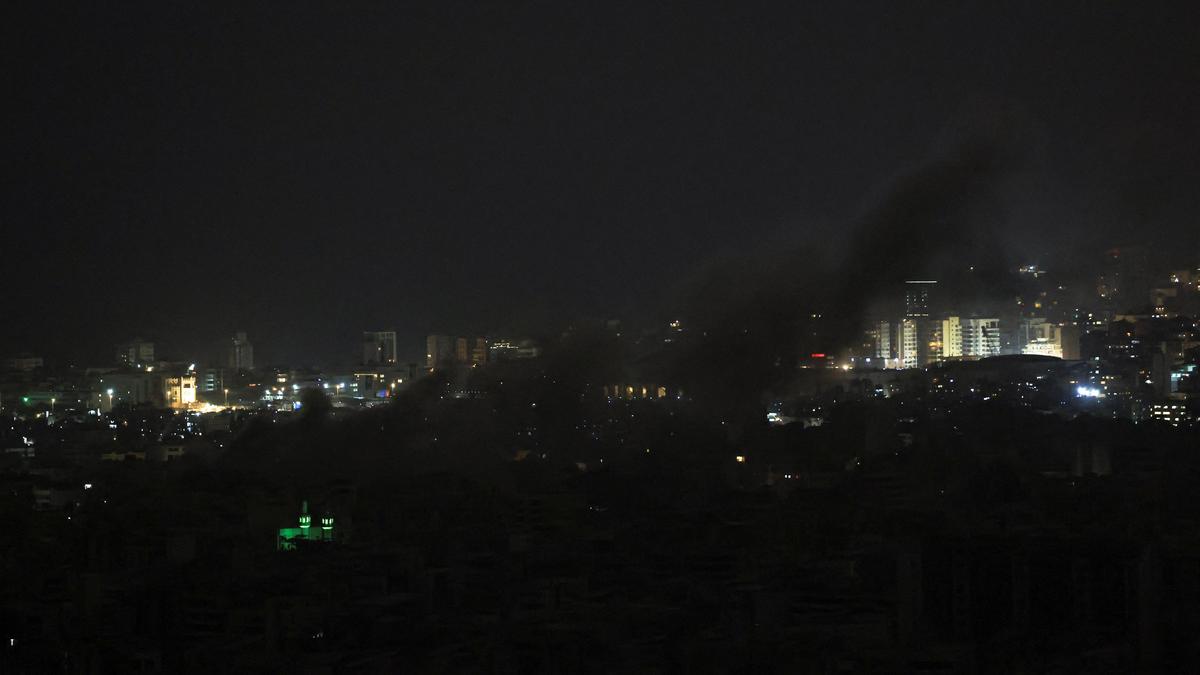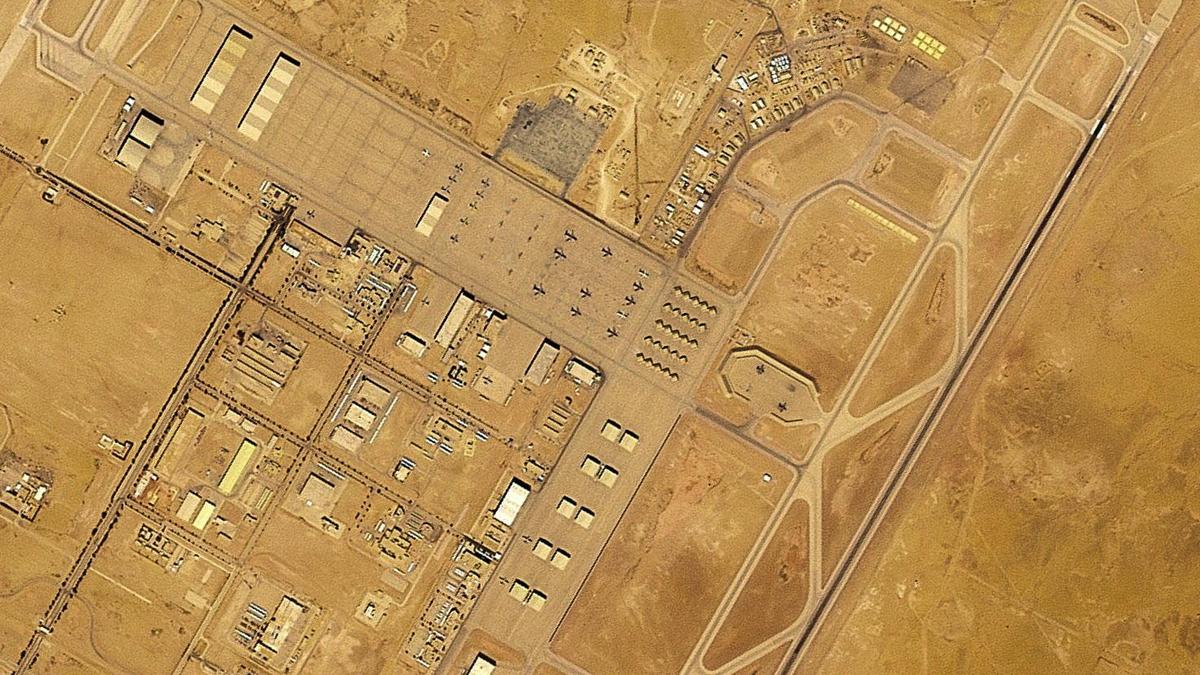
The headlines are screaming about escalation. They are obsessed with the "imminent threat" of a regional war. They look at the Iranian Revolutionary Guard Corps (IRGC) firing missiles at a base in Saudi Arabia housing U.S. forces and see a precursor to World War III. They are wrong. They are reading the script of 1914 in an era of 2026 kinetic signaling.
Most analysts treat missile strikes as a failure of diplomacy. In reality, these strikes are the diplomacy. When the IRGC pushes the button, they aren't trying to start a war they know they would lose in seventy-two hours. They are sending a high-resolution, multi-million dollar memo. If you want to understand the Middle East, you have to stop looking at the explosions and start looking at the coordinates.
The Myth of the Unhinged Aggressor
The "lazy consensus" in Western media portrays Tehran as a collection of religious zealots who might snap at any moment. This narrative is a comfort blanket for people who don't want to do the math. The IRGC is many things—repressive, brutal, and ideologically rigid—but they are also hyper-rational actors.
When they target a specific hangar or a GPS-mapped patch of tarmac at a Saudi airbase, they aren't "lashing out." They are demonstrating a circular error probable (CEP) that should make every defense contractor in Arlington sweat.
The standard view: "Iran is trying to kill Americans."
The reality: "Iran is proving they could kill Americans but chose not to."
In the recent strike, the optics of "zero casualties" weren't a lucky break for the U.S. or a sign of Iranian incompetence. It was the entire point. If the IRGC wanted a pile of bodies, they would have used cluster munitions or timed the strike for the mess hall at noon. Instead, they hit infrastructure. They hit the things that cost money to fix but don't require a flag-draped coffin.
Kinetic Messaging 101
Think of a missile strike as a trade negotiation with a very high entry fee.
- The Medium: A Fateh-110 short-range ballistic missile.
- The Message: "Your Patriot batteries are overmatched, and your presence here is a liability to your host."
- The Audience: Not just Washington, but Riyadh.
By hitting a base on Saudi soil, Iran is telling the Saudis that the U.S. security umbrella is more like a lace parasol. It looks nice in the sun, but it won't keep you dry in a storm. This is a psychological operation disguised as a military engagement.
Why Our Defense Systems are the Wrong Metrics
We spend billions on the "Iron Dome" mentality. We track interception rates like they are batting averages. But the success of a missile defense system isn't measured by whether it hits the incoming projectile. It’s measured by whether it prevents the political shift the projectile was meant to trigger.
We are losing that battle.
Even if a Patriot PAC-3 interceptor blows an Iranian drone out of the sky, Iran wins. Why? Because the interceptor costs $4 million and the drone costs $20,000. I’ve watched defense budgets get cannibalized by this asymmetry. We are using Ferraris to swat flies. Eventually, you run out of Ferraris.
The Cost-Per-Kill Trap
- Iranian Cost: $15,000 to $50,000 per loitering munition.
- U.S. Cost: $2,000,000+ per interceptor missile + operational wear on multi-billion dollar Aegis systems.
When the IRGC targets U.S. forces, they are performing a stress test on the U.S. Treasury. They are betting that the American taxpayer will get tired of paying for the defense of Saudi oil fields long before Iran runs out of cheap, fiberglass wings and lawnmower engines.
Stop Asking if War is Coming
The most common question on cable news is, "Are we headed for a full-scale war?"
It’s the wrong question. It assumes war is a binary state—on or off. In 2026, war is a spectrum of "gray zone" activities. We are already in the war. It’s just not the one you see in movies. There will be no massive amphibious landings. There will be no desert tank battles.
Instead, there will be:
- Deniable attrition: Bases hit by "militias" that everyone knows are proxies.
- Digital decapitation: Cyber-attacks on the desalination plants that keep Riyadh hydrated.
- Logistical choking: Threatening the Strait of Hormuz until insurance premiums for oil tankers make the cargo worthless.
The "consensus" view fails because it waits for a declaration of war. Iran doesn’t declare war; they manufacture a series of "unfortunate events" until their opponent decides the cost of staying is higher than the pride of leaving.
The Saudi Dilemma: A Hostage in Their Own House
The competitor article focuses on the "threat to U.S. forces." That’s a Western-centric ego trip. The real target is the Saudi-U.S. relationship.
Imagine a scenario where every time your neighbor gets into a fight, someone throws a brick through your window because your neighbor is standing in your living room. Eventually, you’re going to ask your neighbor to move out.
The IRGC is turning U.S. military bases into "lightning rods of instability." They are forcing the Saudi leadership to choose between their security partner (the U.S.) and their physical safety (peace with Iran). By targeting these bases, Iran is effectively saying to the Gulf States: "The Americans are the reason you are being hit. If they leave, the missiles stop."
It’s a brutal, effective protection racket. And it’s working. We’ve seen more back-channel diplomacy between Riyadh and Tehran in the last twenty-four months than in the previous decade. That didn't happen because they found common ground; it happened because the IRGC proved they could bypass the world's most expensive defense systems at will.
Dismantling the "Stability" Narrative
Washington loves the word "stability." We claim our presence in the Middle East is a "stabilizing force."
If you are an IRGC commander, that’s hilarious. From their perspective, "stability" is just a code word for "U.S. hegemony." They see a map where they are surrounded by U.S. bases in Iraq, Kuwait, Bahrain, Qatar, the UAE, and Oman.
To them, firing a missile at a base in Saudi Arabia isn't an act of aggression; it’s an act of "defensive perimeter expansion." They are trying to create a "no-go zone" for Western influence.
The Nuance of the "Proxy" Label
We call groups like Kata'ib Hezbollah or the Houthis "proxies." It’s a lazy term that implies they are mindless remote-controlled robots.
They aren't. They are local actors with their own agendas who happen to share a benefactor. When a missile is launched from Iraq toward a base in Saudi Arabia, it’s often a localized response to a local grievance, funded by Iranian hardware. By lumping every incident into a "Tehran-directed" bucket, we miss the granular politics that actually drive the violence. We treat a complex ecosystem like a light switch.
The Hard Truth About De-escalation
Everyone wants "de-escalation." But de-escalation is a luxury of the powerful. For a smaller regional power like Iran, "escalation" is the only way to get a seat at the table.
If they play by the "rules"—meaning they stay quiet and accept sanctions—they slowly choke to death. If they escalate, they get a phone call from the Swiss embassy. They get a seat at a summit. They get "frozen assets" discussed in Geneva.
The IRGC isn't trying to burn the table down. They are trying to prove that if they aren't allowed to eat, nobody is.
What the Analysts Miss About "Precision"
Modern Iranian missiles are now hitting within a 10-meter radius of their targets. Ten years ago, they were lucky to hit the right county. This jump in quality isn't just a technical achievement; it's a strategic shift.
- Old Iran: "We will rain fire on your cities" (Terrorism).
- New Iran: "We will take out the specific generator that powers your drone command center" (Warfighting).
This transition from "terrorist state" to "precision power" is what the status quo ignores. It’s easier to call them "madmen" than to admit they have developed a sophisticated, low-cost doctrine that negates our technological advantages.
The Playbook for Survival
If you are a policy maker or an investor, stop looking for a "peace deal." There isn't one coming. Look for the "Equilibrium of Pain."
The region is settling into a state where both sides know exactly how much damage they can do without triggering a total collapse. The IRGC strike on U.S. forces in Saudi Arabia was a calibration. They were checking the dial.
- Expect more "accidents": If a strike doesn't kill anyone, it’s an invitation to talk.
- Watch the energy markets: Missiles are cheaper than oil. A $50,000 drone can take $100 million of oil off the market in an afternoon.
- Ignore the rhetoric: When the IRGC says they will "destroy the Great Satan," ignore it. That's marketing for the home crowd. When they hit a specific radar array in the middle of the night, pay attention. That’s the real conversation.
The IRGC just sent a very expensive, very loud, and very precise letter. The question isn't whether we can stop the next one. The question is whether we are literate enough to read what it actually says.
Stop looking for the "game-changer." This is the game. It’s been the game for forty years. The only difference now is that the IRGC has better aim.
If you're waiting for a resolution, you're going to be waiting a long time. The goal isn't to win; it's to remain the most expensive problem in the room. In that regard, the IRGC is currently the most successful organization on the planet.
Accept the reality: The missiles aren't the problem. They are the language. And right now, the U.S. and its allies are the only ones in the room who still think we're having a conversation in English.