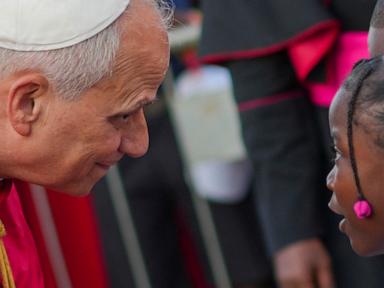
The global Catholic power structure shifted fundamentally not in a gilded Roman chamber, but across the vast, demographic engine of the African continent. When Pope Francis stepped onto African soil, the narrative often painted by Western media suggested a humble leader bringing a message of progress to a traditionalist fringe. This view is fundamentally backward. Francis didn't find his voice in Africa; he collided with a theological wall that forced the Papacy to reckon with its own dwindling influence in the West compared to its explosive growth in the Global South.
The African Church is no longer a mission territory. It is the primary stakeholder of the faith's future. While pews sit empty in Germany and Belgium, African parishes are overflowing. This demographic reality has granted African bishops a level of leverage that hasn't been seen in centuries. They aren't just listening to Rome anymore. They are telling Rome what the Church must be if it wants to survive.
The Myth of the Passive African Church
For decades, the Vatican treated African Catholicism as a grateful recipient of European intellectualism. That era ended during the recent Synods in Rome. The most striking example of this friction appeared during the debates over Fiducia Supplicans, the document allowing for the blessing of same-sex couples. While the Vatican likely expected a quiet, grumbling acceptance, they instead faced a unified, public, and unprecedented rejection from the SECAM (Symposium of Episcopal Conferences of Africa and Madagascar).
This wasn't a case of "backward" thinking. It was a sophisticated assertion of cultural and theological sovereignty. African leaders, led by figures like Cardinal Fridolin Ambongo, argued that the Vatican was effectively engaging in "ideological colonization." They pointed out a glaring hypocrisy: a Church that preaches "synodality" and "listening" cannot simply hand down Western cultural shifts to a continent where those shifts are seen as incompatible with both the Gospel and local social fabric.
The Demographic Hand
Numbers dictate reality. By 2050, it is estimated that three-quarters of the world’s Catholics will live outside the West. This shift is the most significant change in the Church's makeup since the fall of the Roman Empire.
- Growth rates: In Africa, the Catholic population has increased by over 200% in the last thirty years.
- Vocations: African seminaries are full, while European ones are being converted into luxury apartments or museums.
- Financials: While the West still provides the bulk of the Vatican's funding, Africa provides the human capital—the priests and nuns who now staff the very European parishes that once sent missionaries to them.
The "Pope Leo" mentioned in earlier, weaker analyses of this trend is likely a confused reference to the historical Pope Leo XIII or perhaps a metaphorical stand-in for the "Lion" of the papacy. But the actual "lion" in this story is the African clergy. They have realized that the Vatican needs them more than they need the Vatican. If the African Church decided to break away, the Catholic Church would effectively cease to be a global entity, shrinking into a boutique European cultural club.
The Colonial Shadow and the New Resistance
When Pope Francis visits places like the Democratic Republic of Congo or South Sudan, he speaks against economic exploitation. This resonates. However, the tension arises when the Vatican tries to export Western "social progress" alongside its "social justice."
The African perspective is grounded in a communal identity. In the West, faith has become an individualist project, a matter of personal "spirituality." In Africa, the Church is the center of the village, the provider of healthcare, the arbiter of peace, and the backbone of the community. When Rome suggests changes to moral doctrine, it isn't just a theological debate for an African bishop. It is a threat to the social cohesion of his flock.
Critics in the West often dismiss this resistance as a lack of education or a lingering "traditionalism" that will eventually fade. This is an arrogant miscalculation. The African bishops are often more highly educated in classical theology than their European counterparts. Their resistance is a calculated defense of a faith that is actually working. They look at the "progressive" churches of the North and see nothing but decline. Naturally, they are asking why they should follow a roadmap that leads to a cliff.
Power Diplomacy in the Vatican Hallways
The influence of Africa is now felt in every major Vatican department. It is no longer possible to elect a Pope without a significant "Africa-bloc" strategy. The College of Cardinals is being reshaped. Francis has appointed more cardinals from the Global South than any of his predecessors, likely intending to create a more "diverse" Church. The irony is that by doing so, he has empowered the very traditionalist forces that now provide the strongest check on his reform agenda.
This creates a permanent tension. The Papacy is trapped between a secularizing West that demands "modernization" and a booming Africa that demands "orthodoxy."
The Cost of Ignoring the South
If Rome pushes too hard on Western-centric reforms, they risk a schism that wouldn't look like the Protestant Reformation. It wouldn't be a fight over indulgences; it would be a total divorce based on the definition of what it means to be human and what it means to be a family. The African Church has shown it is willing to say "no" to the Pope to say "yes" to its people.
The real story isn't that the world finally heard the Pope's voice in Africa. It is that the Pope finally heard the roar of a continent that has its own ideas about how to save its soul. The Vatican is no longer the undisputed center of the Catholic universe. The center has moved south, and it isn't coming back.
The next Conclave will be the true test of this power shift. Any candidate who doesn't have a plan that satisfies the African continent will find themselves unable to reach the required two-thirds majority. The era of the Euro-centric Papacy is dead. The African Church isn't just finding its voice; it is now the one holding the microphone.
Govern yourself accordingly. The institution is changing not through papal decree, but through the sheer force of people in the pews who refuse to be ignored by a bureaucracy that forgot where its strength actually lies.