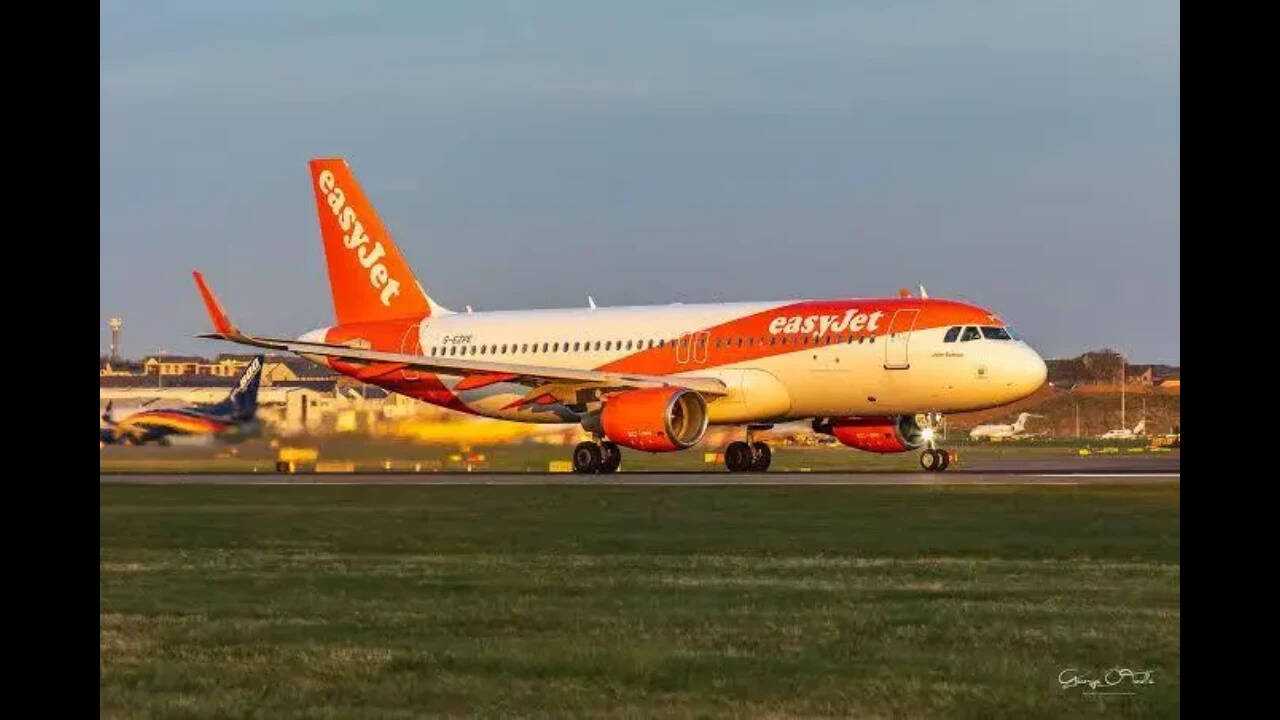
Commercial aviation operates on the razor's edge of narrow performance margins where a temperature increase of a few degrees or a minor change in wind velocity can transform a profitable flight into a logistical liability. The recent incident involving an EasyJet flight from Lanzarote to Liverpool—where passengers were requested to deboard due to an "overweight" aircraft—is not a failure of booking systems, but a predictable collision between atmospheric physics and fixed infrastructure. To understand why an aircraft becomes too heavy to fly despite being under its structural maximum takeoff weight (MTOW), one must analyze the three variables of the performance equation: air density, runway length, and obstacle clearance.
The Triad of Performance Limitation
An aircraft’s ability to depart safely is dictated by more than the physical integrity of its wings. It is governed by a shifting ceiling known as the Regulated Takeoff Weight (RTOW). This figure is frequently lower than the aircraft's structural limit and is determined by the most restrictive of three specific bottlenecks. If you enjoyed this article, you might want to check out: this related article.
Air Density and Lift Generation
Aviation lift is a direct function of air density. As temperatures rise, air molecules spread apart, reducing the mass of air flowing over the wing and into the engines. In the Lanzarote case, high ambient temperatures decreased the density altitude, forcing the engines to work harder to produce less thrust while requiring the wings to achieve a higher true airspeed to generate the necessary lift for rotation.
The Runway Length Constraint
Lanzarote Airport (ACE) features a runway (03/21) that is relatively short for a fully loaded narrow-body aircraft at approximately 2,400 meters. When the air is thin and hot, the aircraft requires a longer ground roll to reach $V_1$ (the decision speed after which a takeoff must continue). If the required roll exceeds the available "Accelerate-Stop Distance," the flight is legally grounded. The aircraft could physically fly, but it could not safely stop if an engine failed a second before liftoff. For another angle on this development, refer to the recent coverage from Travel + Leisure.
The Net Flight Path and Obstacles
Post-takeoff safety is measured by the "climb gradient." Regulations demand that an aircraft lose one engine at the worst possible moment and still clear all obstacles in its path by a specific vertical margin. Hot weather degrades this gradient. If the aircraft is too heavy, its single-engine climb rate will not meet the legal threshold to clear the volcanic terrain surrounding Lanzarote.
The Weight Shedding Hierarchy
When a flight exceeds its RTOW, the airline must shed mass. This is not a random process but a strictly ordered operational protocol designed to minimize financial and reputational damage.
- Discretionary Fuel: Pilots first reduce any fuel loaded above the legal minimum (trip fuel plus mandatory reserves). However, reducing fuel limits the aircraft's ability to hold in traffic or divert, increasing operational risk.
- Commercial Cargo: Non-passenger freight is the second to go. It is easier to compensate a shipping company than a human being.
- Non-Essential Fluids and Catering: On short-haul flights, potable water and food trolleys may be removed, though the weight savings are often negligible (less than 200kg).
- Volunteer Offloading: When the previous steps fail to bring the aircraft within the RTOW, passengers must be removed.
The decision to offload 20 passengers in the Lanzarote incident suggests a weight discrepancy of approximately 1,600kg to 2,000kg (assuming a standard passenger mass of 84kg plus luggage). This is a significant margin, likely caused by a sudden drop in headwind or a "bump" in temperature that occurred after the flight was fueled and boarded.
The Economic Cost Function of Thermal Instability
For a Low-Cost Carrier (LCC) like EasyJet, the cost of offloading passengers is calculated through a multi-factor equation. The immediate payout offered—reportedly €500 per passenger—is only the baseline.
$$Total Cost = (I + A + R) \times P$$
Where:
- $I$ is the immediate cash compensation (mandated by EU261/UK261 regulations).
- $A$ is the logistical cost of re-accommodation (hotels, meals, and re-booking).
- $R$ is the long-term reputational decay and loss of "Customer Lifetime Value."
- $P$ is the number of passengers removed.
In this instance, paying 20 passengers €500 each creates an immediate €10,000 liability. However, the alternative—refueling with less gas and making a technical stop—costs significantly more in landing fees, fuel burn for an extra takeoff, and crew duty hour violations. Removing passengers is the most "operationally clean" way to solve a weight-and-balance crisis, despite its optics.
Predictive Limitations in Flight Planning
A common critique of such incidents is the question of why the airline didn't predict the weight issue during check-in. The disconnect lies in the timing of data.
Flight Dispatchers use forecasted weather (TAFs) to set initial weight limits. However, the final "Load Sheet" is not locked until the cabin doors close. Between the time of dispatch and the time of engine start, the "Current Weather" (METAR) may change. A shift from a 10-knot headwind to a 2-knot tailwind can instantly reduce the RTOW by several tons.
Furthermore, Lanzarote’s geography creates a "venturi effect" where wind speeds can fluctuate rapidly. The airline is caught between the desire to sell every seat and the physical reality that the environment may revoke that seat's viability at the last minute.
Structural Bottlenecks and Infrastructure Inelasticity
The Lanzarote incident highlights a growing tension in global travel: the infrastructure is static while the climate is dynamic. Many Mediterranean and Canary Island airports were designed for a climate that is several degrees cooler than current averages.
The Runway Expansion Paradox
Expanding runways to accommodate "hot and high" conditions is often impossible due to geographical constraints (cliffs, oceans, or urban sprawl) or environmental regulations. As average summer temperatures increase, we should expect a higher frequency of "Payload Restrictive" days.
Fleet Limitations
Airlines utilize aircraft like the Airbus A320neo because of their fuel efficiency. While these aircraft have modern engines, they are still subject to the same aerodynamic laws as their predecessors. If an airline were to operate under-capacity to "buffer" against weight issues, the increased seat-mile cost would necessitate higher ticket prices, breaking the LCC business model.
Operational Strategy for High-Temperature Departures
To mitigate these risks without sacrificing the load factor, airlines must pivot toward more aggressive technical management.
- Dynamic Thrust Ratings: Increasing the use of "Full Takeoff Thrust" instead of "Flex Temp" (reduced thrust) starts. This increases engine wear and maintenance costs but maximizes the RTOW.
- Tire Speed Ratings: Upgrading to tires with higher speed ratings allows for higher $V_{liftoff}$ speeds, partially compensating for thin air.
- Real-time Payload Monitoring: Integrating live weather feeds directly into the check-in system to "cap" sales in real-time as temperatures rise throughout the day.
The current model of "sell first, apologize later" is becoming an expensive habit. As thermal volatility increases, the industry must transition from reactive passenger offloading to predictive payload capping. For the passenger, this means the era of the "guaranteed" seat on a hot day at a short-runway airport is ending. The physics of the atmosphere simply will not permit it.
The strategic imperative for carriers in these regions is the deployment of aircraft with "Enhanced Short Runway" kits—modifications to slats and flaps that allow for steeper climbs and lower rotation speeds. Without these capital investments, the "Lanzarote Protocol" of paying passengers to stay behind will shift from a rare anomaly to a standard line item in the operational budget. Carriers must now choose between the high CapEx of specialized fleet configurations or the high OpEx of constant EU261 compensation claims. In a high-interest-rate environment, many will continue to choose the latter, treating the passenger as a liquid asset that can be drained when the air gets too thin.