The envelope is a heavy, creamy weight in a presenter's hand. It represents the singular nature of victory. For nearly a century, the Academy of Motion Picture Arts and Sciences has operated on a brutal, binary logic: one category, one winner. We crave the definitive. We want the camera to zoom in on five faces and then, in a flash of strobe lights and adrenaline, freeze on the one that gets to change their Twitter bio to "Oscar Winner" forever.
But sometimes, the collective mind of several thousand voters does something statistically impossible. It splits perfectly down the middle. For a more detailed analysis into similar topics, we suggest: this related article.
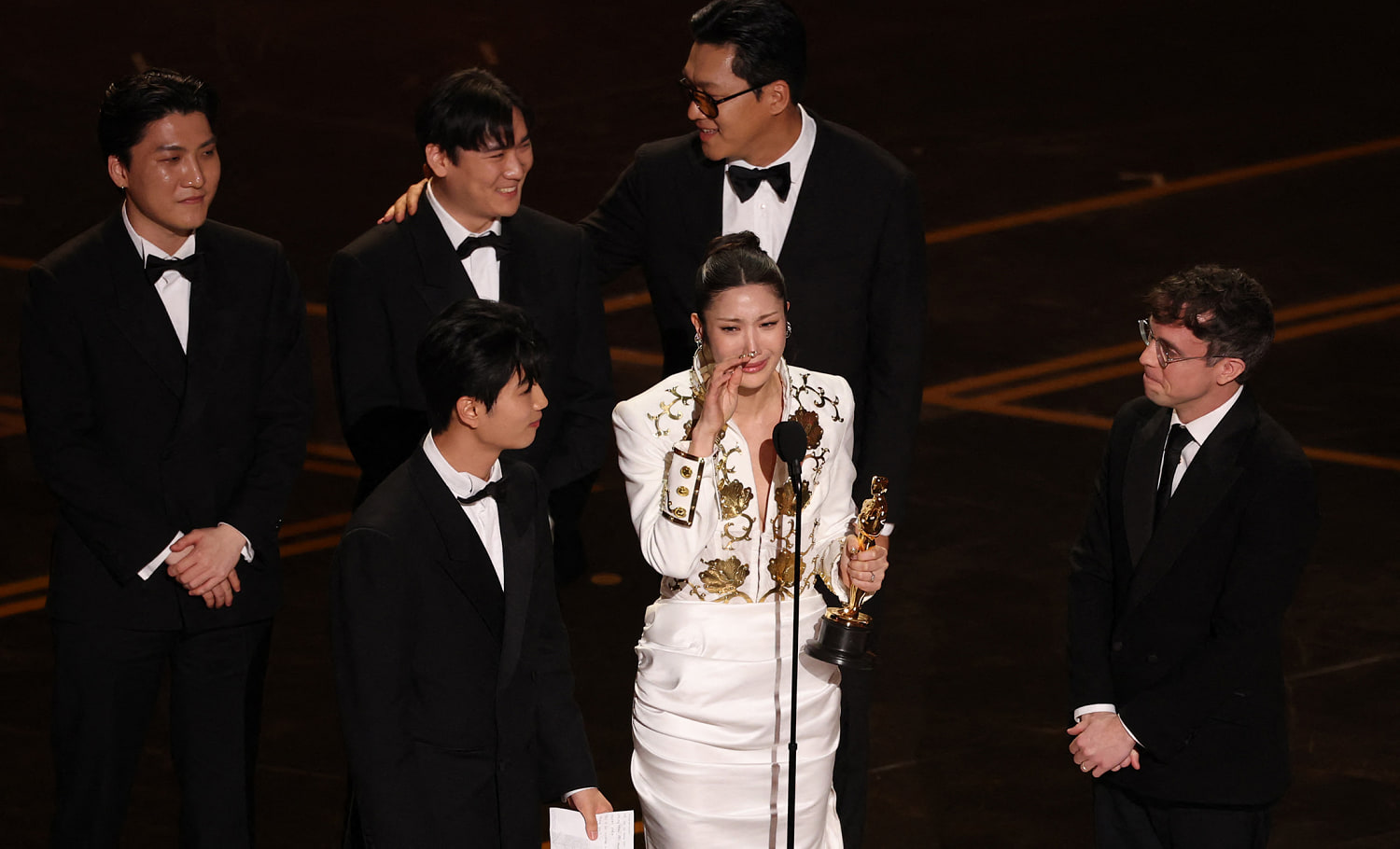
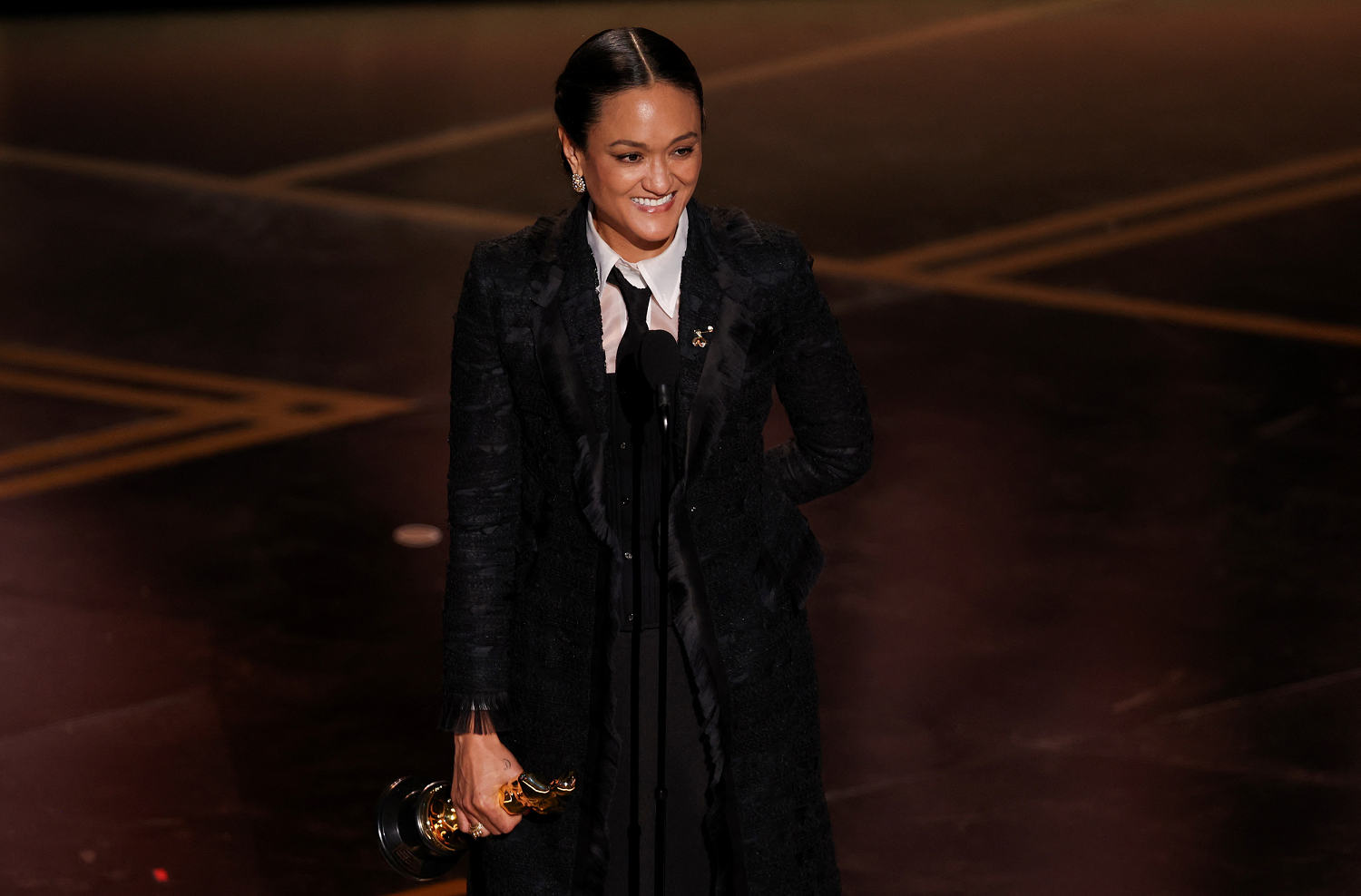
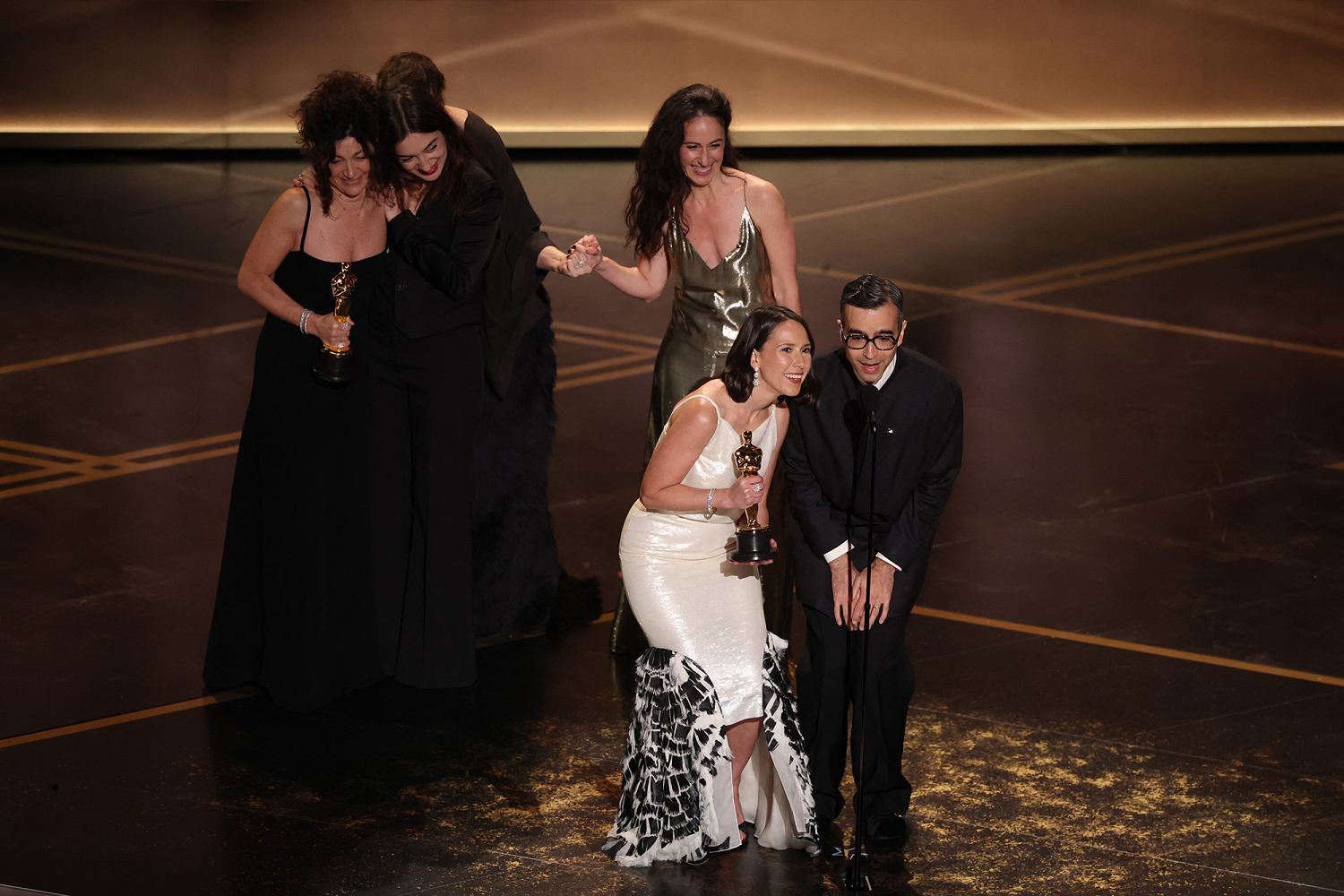
When the announcement came that the Oscar for Best Live Action Short Film was a tie, the room didn't just erupt in applause; it exhaled in a collective gasp of disbelief. Two films. Two sets of creators. One gold statue—or rather, two identical ones waiting in the wings because the Academy prepares for the "mathematical miracle" just in case.
Short films are the heartbeat of the Oscars that most people skip to grab a refill of sparkling water. They are the laboratory of cinema. These aren't the blockbusters with ninety-million-dollar marketing budgets. These are the projects funded by credit cards, favors, and the kind of obsession that keeps a director awake at 3:00 AM wondering if a three-second cut of a closing door carries enough emotional weight. To see this category, of all things, result in a deadlock felt less like a clerical error and more like a cosmic statement on the quality of storytelling today. For further context on this topic, extensive coverage is available on Deadline.
The Mechanics of a Deadlock
To understand how we got here, you have to look at the way the Academy actually counts. They use a system that usually weeds out the possibility of a draw. In the final round of voting, it is a straightforward popular vote. Thousands of professionals from every branch of the industry—actors, cinematographers, editors—cast a single ballot for their favorite.
For two films to land on the exact same number of votes is a feat of probability that makes winning the lottery look like a sure bet. Consider the sheer volume of voters. We aren't talking about a jury of twelve people in a locked room. We are talking about a global body of industry veterans. For the tally to finish in a dead heat, the universe had to align.
This isn't the first time Hollywood’s math failed to produce a lone survivor. The most famous instance remains the 1969 Best Actress race, where Ingrid Bergman announced that both Barbra Streisand and Katharine Hepburn had won. Streisand was the newcomer in Funny Girl; Hepburn was the titan in The Lion in Winter. The image of Babs clutching her trophy while Hepburn stayed home remains etched in Oscar lore.
But in the world of short films, a tie feels different. It feels like a refusal to choose between two disparate, equally vital visions of the human condition.
Why the Short Film Matters More Than You Think
We often treat "shorts" as the appetizer. In reality, they are the purest form of the craft. Without the padding of a two-hour runtime, a director has about twenty minutes to make you fall in love, break your heart, or terrify you.
Imagine a young filmmaker. Let’s call him Elias. Elias spent three years scraping together the budget for a twenty-minute film about a grandfather losing his memory. He shot it in his aunt’s kitchen. He edited it on a laptop that overheated every hour. For Elias, the Oscars aren't just a party; they are a legitimizing force that determines if he gets to make a feature-length movie next year.
Now imagine the voting body watching Elias’s film alongside a visceral, high-octane political thriller from a director in London. Both films are perfect. One makes the voters cry; the other makes them think. When the ballots are cast, the community finds itself paralyzed by excellence.
The tie suggests that we have reached a point in digital filmmaking where the barrier to entry is low, but the ceiling for quality is skyrocketing. When everyone has access to high-end cameras and editing software, the only thing left to compete on is the soul of the story. And as it turns out, the Academy couldn't decide which soul was more haunting.
The Human Cost of Sharing the Stage
There is a specific kind of ego required to be a director. You have to believe your vision is the only vision. Standing on that stage and looking to your left to see someone else holding the same trophy is a masterclass in humility.
It changes the narrative from "I conquered" to "We belong."
In a culture obsessed with ranking everything—the best, the fastest, the greatest—the tie is a glitch in the Matrix. It forces us to sit with the discomfort of parity. It tells the losers of the category that the margin was so razor-thin it practically didn't exist. It tells the audience that the "Best" isn't always a single point on a map; sometimes, it’s a territory shared by two equals.
The logistics of a tie are surprisingly mundane. The Academy keeps two of every trophy on hand at the engraving station. The presenters are briefed. The teleprompter is updated in a heartbeat. But the emotional ripple lasts much longer.
The Weight of the Statue
The Oscar weighs about eight and a half pounds. It is solid bronze plated in 24-karat gold. When you hold it, the first thing you notice is that it’s colder and heavier than it looks on television.
For the two winners this year, that weight is now a permanent fixture in their homes. It is a door-opener. It is a "yes" from a studio head who previously wouldn't take a meeting. Because the win was a tie, the industry buzz is doubled. People who might have only watched one winner now feel compelled to watch both to see if they can spot the "better" one, only to realize that the voters were right.
They are two sides of the same coin. One might be a story of quiet resilience; the other, a loud cry for justice. By crowning both, the Academy inadvertently acknowledged that cinema needs both to be whole.
Beyond the Tally
We live in an era of "The Discourse." We want to argue about who was robbed and who didn't deserve it. A tie robs us of our ability to complain. It is the ultimate diplomatic solution reached by accident.
It reminds us that art is not a 100-meter dash. In a race, one person’s chest crosses the tape first. Physics demands a winner. But in storytelling, the finish line is the audience’s reaction. If two stories reach into the chests of the viewers and pull at their hearts with equal force, then the math should reflect that.
The lights eventually dimmed on the Dolby Theatre. The seat fillers went home. The winners headed to the Governors Ball, their names being etched into the bases of their respective trophies.
Somewhere in the world, the next Elias is sitting at a kitchen table, looking at a script. He now knows that the world is big enough for more than one winner. He knows that excellence doesn't always have to come at the expense of someone else's defeat. Sometimes, the envelope opens, and there is enough room inside for everyone who touched the truth.
The gold is bright. The stage is wide. The math, for once, was kind.