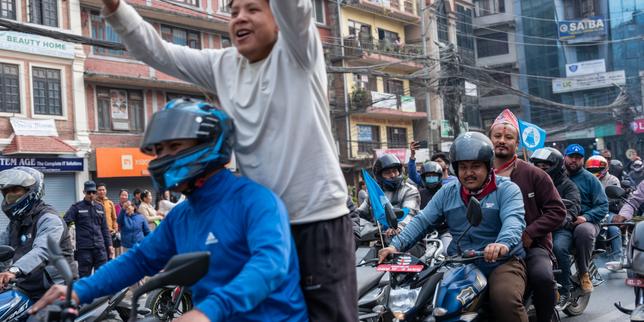
The international press is currently infatuated with a fairytale. They call it a "Gen Z revolution" in Nepal. They point to the streets of Kathmandu, the viral hashtags, and a handful of young mayors as proof that the old guard is finally dead. They want you to believe that a demographic shift alone can dismantle a patronage system that has survived civil wars, royal massacres, and earthquakes.
They are wrong.
The "thirst for change" narrative is a shallow reading of a much grimmer reality. What we are seeing isn't the birth of a new democracy; it is the digitization of desperation. While Western observers applaud the "spirit" of the youth, the smartest young minds in Nepal are not staying to fight. They are queuing at the Department of Passports.
If you want to understand why the current "revolt" is failing even as it trends, you have to stop looking at the slogans and start looking at the spreadsheets.
The Myth of the Independent Disruptor
The media loves a protagonist. Currently, that protagonist is Balen Shah or the rise of the Rastriya Swatantra Party (RSP). The story goes like this: young, tech-savvy outsiders bypassed the corrupt "Big Three" parties (NC, CPN-UML, and the Maoists) to seize power through the sheer force of common sense and social media.
It’s a seductive story. It’s also a distraction.
Individual brilliance cannot fix a structural deficit. In Nepal, the bureaucracy is a sclerotic organism designed to stall progress. Winning an election is the easy part. Governing requires navigating a civil service that is deeply entrenched with the old partisan unions. When a "new" leader tries to clear a sidewalk or digitize a tax office, they aren't just fighting a mayor from the 1990s; they are fighting an entire ecosystem that views efficiency as a threat to its survival.
I have seen this movie before in dozens of emerging markets. A "disruptor" enters the fray, captures the imagination of the youth, and then gets suffocated by the very institutions they claimed they would overhaul. Without a deep, grassroots organizational structure that rivals the old parties' reach into every village and tea shop, these "independents" are just celebrities with high-stress jobs.
Remittance is the New Opium
Everyone asks: "When will the youth finally reach a breaking point?"
The premise is flawed. The breaking point was reached a decade ago. The response wasn't a revolution; it was an exodus.
Nepal’s economy is currently propped up by remittance, which accounts for roughly 23% to 25% of the GDP. In 2023 alone, over 700,000 permits were issued for foreign employment. We aren't seeing a political awakening; we are seeing a brain drain disguised as a career move.
The "Gen Z revolt" is happening among those who haven't left yet. But for the vast majority, the goal isn't to fix Kathmandu. The goal is to survive Dubai, Seoul, or Sydney.
This creates a perverse incentive for the ruling elite. Why fix the local economy when the most vocal, frustrated, and capable young people are literally exporting themselves? Every plane that leaves Tribhuvan International Airport acts as a pressure release valve for the government. It removes the very people who would be the architects of a real revolt.
The status quo isn't just surviving; it’s being funded by the people who hate it most. Every dollar sent back home to pay for imported rice and internet data keeps the current system afloat.
The TikTok Trap
Social media hasn't democratized power in Nepal; it has merely made the theater of politics more entertaining.
The competitor's view is that TikTok was the catalyst for the "six-month revolt." While it’s true that the platform allowed for rapid mobilization, it also incentivized performative governance. We now have a political class—both old and new—that prioritizes the "viral moment" over the "boring policy."
- The "Action" Shot: A leader bulldozing an illegal structure makes for a great 15-second clip.
- The Reality: The underlying zoning laws remain a mess, the displaced have no recourse, and the legal battles will drag on for twenty years.
We are confusing motion with progress. A mayor shouting at a corrupt official on a livestream feels good. It provides a hit of dopamine to a frustrated public. But if the legal framework doesn't change, the official will still be there long after the livestream ends.
This is the "aesthetic of reform." It looks like change, it sounds like change, but the bones of the state remain brittle.
The "Big Three" Are Not Scared
If you think the old-guard politicians are trembling in their boots because of a few protest rallies, you don't understand how power works in the Himalayas.
The leaders of the NC, UML, and Maoists have survived decades of literal and figurative warfare. They control the cooperatives. They control the land registries. They control the distribution networks for basic goods.
They are playing a multi-generational game. Their strategy is simple:
- Wait for the "new" leaders to make a mistake.
- Co-opt their most popular slogans.
- Use their vast financial reserves to buy back loyalty during the next election cycle when the initial "hype" of the independents has faded.
The tragedy of the "Gen Z revolt" is its lack of a coherent economic philosophy. It is a movement built on "anti-corruption," which is a noble but empty vessel. You cannot eat "lack of corruption." You need jobs, energy, and infrastructure. Until the new movement can explain how it will build a factory without a kickback, the old guard will remain the only people who know how to actually get things—legal or otherwise—done.
Stop Asking if the Youth are "Ready"
People keep asking: "Is Nepal's Gen Z ready to lead?"
Wrong question. The real question is: "Is the Nepali state even capable of being led?"
Imagine a scenario where the most brilliant, honest, and energetic 25-year-old in the country is handed the keys to the Ministry of Finance. On day one, they realize that $80$ percent of the budget is locked into recurrent expenditure (salaries and pensions for the old guard). They realize that the trade deficit is so massive that the country is essentially a giant consumer hub for Indian and Chinese goods. They realize that the interest groups protecting the cartels in transport and education are more powerful than the police.
The youth are ready. The system is rigged to ensure their readiness doesn't matter.
The Brutal Truth About "Change"
If you genuinely want to see Nepal change, stop looking at the protests. Look at the private sector.
True disruption in Nepal won't come from a ballot box. It will come when the cost of corruption exceeds the cost of innovation. Right now, it is still "cheaper" for a businessman to pay a bribe than to follow a broken law. Until the digital infrastructure makes it impossible for a mid-level bureaucrat to gatekeep a permit, nothing changes.
The current revolt is a cry for help, not a blueprint for a new nation. Calling it a "success" or a "turning point" after six months is patronizing. It ignores the crushing weight of the debt-to-GDP ratio and the fact that Nepal’s primary export is its own people.
The revolution will not be televised, and it certainly won't be on TikTok. It will happen in the quiet, unglamorous work of rewriting the thousands of micro-laws that allow the old guard to breathe.
Until then, all you have is a very loud, very colorful, and very temporary distraction.
Go to the airport tonight at 10:00 PM. Watch the thousands of young people in "Gen Z" hoodies boarding flights to Qatar. That is the real state of the revolt. They aren't waiting for the change. They are leaving it behind.