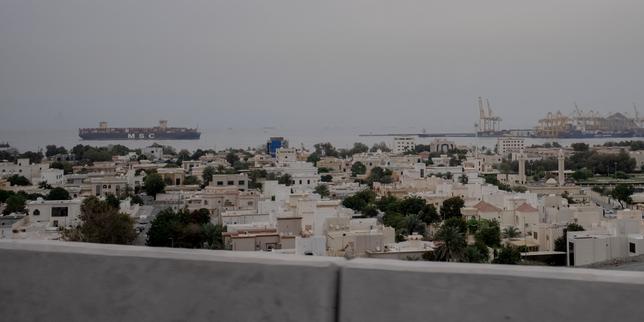
The headlines are screaming about a "historic" breakthrough. Two U.S. destroyers just cut through the Strait of Hormuz on a demining mission, and the mainstream press is treating it like a masterstroke of naval diplomacy. They want you to believe this is a signal of strength, a restoration of the status quo, and a "first" that changes the math of the Middle East.
It is actually a confession of weakness.
Sending billion-dollar Arleigh Burke-class destroyers to hunt for sea mines in one of the world’s most congested chokepoints isn't a show of force. It is an expensive, high-stakes janitorial service. We are witnessing the most sophisticated navy in history being forced into a reactive loop by asymmetric tactics that cost roughly as much as a used sedan. If you think this "operation" secures the global energy supply, you are looking at the wrong map.
The Expensive Lie of Freedom of Navigation
The "Freedom of Navigation" trope is the security industry’s favorite security blanket. It sounds noble. It sounds decisive. In reality, it is a logistical nightmare masquerading as a strategy.
When the Pentagon broadcasts that it is conducting demining operations, it isn't "opening" the Strait. It is admitting that the Strait is currently contested to the point where commercial shipping cannot function without a military escort. For a global hegemon, having to prove you can pass through a door is the first sign that you no longer own the house.
The math of this engagement is a disaster. Consider the $USS$ $Carney$ or the $USS$ $Mason$. These ships represent hundreds of millions in taxpayer investment and thousands of man-hours. They are being used to counter "dumb" mines and low-cost drone threats. This is not a win. This is a massive drain on resources. We are trading high-end interceptors and operational readiness for the temporary absence of obstacles.
The Mine is a Mental Weapon
The media obsesses over the physical hardware, but the real demining needs to happen in the heads of the policy makers. A sea mine doesn't even have to exist to work. The mere suggestion of a minefield in the Strait of Hormuz spikes insurance premiums for oil tankers to the moon.
The U.S. Navy can sweep the water 24/7, but they cannot sweep the risk. As long as the adversary knows that two destroyers moving through the Strait is "breaking news," they know they have the upper hand. They have successfully dictated the movement of the most powerful fleet on Earth.
I’ve watched defense analysts pivot to "deterrence" every time a carrier strike group moves an inch. But deterrence is only effective if the other side believes you have a plan beyond cleaning up their mess. Currently, the U.S. strategy is purely janitorial. We wait for the threat to be deployed, then we send the most expensive equipment possible to mitigate it. That isn't deterrence; it's a subsidy for the adversary's provocation.
The Tech Gap is Working Backward
We are told that our superior technology is what keeps the shipping lanes open. That’s a fundamental misunderstanding of modern naval warfare.
In a confined space like the Strait of Hormuz—roughly 21 miles wide at its narrowest—high-tech systems actually become liabilities. Radar clutter, civilian traffic, and the proximity of land-based missile batteries turn a destroyer into a massive target.
- The Drone Problem: Small, submersible drones are the new mines. They aren't static. They don't just sit there waiting to be found by sonar.
- The Cost Curve: Every time a destroyer fires a $Standard$ $Missile-2$ to take out a threat, we are losing the economic war.
- The Detection Lag: Despite the "all-seeing" eye of modern sensor suites, identifying a mine in a high-current, high-debris environment remains a slow, grueling process.
While the press celebrates the "first demining operation since the start of the war," they ignore the fact that the very need for such an operation proves the previous three decades of "stability" were a house of cards.
The Energy Independence Delusion
A common refrain is that the U.S. doesn't need the Strait because of domestic fracking. This is a dangerous half-truth. Oil is a fungible global commodity. If the Strait of Hormuz closes, or even slows down to the pace of a demining crawl, the price of a barrel hits triple digits globally.
The U.S. Navy isn't protecting "our" oil. They are protecting the global financial system from a heart attack. The irony is that by acting as the world’s unpaid security guards, we are shielding our competitors from the consequences of regional instability while we foot the bill.
If the goal was actual security, we wouldn't be bragging about ships crossing a line. We would be making the line irrelevant. Instead, we are doubling down on 20th-century naval doctrine in a 21st-century asymmetric reality.
Stop Asking if the Strait is Open
The question isn't whether the ships passed through. The question is: what happens tomorrow?
The "lazy consensus" says that as long as the U.S. Navy is present, the spice will flow. But look at the Red Sea. Look at the Bab el-Mandeb. Constant patrols haven't stopped the diversion of shipping around the Cape of Good Hope. The world’s largest shipping companies—Maersk, Hapag-Lloyd—don't care about a "successful demining operation" if the risk of a follow-up attack is 10%. They want 0%.
The U.S. military cannot provide 0% risk in the Strait of Hormuz. By attempting to do so, they are overextending the fleet and exhausting crews for a PR win that lasts about as long as a news cycle.
We are watching a superpower use a sledgehammer to kill flies. The flies are winning because the sledgehammer is getting tired.
The Hard Truth of Naval Overreach
The Navy is currently facing a massive maintenance backlog. Every day these destroyers spend idling in the Persian Gulf, performing high-stress, low-reward demining sweeps, is a day they aren't in the Pacific or undergoing necessary refits.
We are sacrificing long-term readiness for short-term theater.
If you want to know the "controversial truth," it's this: The Strait of Hormuz is effectively closed the moment we have to send destroyers to prove it’s open. The psychological victory belongs to those who laid the mines, not those who found them. They forced the giant to bend down and look for pebbles.
Stop cheering for the "first demining operation." Start questioning why the world's most powerful military is stuck in a reactive loop that it cannot afford to win and cannot afford to lose.
The Strait isn't being secured. It's being babysat. And the babysitter is running out of patience and parts.