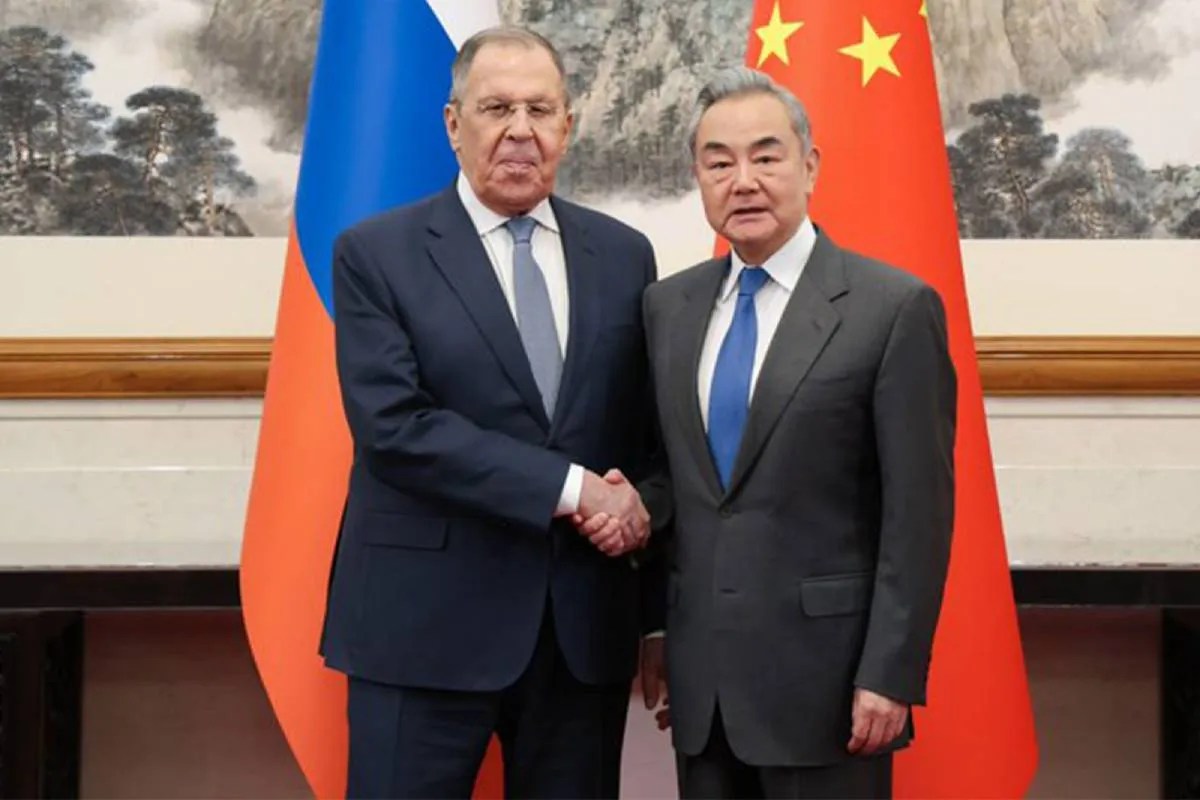
The headlines are screaming about a "New World Order" because Vladimir Putin and Xi Jinping shared a stage in Beijing. The mainstream media is obsessed with the idea that the U.S. is "losing sleep" over this handshake. They see a monolith of authoritarian power that will magically redraw the global map.
They are wrong.
This isn't a marriage of equals. It’s a predatory loan agreement masquerading as a strategic partnership. If you think the "Limitless Partnership" is a threat to Western hegemony, you aren't paying attention to the math. Moscow is effectively becoming a high-end gas station for a Chinese economy that is currently hitting a demographic and debt wall.
The Sovereignty Trap
Geopolitical "experts" love to talk about the BRICS expansion and the end of the dollar. I’ve sat in rooms with hedge fund managers who tremble at the thought of a Yuan-backed oil market. Here is the reality: China does not want to replace the dollar; it wants to survive the dollar.
Russia, desperate for a lifeline after being severed from SWIFT, has handed China the ultimate leverage. When you have only one major buyer for your commodities, you aren't a partner. You are a vassal. China is currently buying Russian energy at a massive discount, paying in a currency (Yuan) that Russia can only spend back in China. It is a closed-loop system that benefits Beijing exclusively.
The "restructuring of the global map" is actually the shrinking of Russia’s options. By tying its fate to Beijing, Moscow has traded its European leverage for a permanent seat at the kid's table in Asia.
The Silicon Mirage
The competitor pieces claim that Sino-Russian tech cooperation will "crush" Western innovation. This is pure fantasy.
Let's look at the hardware. Russia’s domestic chip industry is decades behind. China, despite its massive investments in SMIC and Huawei, still hits a brick wall when it comes to Extreme Ultraviolet (EUV) lithography. You cannot build a 21st-century superpower on 28nm chips and stolen blueprints.
The U.S. and its allies (the Netherlands, Japan, Taiwan) control the actual bottlenecks of human progress. A thousand meetings in Beijing won't change the fact that the "Dragon-Bear" axis is currently starving for high-end AI compute.
Why the U.S. Is Smiling
Washington isn't "losing sleep." The Pentagon and the State Department are witnessing the ultimate strategic gift: their two greatest rivals are locking themselves into a bilateral dependency that makes them easier to contain.
- Focus: The alliance forces Europe to finally take its own defense seriously, offloading the cost from the American taxpayer.
- Transparency: The more Russia depends on Chinese tech, the easier it is for U.S. intelligence to track the supply chain.
- The Taiwan Buffer: China’s support for Russia has effectively killed any "charm offensive" Beijing had planned for Europe.
The Debt and Demographics Reality Check
While the talking heads focus on tanks and submarines, they ignore the balance sheets. China is facing a property crisis that represents roughly 30% of its GDP. Russia is burning through its National Wealth Fund to finance a war of attrition.
You don't build a new world order on two sinking ships tied together.
Common industry wisdom says we are entering a "Bipolar World." I’d argue we are entering a "Fractured World" where the U.S. remains the only player with a functional capital market, a growing population (via immigration), and energy independence.
The "De-Dollarization" Delusion
"People Also Ask" if the Yuan will replace the dollar. The answer is a hard no.
To have a global reserve currency, you must be willing to run a massive trade deficit. You must have an open capital account. You must have a rule of law that doesn't change because a Premier had a bad morning. China will never allow the Yuan to float freely because it would lead to an immediate capital flight that would collapse their banking system.
Russia is "de-dollarizing" because it was kicked out, not because it chose a better path. Holding Yuan is a trap; you can’t buy a sandwich in Paris or a factory in Brazil with it without converting it back to the "imperialist" currency they claim to hate.
The Coming Friction
History is a graveyard of "eternal friendships" between Moscow and Beijing. They share a massive, poorly defended border. They are both deeply nationalistic and paranoid.
Currently, they have a common enemy. But what happens when China starts asserting more influence in Central Asia—Russia's "backyard"? What happens when Russia realizes China is using its "friendship" to colonize Russian industry?
The friction is already there. It’s hidden behind the smiles and the joint statements.
Stop looking at the photo ops. Look at the capital flows. Look at the lithography machines. Look at the birth rates. The "partnership" is a tactical necessity for two declining powers, not a strategic triumph.
The world map isn't being redrawn in Beijing. It’s being reinforced in the semiconductor labs of San Jose and the shale fields of Texas.
Russia and China haven't joined forces to conquer the world; they’ve huddled together to stay warm in a winter of their own making.
Betting against the West because of a handshake in Beijing isn't just a bad take—it's a financial suicide mission.