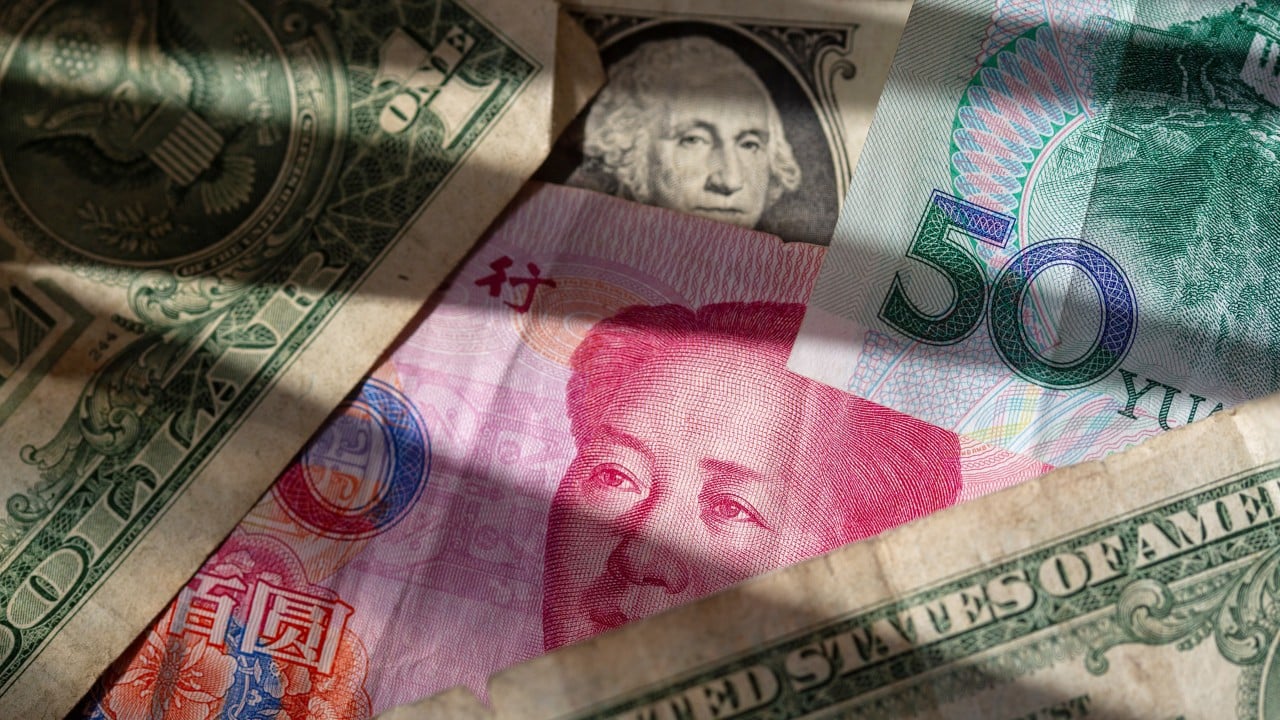
The financial press is addicted to a ghost story. The narrative is always the same: Washington is "weaponizing" the dollar, the federal deficit is a ticking time bomb, and the BRICS nations are moments away from launching a gold-backed rival that will send the U.S. economy into a tailspin. It’s a compelling tale for those who hate the current world order, but it collapses the second you stop looking at political headlines and start looking at the plumbing of global finance.
The biggest threat to dollar dominance isn't Washington’s incompetence. Washington’s incompetence is actually the dollar’s secret sauce.
In a world of bad options, the U.S. remains the only nation with the "exorbitant privilege" of being the least-ugly horse in the glue factory. While critics point to the $34 trillion debt as a terminal illness, they ignore the reality that the world doesn't buy U.S. Treasuries because they love American politics; they buy them because there is literally nowhere else to put $100 trillion in global capital without it evaporating.
The Liquidity Trap the Critics Ignore
Most analysts crying about the end of the dollar focus on "store of value." They argue that because the dollar has lost 90% of its purchasing power since 1913, it's a failed currency. This is the first major mistake. A global reserve currency isn't just a piggy bank; it is a utility.
To replace the dollar, you need more than just a "stable" currency. You need a massive, deep, and transparent bond market. You need a legal system that doesn't change based on the whims of a general secretary or a local autocrat. Most importantly, you need a trade deficit.
The "Triffin Dilemma" is a concept most amateur pundits skip. To provide the world with a reserve currency, the issuing country must be willing to run massive trade deficits. The world needs dollars to trade; the only way they get them is if the U.S. buys their goods and sends dollars abroad.
- China cannot do this. They are an export-led economy that relies on capital controls to stay in power.
- The Eurozone cannot do this. They lack a unified fiscal bond, making their "safe asset" market fragmented and fragile.
- The BRICS? A group containing India and China—nations that literally have border skirmishes—will never agree on a unified central bank policy.
Imagine a scenario where the "BRICS currency" launches tomorrow. Who sets the interest rate? Does it favor Brazil’s commodity-heavy needs or China’s manufacturing requirements? The moment the first crisis hits, the union fractures. The dollar wins by default because it is the only currency that offers a liquid exit ramp when the world starts burning.
Weaponization is a Feature, Not a Bug
The competitor article argues that seizing Russian assets or using SWIFT as a diplomatic cudgel will drive nations away. This is a half-truth that misses the larger geopolitical reality. Yes, "adversarial" nations like Russia, Iran, and perhaps China are looking for alternatives. But these countries represent a fraction of global GDP and an even smaller fraction of global trust.
Sanctions don't destroy the dollar; they define the cost of entry to the premier global club. When the U.S. freezes assets, it isn't a sign of weakness. It is a demonstration of the dollar's role as the "operating system" of global trade. If you want to play in the deep end of the pool, you follow the rules of the lifeguard.
The "weaponization" argument assumes that there is a safe, neutral alternative waiting in the wings. There isn't. Gold is a logistical nightmare for settling trillion-dollar oil trades. Bitcoin, while interesting, lacks the institutional depth and state backing to support a global supply chain. Every time a central bank tries to diversify into the Yuan, they realize they can't get their money out when they actually need it.
The Debt Paradox: Why $34 Trillion Doesn't Matter (Yet)
The "Washington is destroying itself" crowd loves to cite the debt-to-GDP ratio. They claim we are the next Weimar Republic. I’ve heard this for twenty years, and yet, the demand for U.S. debt remains insatiable.
The reason is simple: The U.S. produces the world's only truly "risk-free" asset. In finance, risk is relative. If the U.S. defaults, the global financial system ceases to exist. Your gold, your Swiss francs, and your local real estate won't save you because the very rails of commerce will have been ripped up. Therefore, as long as the U.S. has the world's most powerful military to enforce its contracts and the most innovative tech sector to drive growth, the debt is just a ledger entry in a system the U.S. owns.
We aren't seeing a "flight from the dollar." We are seeing a "rebalancing of the portfolio." Central banks holding 58% of reserves in dollars instead of 70% isn't a collapse; it's basic risk management. The Euro has hovered at 20% for two decades. The Yuan? It’s struggling to break 3%.
Stop Asking if the Dollar is Dying
The real question isn't "When will the dollar lose its crown?" but "What would the world look like if it did?"
The answer is a dark, fractured, and significantly poorer world. Without a single dominant currency, transaction costs for every single item you buy—from coffee to iPhones—would skyrocket. Global trade would regionalize. Innovation would stall as capital becomes trapped behind national borders.
People ask: "How can Washington be so reckless with the deficit?"
They should be asking: "Why does the world keep rewarding that recklessness by buying more Treasuries?"
The world rewards it because the U.S. is the only nation capable of providing the legal and military infrastructure that makes globalism possible. Washington’s dysfunction is a sideshow. It’s loud, it’s ugly, and it’s embarrassing, but it doesn't change the fact that the Federal Reserve is the world's de facto central bank.
The "biggest threat to the dollar" is a myth designed to sell newsletters and gold bars. The dollar isn't dominant because Washington is competent; it's dominant because every other alternative is a catastrophe waiting to happen.
If you're waiting for the greenback to fail, bring a very long lunch. You’ll be waiting for a century. The dollar isn't just money; it's the glue holding a chaotic world together, and Washington's circus is just part of the price of admission.
Buy the dip. Trust the plumbing. Forget the headlines.