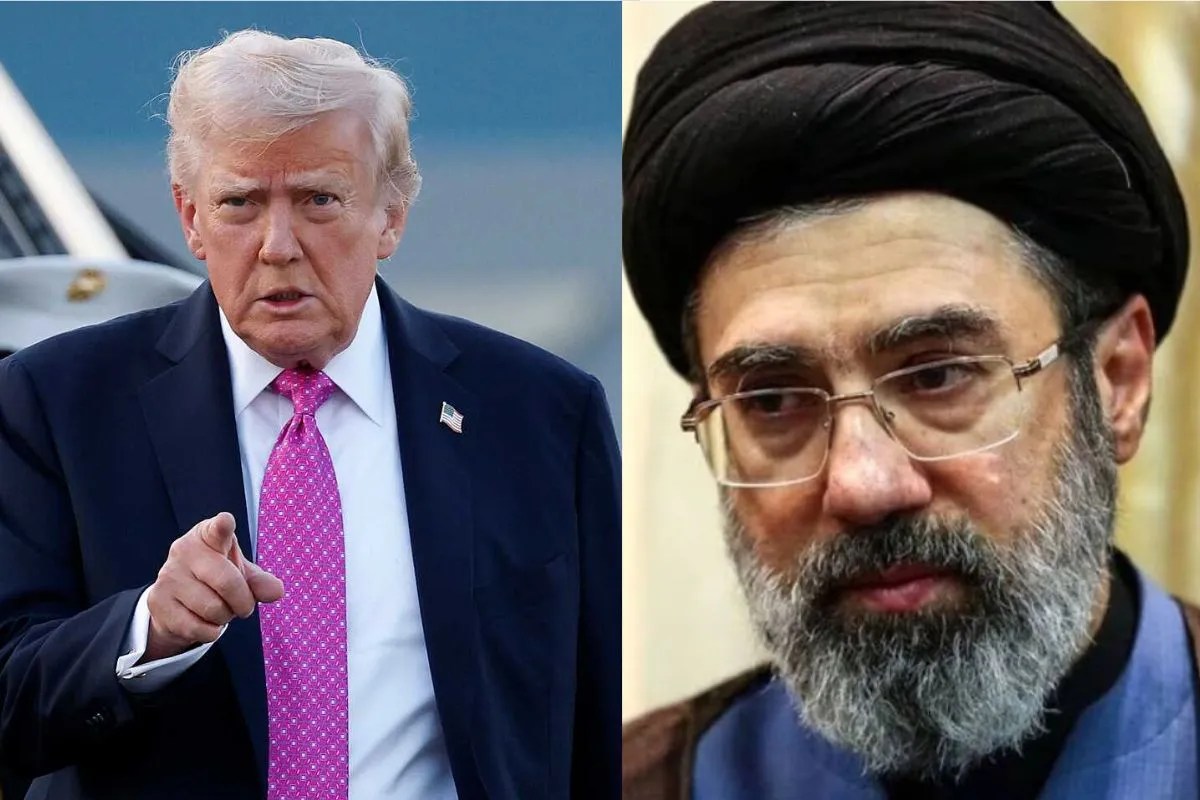
The United States just put a $10 million price tag on the head of Iran’s most guarded secrets. This isn't just about a single person. It’s a calculated strike at the very heart of the Iranian power structure during a time when the Middle East is a powderkeg. By targeting Mojtaba Khamenei, the son of Supreme Leader Ayatollah Ali Khamenei, Washington is signaling that the era of "off-limits" figures is officially over.
If you've been following the escalating tension between Israel and Iran, you know the stakes. But this specific move by the U.S. State Department’s Rewards for Justice program changes the math. They aren't just looking for a location. They’re hunting for the financial pipelines, the clandestine networks, and the shadow figures who keep the regime's elite in power. It’s a bold, aggressive play that forces the Iranian leadership to look over their shoulders.
Why Mojtaba Khamenei is the Ultimate Target
Most people haven't seen much of Mojtaba Khamenei. He rarely gives interviews. He doesn't post on social media. Yet, he's widely considered the gatekeeper to the Supreme Leader. In many ways, he's the one who bridges the gap between the aging Ayatollah and the Islamic Revolutionary Guard Corps (IRGC).
The U.S. government doesn't throw around $10 million for fun. They want actionable intelligence on his financial assets, his business associates, and his role in suppressing domestic dissent. By putting a bounty on this information, the U.S. is essentially trying to buy loyalty from within the regime's inner circle. They know that even the most dedicated loyalists might have a price, especially when the Iranian economy is cratering under sanctions.
This reward targets more than just the "heir apparent." It includes several other key figures who manage the regime's wealth and its ability to bypass global banking systems. The goal is simple. Break the bank, and you break the ability to fund proxy wars in Lebanon, Yemen, and Gaza.
The Israel Connection and the War of Intelligence
You can’t talk about this bounty without talking about the shadow war with Israel. For years, the Mossad has been operating deep inside Iranian territory. We've seen high-profile assassinations and sophisticated cyberattacks on nuclear facilities. Now, the U.S. is adding a massive financial incentive to that pressure cooker.
Israel’s intelligence community likely already has folders thick with data on Mojtaba. However, by making this a public U.S. bounty, it legitimizes the hunt on a global scale. It tells every middleman, every banker in Dubai, and every shipping magnate in the Caspian Sea that doing business with these men carries a $10 million risk.
The timing is critical. As Iran and Israel exchange direct missile fire, the internal stability of the Iranian leadership becomes its greatest vulnerability. If the people at the top can't trust their own staff because of a life-changing payout from the Americans, the system starts to rot from the inside.
Breaking Down the Rewards for Justice Strategy
This isn't a new tactic, but it's being applied with fresh intensity. The Rewards for Justice program has historically targeted terrorists like those in Al-Qaeda or ISIS. Moving the focus so sharply onto high-ranking state officials like Mojtaba Khamenei is a shift. It treats the Iranian leadership not as a traditional government, but as a criminal enterprise.
- Financial Networks: The U.S. wants to know how the Khamenei family moves money. We're talking about front companies, gold smuggling, and crypto-laundering.
- Human Rights Abuses: Information regarding the crackdown on the "Woman, Life, Freedom" protests is high on the list.
- Election Interference: Any data on how these leaders influence foreign politics is worth a fortune.
The U.S. is betting on the fact that the regime isn't as monolithic as it looks. There are factions. There are jealous generals and disgruntled bureaucrats. A $10 million check is a lot of motivation to settle an old grudge or secure a future outside of Tehran.
The Risk of Backfire
Let's be real for a second. This kind of move can also harden the regime's resolve. When you corner a wolf, it bites. By targeting the Supreme Leader’s son, the U.S. is making the conflict personal. This could lead to a "rally around the flag" effect among hardliners who see this as a direct insult to Iranian sovereignty.
It also raises the risk for Americans or Westerners currently held in Iran. The regime has a long history of using "hostage diplomacy" to get what it wants. Every time the U.S. ramps up the pressure, the price of freedom for those individuals usually goes up too.
But from the perspective of the State Department, the "wait and see" approach hasn't worked. Diplomacy is stalled. Sanctions are at their limit. This leaves intelligence and financial warfare as the only remaining levers short of a full-scale regional war.
What This Means for the Region
The message to the Iranian people is also clear. The U.S. is trying to show that the suffering of the average Iranian citizen is directly tied to the corruption at the top. While the "street" struggles with inflation and water shortages, the elite are sitting on billions.
If this program successfully recruits a high-level defector, it could be the "Black Swan" event the West has been waiting for. One person with the right hard drive or the right set of bank codes could do more damage to the IRGC than a dozen airstrikes.
For anyone watching this play out, the next few months are going to be tense. Watch the movements of Iranian officials. Watch the rhetoric coming out of the IRGC-affiliated media. They're scared. You don't put out a $10 million bounty on someone who isn't a massive threat to your interests.
The move isn't just about catching a "bad guy." It’s about mapping the entire nervous system of a regime that has defied the West for four decades. If you're an analyst or just a concerned observer, start looking closer at the "Bonyads"—the massive, opaque charitable foundations controlled by the Khamenei family. That’s where the real bodies are buried, and that’s exactly where the U.S. expects this $10 million to lead.
Keep an eye on the Rewards for Justice official portal. The list of names is growing, and the rewards are hitting record highs. This is the new front line of the Iran-Israel war, fought with bank statements and informants instead of just drones and missiles.