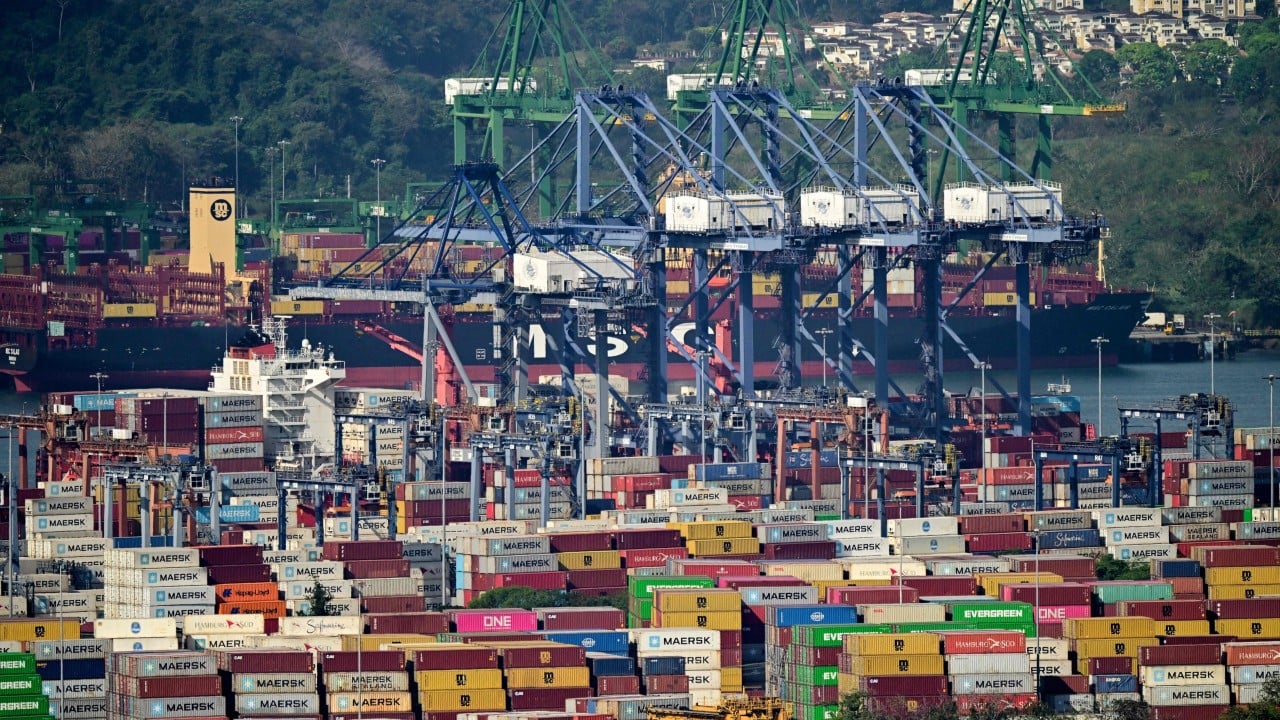
The chancellery is calling it "pragmatic rebalancing." The press is calling it a "return to realism." They are both wrong. What we just witnessed in Beijing wasn't a diplomatic masterstroke by Friedrich Merz; it was a managed surrender dressed up in a Brioni suit.
For decades, the German economic engine ran on a simple, Faustian bargain: we give China the blueprints, they give us the market. That deal is dead. Merz went to China to try and resuscitate a corpse, ignoring the fact that the "partner" across the table is now the primary executioner of the German automotive and engineering sectors.
The Myth of the Level Playing Field
Mainstream analysts love to talk about "leveling the playing field." It’s a comforting fiction. It suggests that if we just tweak a few trade regulations or get a signature on a memorandum of understanding, Volkswagen and BASF will compete fairly with BYD and CATL.
It’s time to stop pretending. The Chinese industrial complex does not operate on a profit-and-loss basis that any Western CFO would recognize. When the state provides land, subsidized energy, and zero-interest loans that never need to be repaid, the "playing field" isn't just tilted; it’s a vertical wall.
Merz’s insistence on "fair competition" during his meetings with the Chinese leadership is a category error. You cannot have fair competition with a command economy that has weaponized overcapacity as a tool of foreign policy. I have sat in boardrooms in Stuttgart and Munich where executives whisper about "de-risking" while publicly doubling down on Shanghai investments. They are trapped in a sunk-cost fallacy of historic proportions.
De-risking is a Polite Word for Slow-Motion Suicide
The "pragmatism" Merz is peddling suggests we can decouple slowly—shifting supply chains while maintaining access to the Chinese consumer. This ignores the reality of how the CCP operates. They don't want your finished products anymore; they want your remaining intellectual property to bridge the gap in high-end manufacturing.
Every Euro a German Tier 1 supplier invests in a Joint Venture in Hefei today is a Euro that isn't going into software-defined vehicle architecture at home. By the time the "de-risking" is complete, there won't be a domestic industry left to protect.
- The Battery Trap: Germany spent a century perfecting the internal combustion engine. China skipped the line and cornered the battery supply chain. Merz asking for "market access" for German cars is irrelevant if the heart of the car—the battery—is controlled by the entity he's negotiating with.
- The Software Gap: While Merz talks about trade quotas, Chinese tech giants are integrating LLMs and autonomous driving stacks into vehicles at a pace that makes the VDA (Verband der Automobilindustrie) look like a group of watchmakers in the age of the smartphone.
Why the "Middle Way" is a Dead End
The prevailing wisdom suggests Germany can be a bridge between Washington’s hawkishness and Beijing’s expansionism. This "Middle Way" is a fantasy. In a bipolar world, the bridge is the first thing that gets stepped on.
If Merz thinks he can maintain the U.S. security umbrella while feeding the Chinese industrial machine, he hasn't been paying attention to the mood in D.C. The Americans are moving toward a total technological blockade. Germany’s attempts to play both sides aren't viewed as "pragmatic" in Washington; they are viewed as a liability.
Imagine a scenario where a conflict breaks out in the Taiwan Strait. Every German factory in China becomes a hostage overnight. Every supply chain link snaps. The "pragmatism" of 2025 will look like the "Nord Stream" blindness of 2021. We are repeating the exact same mistake—trading long-term sovereignty for short-term quarterly earnings.
The Brutal Reality of Overcapacity
The biggest threat to the German Mittelstand isn't Chinese protectionism; it's Chinese efficiency backed by state-funded overcapacity. China is currently producing millions more vehicles and industrial units than its domestic market can consume.
Where does that excess go? It gets dumped into Europe at prices no German company can match without going bankrupt. When Merz smiles for the cameras in Beijing, he is shaking hands with the architects of a deflationary wave that will hollow out the Ruhr valley.
The "People Also Ask" crowd wants to know: "Can Germany survive without the Chinese market?"
The answer is: "Can Germany survive as a vassal state to Chinese technology?"
If the price of "market access" is the systematic dismantling of your own technological edge, the market isn't worth having.
Stop Trying to Save the 20th Century
Merz is a man of the 1990s trying to solve a 2030s problem. He views China through the lens of Wandel durch Handel (change through trade). That philosophy didn't work with Russia, and it’s a catastrophic failure with China.
True pragmatism would involve:
- Immediate, Aggressive Industrial Defense: Not "free trade," but protective tariffs that reflect the true cost of state-subsidized competition.
- Hard Decoupling of Critical Tech: Accepting that certain sectors are gone and protecting the ones that remain with an iron fist.
- European Consolidation: Realizing that Germany alone is a rounding error. Without a unified European industrial policy that prioritizes internal resilience over global exports, the game is over.
The downside to this? Prices will go up. Growth will slow. The transition will be painful, messy, and expensive. But the alternative—the one Merz is currently pursuing—is a comfortable slide into industrial irrelevance.
Merz didn't go to China to lead. He went to manage the decline. If you're waiting for a "win" from this trip, you're looking at the wrong scoreboard. The only winners are the ones who realize the old world is gone and aren't afraid to burn the bridges that lead back to it.
Stop asking if the trip was a success. Start asking how much of the German future was traded away for a few more months of "stability."
Move your capital. Protect your IP. Stop believing the press releases.