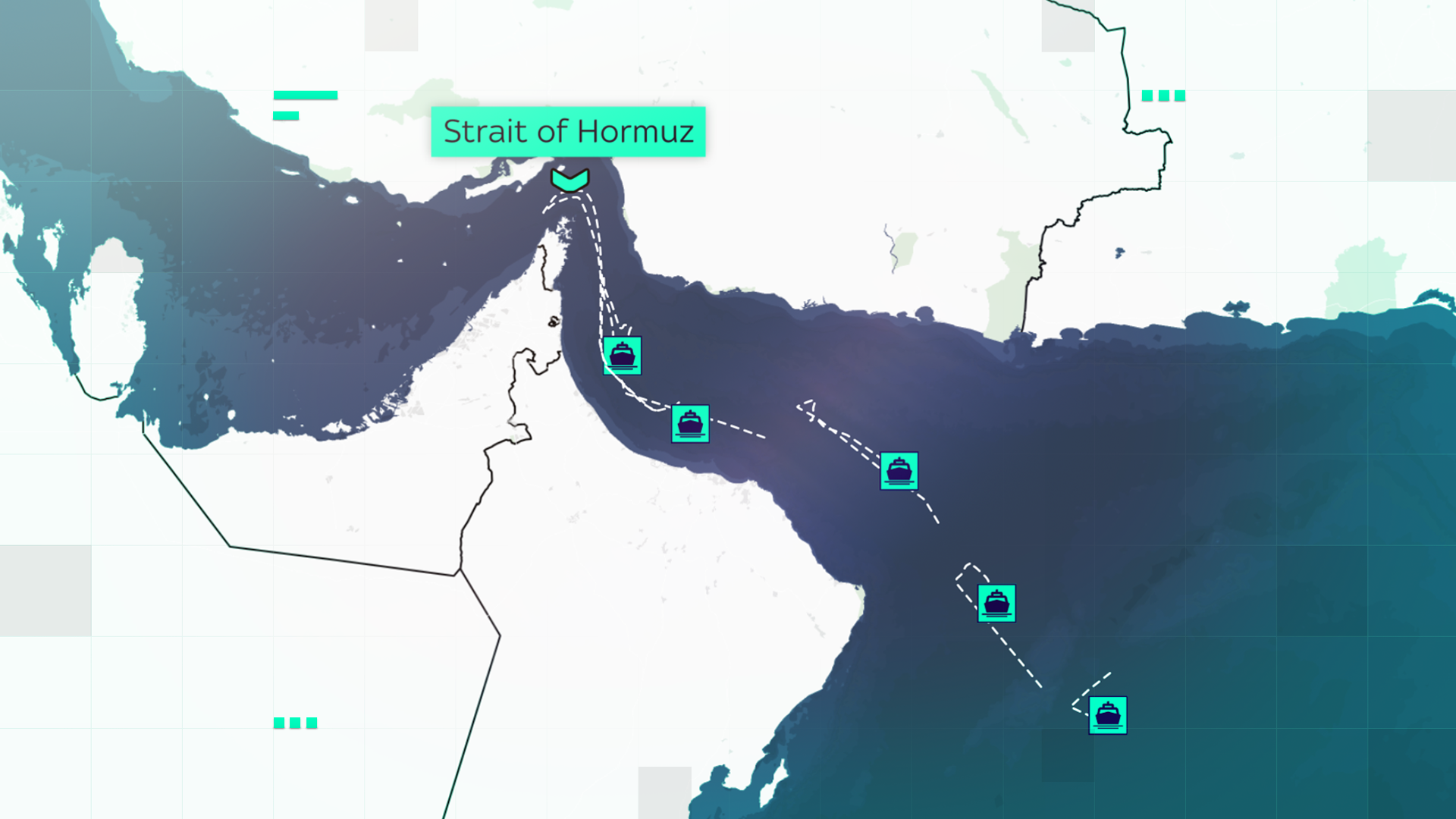
The Gulf is currently a massive, floating parking lot. If you look at live satellite AIS data right now, you aren't just seeing dots on a map. You're looking at millions of barrels of crude oil sitting stationary in the water. These tankers aren't moving. They're waiting. This isn't some minor logistical hiccup that gets solved in a weekend. It's a high-stakes bottleneck that impacts everything from the price of gas at your local station to the stability of the global energy market.
Ship tracking data shows a startling accumulation of Very Large Crude Carriers (VLCCs) and Suezmax tankers idling in the Gulf. This isn't normal. While some congestion is expected near major ports, the current scale of this gridlock suggests deeper issues in the supply chain. We're talking about a volume of oil that could power entire countries for days, just sitting there. Why? It's a mix of infrastructure limits, shifting geopolitical alliances, and a sudden surge in production that the current offloading systems can't handle.
The Real Cost of a Floating Bottleneck
When a tanker sits idle, it's not free. Every day a vessel stays at anchor costs tens of thousands of dollars in "demurrage" fees. These costs don't just vanish. They get baked into the final price of the oil. If you're wondering why energy prices feel volatile even when production numbers look good, this is part of the answer. The oil exists. It's just stuck in a 1,100-foot-long steel tube three miles offshore.
The environmental risk also climbs. A moving ship is a managed ship. A stationary ship in a crowded waterway is a different beast entirely. We've seen what happens when maritime traffic gets too dense in narrow corridors. One dragging anchor or one communication error can lead to a disaster that takes decades to clean up. The Gulf is already one of the most heavily trafficked maritime zones on Earth. Adding a massive, stationary fleet of oil-laden giants to that mix is a recipe for anxiety.
What the Satellite Data Isn't Telling You
You can't just look at a map and assume every ship is there for the same reason. Ship tracking is an art, not just a science. Some of these tankers are "floating storage." This happens when traders bet that oil will be more expensive in six months than it is today. They buy the oil, put it on a boat, and wait. It's a massive gamble on the future of the market.
Others are stuck because of "berth occupancy" issues. Basically, the docks are full. A port can only process so many ships at a time. If three ships arrive for every two that leave, the line gets long fast. In the Gulf, many of the older terminals weren't built for the sheer size of modern VLCCs. We're trying to fit a 21st-century production surge through 20th-century plumbing.
Then there's the "dark fleet" factor. Not every ship wants to be seen. Some tankers turn off their transponders or "spoof" their locations to hide where they're coming from or where they're going. This happens often with sanctioned oil. When these ships enter the mix, they create "ghost" traffic that makes the gridlock even harder for port authorities to manage. You can't coordinate a dance if half the dancers are wearing blindfolds and refusing to follow the music.
The Geopolitical Ripple Effect
The Gulf isn't just a body of water. It's the pulse of the global economy. When millions of barrels of oil get delayed, countries that rely on just-in-time delivery start to panic. We're seeing a shift in where this oil goes. For years, the flow was primarily West. Now, a huge portion of this "stuck" oil is destined for Asian markets.
China and India have become the primary customers for many Gulf producers. This change in direction has strained the traditional shipping lanes. The infrastructure in the Gulf was designed for a world that doesn't exist anymore. The shift in trade routes means ships are spending more time in the Gulf waiting for clearance to head East through the Strait of Hormuz. It's a classic case of demand outstripping the physical capacity of the geography.
Why Production Surges Aren't Always Good News
It sounds counterintuitive. More oil should be a good thing, right? Not if you can't move it. When production ramps up faster than the shipping industry can adapt, you get exactly what we're seeing now. Producers are pumping oil out of the ground at record rates, but the "midstream" — the pipes, the ports, and the tankers — is at its breaking point.
This creates a "glut" in one specific spot while other parts of the world face shortages. It's a localized surplus that can't reach the people who need it. This disconnect is what drives the wild swings in Brent and WTI crude prices. The market reacts to the news of the gridlock, and suddenly, the price of a barrel jumps because traders realize that oil might not reach the refinery on time.
The Infrastructure Gap Nobody is Fixing
Building a new oil terminal isn't like building a warehouse. It takes years of environmental studies, billions in investment, and complex international agreements. Most countries in the region are focused on pumping more oil, not necessarily on building better ways to get it onto ships. They're focused on the "top line" revenue and ignoring the logistical nightmare growing in their own backyard.
We also have a labor issue. You need highly skilled pilots to guide these massive tankers into port. You need technicians to maintain the pumping stations. During the recent global labor shortages, the maritime industry took a massive hit. There simply aren't enough people to keep the gears turning at the speed required by modern demand. This human element is often overlooked in the high-tech world of satellite ship tracking, but it's often the primary reason a ship doesn't move for three days.
Breaking the Gridlock
There is no "magic button" to clear the Gulf. It requires a massive coordination of data and a serious investment in physical infrastructure. Some companies are starting to use AI-driven logistics to predict when berths will open up, allowing ships to slow down their approach and save fuel instead of racing to wait at anchor. It's a smarter way to manage the flow, but it only works if everyone shares their data. In the secretive world of oil trading, transparency is rare.
If you're tracking these ships, don't expect the map to clear up anytime soon. This is the new reality of energy logistics. We live in a world where the ability to extract resources has far outpaced our ability to transport them. Until the physical ports and the digital tracking systems catch up, the Gulf will remain a crowded, expensive, and risky parking lot for the world's most valuable commodity.
Check the AIS maps daily. Look for the clusters near the major terminals. When those clusters start to grow, it's a signal that the global economy is about to get a lot more expensive. Pay attention to the "days at anchor" metric. If a ship stays for more than 48 hours, something is wrong. That's the data point that actually matters. Watch the draft levels of the ships as well. If a ship is sitting low in the water but isn't moving, that's millions of dollars in locked capital. Follow the movement of the support tugs. They are the first sign that the gridlock is finally starting to break.