The ink on the old maps is starting to bleed.
If you stand in the quiet, wood-paneled offices of Tokyo’s political elite, you can almost hear the sound of the world fracturing. It isn't a loud bang. It’s the sound of supply chains rerouting, of silent digital walls rising, and of a century’s worth of assumptions quietly dissolving. For decades, the logic was simple: follow the lead of the West, keep the engines of industry humming, and treat the giant neighbor across the sea as a factory rather than a partner.
That logic is dying.
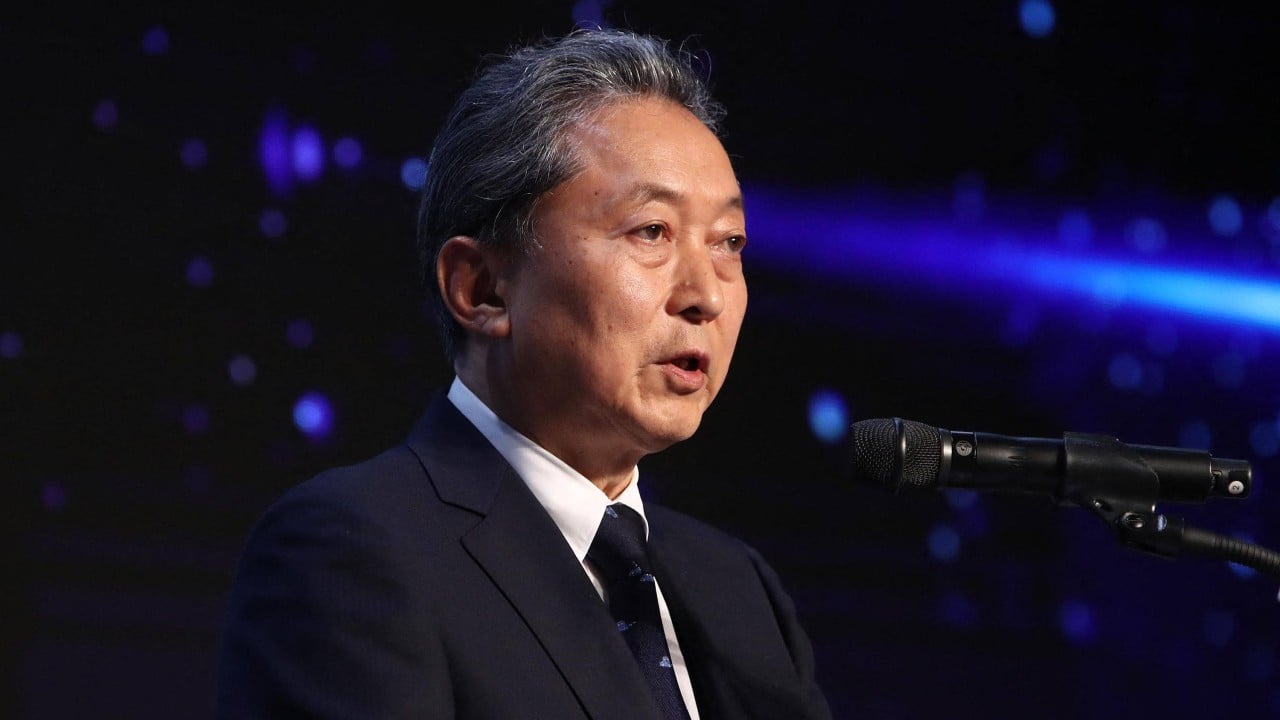
Yasuo Fukuda, a man whose family name is synonymous with the post-war architecture of Japanese power, recently stood before a crowd and said the thing that many in the corridors of the Diet only whisper. He didn't speak in the aggressive tones of a hawk or the idealistic language of a dreamer. He spoke with the weary clarity of a navigator who realizes the stars have shifted. Japan, he argued, can no longer afford to be a spectator in the divorce between Washington and Beijing.
The choice isn't just about trade. It is about survival in a world where the old center no longer holds.
The Ghost of the 1970s
To understand why a former Prime Minister is urging a pivot toward China, you have to understand the specific kind of haunting that happens in Tokyo. Japan is a nation built on the memory of scarcity. It is an archipelago with almost no natural resources, clinging to the edge of a massive continent. Its wealth isn't pulled from the ground; it is manufactured through stability.
When the global order fragments—when the United States and China begin to look at one another not as competitors but as existential threats—Japan becomes the person caught in the middle of a collapsing doorway.
Fukuda knows this history intimately. His father, Takeo Fukuda, authored the "Fukuda Doctrine" in 1977. It was a promise that Japan would never again become a military power, but would instead lead through "heart-to-heart" understanding. It was a vision of a soft-power bridge. Today, the son sees that bridge catching fire.
The current geopolitical climate treats "engagement" like a dirty word. In Washington, the consensus has hardened into a cold-war rigidity. In Beijing, the rhetoric is increasingly assertive. Yet, for the average Japanese salaryman or the CEO of a robotics firm in Nagoya, "decoupling" isn't a strategy. It’s a slow-motion car crash.
A Hypothetical Morning in Osaka
Consider a hypothetical engineer named Kenji. He works for a mid-sized firm that specializes in high-precision sensors. For twenty years, Kenji’s life has been a miracle of globalization. His designs are refined in Germany, his components are sourced from Taiwan, and his biggest customer is a smartphone manufacturer in Shenzhen.
Under the current trajectory of a "fragmenting order," Kenji’s world shrinks every day.
One morning, a new regulation from the West tells him he can no longer export certain chips to China because they might have dual-use military applications. The next week, China retaliates by throttling the export of the rare earth minerals Kenji needs to build those very sensors. Suddenly, the "global" market is just a series of walled gardens.
Kenji isn't a diplomat. He doesn't care about the South China Sea or the intricacies of the Belt and Road Initiative. He cares that the math no longer adds up. When Fukuda speaks of a "pivot," he is speaking for Kenji. He is arguing that if Japan follows the path of total confrontation, it isn't just picking a side—it is picking a slow economic decline.
The Weight of the Invisible Stakes
The stakes are often framed in terms of naval destroyers and semiconductor legislation. Those are the visible markers. But the invisible stakes are far more dangerous: the loss of the ability to communicate.
Fukuda’s warning is centered on the terrifying reality that the lines of communication between the world’s second and third-largest economies have gone cold. When leaders stop talking, they start imagining the worst about each other. In a fragmented world, suspicion becomes the default setting.
Japan finds itself in a unique, agonizing position. It is the primary security ally of the United States in the Pacific, housing thousands of American troops. Yet, its economic heart is inextricably tied to China. Over 20% of Japanese exports go to the Chinese market. Thousands of Japanese companies have set up shop there, not just for cheap labor, but for a consumer base that is hungry for Japanese quality.
To "pivot" doesn't mean to abandon the U.S. alliance. That would be a different kind of suicide. Instead, the argument is for a return to a "multi-directional" diplomacy. It is the realization that Japan cannot be a satellite of a Western power that is increasingly focused on domestic protectionism.
The Illusion of Total Autonomy
There is a popular myth in modern politics that a nation can be an island—not just geographically, but economically. We hear talk of "reshoring" and "friend-shoring." We are told that we can build everything we need within the borders of countries that share our values.
It is a beautiful lie.
The modern world is a nervous system. You cannot cut a nerve in the arm and expect the hand to keep moving just because the heart is still beating. Japan’s industry is the hand; China is a vital part of the nervous system.
Fukuda is pointing out that the "fragmentation" we see isn't a natural disaster. It is a choice. It is the result of a collective failure of imagination. When he urges a pivot to China, he is asking Japan to regain its agency. For too long, Tokyo has played the role of the quiet partner, following the lead of the State Department.
But the State Department isn't worried about the price of groceries in Saitama.
The Cost of Silence
The real tragedy of the current moment is the "hollowing out" of the middle ground. In the binary world of "Us vs. Them," the bridge-builders are the first ones to get shot.
Fukuda’s stance is a lonely one. It invites criticism from the growing nationalist wing in Japan, which sees any overture to Beijing as a sign of weakness. It invites skepticism from Washington, which views neutral ground as a vacuum that China will fill.
But look at the numbers. Look at the aging population of Japan. A shrinking, greying nation cannot afford a permanent state of high-tension cold war with its largest neighbor. It needs trade. It needs regional stability. It needs the ability to say "No" to both sides when their interests clash with Japan’s basic survival.
The "pivot" is actually a rebalancing. It’s an admission that the post-1945 era—an era defined by a single, undisputed hegemon—is over. We are entering a messy, multipolar reality where "friendship" is less important than "functional coexistence."
The Silent Tea Room
Imagine a meeting in a traditional tea room in Kyoto. On one side sits an American diplomat, focused on containment and "strategic competition." On the other side sits a Chinese official, focused on "national rejuvenation" and regional dominance.
Between them sits the Japanese host.
For years, the host has simply nodded and served the tea, making sure the American’s cup was always full. Now, the host is realizing that if the two guests start a fight, the tea room will be smashed to pieces. The host has to speak up. Not to pick a winner, but to protect the room.
Fukuda’s message is that Japan must be the one to lower the temperature. It must use its historical, cultural, and economic ties to China to act as a buffer. If Japan doesn't do it, no one will. South Korea is dealing with its own internal divisions. Southeast Asia is trying to stay out of the fray. Japan is the only power with the weight and the history to force a dialogue.
The Finality of the Drift
The danger of fragmentation is that it feels gradual until it is total. It’s a series of small "security" decisions that eventually add up to a world where two halves of the planet no longer recognize each other.
We are currently in the drifting phase.
Fukuda’s intervention is an attempt to drop an anchor. He is reminding his country—and the world—that China is not a problem to be solved, but a reality to be managed. You don't have to like your neighbor to realize that burning down the fence between your houses is a bad idea.
The world is watching the high-level summits and the military drills. But the real story is in the quiet anxiety of the boardrooms and the assembly lines. It is in the realization that the old map, the one where the West was the only destination that mattered, has been torn.
Japan is holding the thread, trying to sew the pieces back together before the gap becomes an abyss. Whether it succeeds depends on whether it has the courage to be more than just an ally, and instead, be a neighbor.
The alternative is a world where the maps are replaced by mirrors, and we all end up staring at ourselves, wondering where everyone else went.