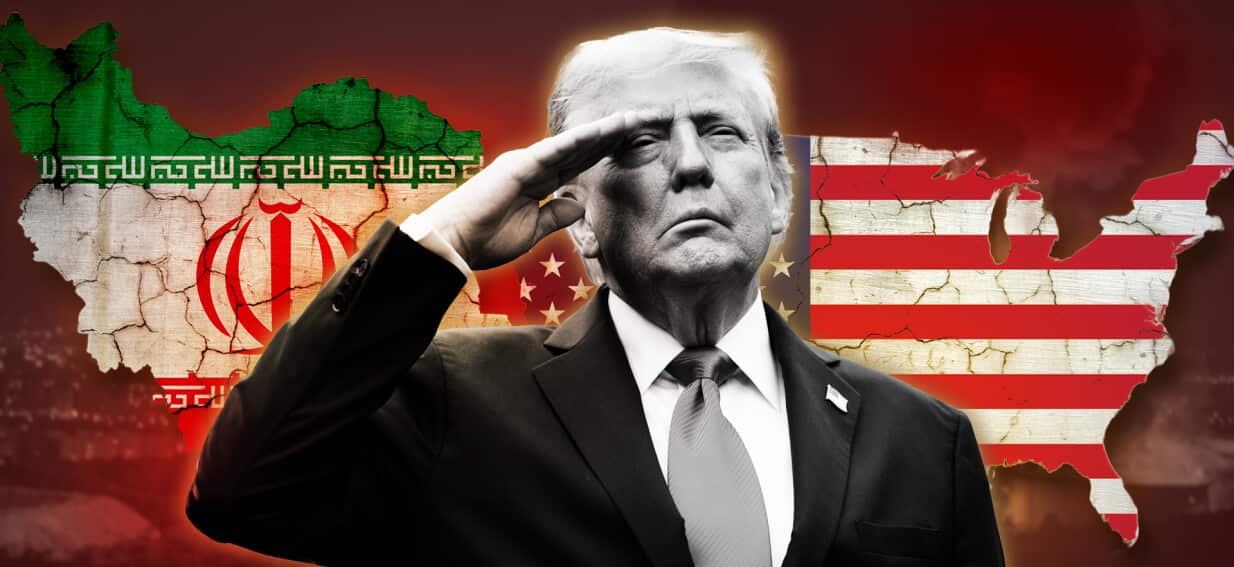
In a quiet suburb of Canberra, a desk lamp flickers in a window long past midnight. A policy analyst stares at a map of the Red Sea, tracing the jagged coastline where drones—costing less than a used sedan—are currently dictating the price of milk in a Melbourne grocery store. This is the new reality of Australian security. It is no longer about the size of the fleet or the polish on the medals. It is about a fundamental shattering of the old order, a re-ordering of power that began in the dust of the Middle East and is now knocking on the doors of the Indo-Pacific.
We used to believe in a world of straight lines. There were allies, there were adversaries, and there was a vast, predictable ocean that kept the two apart. That world died. It died under the weight of asymmetrical warfare and the realization that a conflict five thousand miles away can rewrite the rules of a nation’s survival overnight.
The Butcher’s Bill for Stability
Consider a hypothetical shipping executive named Sarah. She oversees the logistics for a firm that brings medical components into Sydney. A year ago, her biggest headache was a labor strike or a seasonal storm. Today, she watches live telemetry of Houthi missile strikes. She sees the "global commons"—those invisible highways of the sea we all took for granted—turning into a shooting gallery.
When the Middle East catches fire, the smoke doesn’t just drift; it chokes. For Australia, the conflict between Israel and its neighbors isn't just a tragic nightly news segment. It is a stress test for every alliance the country holds dear. For decades, Australia relied on the "Unipolar Moment," a period where American hegemony acted as a global police force. If there was trouble in the shipping lanes, the U.S. Navy would arrive, and the problem would vanish.
That certainty has evaporated.
The United States is tired. Its resources are stretched thin across a three-theater problem: supporting Ukraine, deterring China, and quenching the fires in the Levant. Australia now faces a harrowing question that no politician wants to ask aloud: If the world goes to hell in three places at once, who shows up for us?
The Mechanics of the New Order
The re-ordering of power isn't a metaphor. It is a physical reality. We are seeing the rise of what experts call the "Axis of Upsetters." Iran, Russia, and North Korea, with varying degrees of Chinese backing, have realized that they don't need to defeat the West in a fair fight. They just need to make the current system too expensive to maintain.
Think about the math of a modern missile defense. An insurgent group launches a "suicide drone" that costs $20,000 to build in a garage. To stop it from hitting a billion-dollar destroyer or a merchant ship, an allied navy must fire an interceptor missile that costs $2 million. You don't need to be a mathematician to see where that ends. It ends in exhaustion.
This economic exhaustion is a weapon. It forces the U.S. to make choices. Every Tomahawk missile fired in the Red Sea is one fewer missile available to deter a flashpoint in the South China Sea. For Australia, this is the "Invisible Stake." Our security is being cannibalized by a conflict we have no power to stop.
The AUKUS Friction
Then there is the matter of the "Great Pivot." Australia has bet its entire century on AUKUS—the trilateral security pact with the UK and the U.S. centered on nuclear-powered submarines. It was a bold, expensive, and deeply specific bet. The premise was simple: we will integrate our DNA with the Americans to ensure a "Free and Open Indo-Pacific."
But the Middle East is the great disruptor of pivots.
Every time Washington tries to turn its face toward Asia, the Middle East grabs it by the shoulders and spins it back around. This creates a terrifying resonance in Canberra. There is a growing fear that the "Check is in the mail," but the mail truck is currently stuck in a ditch in Gaza or Southern Lebanon.
Australia’s alliances are being forced to evolve from a "Hub and Spoke" model—where everyone just talks to the U.S.—into a "Web" model. This is why you see Australian ministers flying to Tokyo, Seoul, and Manila with frantic frequency. They are building a safety net. They are realizing that the old protector is busy, and the neighborhood is getting louder.
The Human Cost of Strategy
It is easy to get lost in the jargon of "geopolitical shifts" and "interoperability." But look closer at the human element. Look at the families of Australian defense personnel who are being told that their roles are changing. Look at the small business owner in Perth who can’t get the parts he needs because the ships are taking the long way around Africa to avoid the missiles.
The Middle East conflict has also imported a social volatility that Australia hasn't seen in decades. The "re-ordering" isn't just happening at the UN; it’s happening in our streets. The polarized protests, the breakdown of social cohesion, the intense emotional labor of a multicultural society processing a distant war—this is part of the security landscape too.
A nation that is fractured internally cannot project strength externally.
Our adversaries know this. They aren't just counting missiles; they are counting TikTok views. They are watching how the domestic fallout of the Middle East conflict paralyzes the decision-making of Western governments. If a government is afraid of its own voters' reaction to a foreign policy move, that government is effectively neutralized.
The End of the Spectator Era
For most of its modern history, Australia has been a "Spectator State." We contributed small, high-quality forces to distant wars, paid our "insurance premiums" to the alliance, and went back to our barbecues. We enjoyed the luxury of distance.
That distance is gone.
Digital connectivity, global supply chains, and the democratization of high-tech weaponry have collapsed the map. A teenager in a basement in Tehran can now affect the interest rates in Brisbane. This realization is a cold shower for a nation that has long felt "Girt by Sea" meant "Safe by Sea."
The re-ordering of power means we are moving into a world of "Vigilante Stability." Small and middle powers are taking matters into their own hands. Australia is buying long-range strike missiles. We are building our own drones. We are, for the first time in a long time, acting like a nation that realizes no one is coming to save us unless we are worth saving.
The Mirror of Conflict
If you look into the flames of the Middle East, you don't just see a war between local actors. You see a mirror. You see what happens when deterrence fails. You see how quickly "unbreakable" international norms can shatter.
The lesson for Australia’s alliances is brutal: Loyalty is a function of capacity.
The U.S. will remain Australia’s primary partner, but the nature of that partnership is shifting from "Protector and Protected" to "Struggling Co-operators." It is a messy, uncomfortable transition. It requires Australia to grow up, strategically speaking, and fast.
The desk lamp in Canberra stays on. The analyst scrolls past another video of a burning tanker. They aren't just looking at a conflict; they are looking at a blueprint. They are trying to figure out how to keep a mid-sized island continent relevant in a world where the big players are distracted and the small players have discovered how to bite.
We are all living in the shadow of that distant fire. The warmth of the old alliances is fading, replaced by the harsh, flickering light of a world where power is no longer granted—it is seized, contested, and defended every single day.
The map on the wall is the same. The lines are just beginning to bleed.


