The air in the Tehran bazaar does not care about diplomatic cables. It smells of saffron, diesel exhaust, and the metallic tang of anxiety. When the currency ripples, the price of a kilo of lamb rises before the ink on the morning papers is even dry. For the shopkeeper weighing out pistachios, the geopolitical maneuvering in high-walled compounds isn’t a game of chess. It is a weight on his chest.
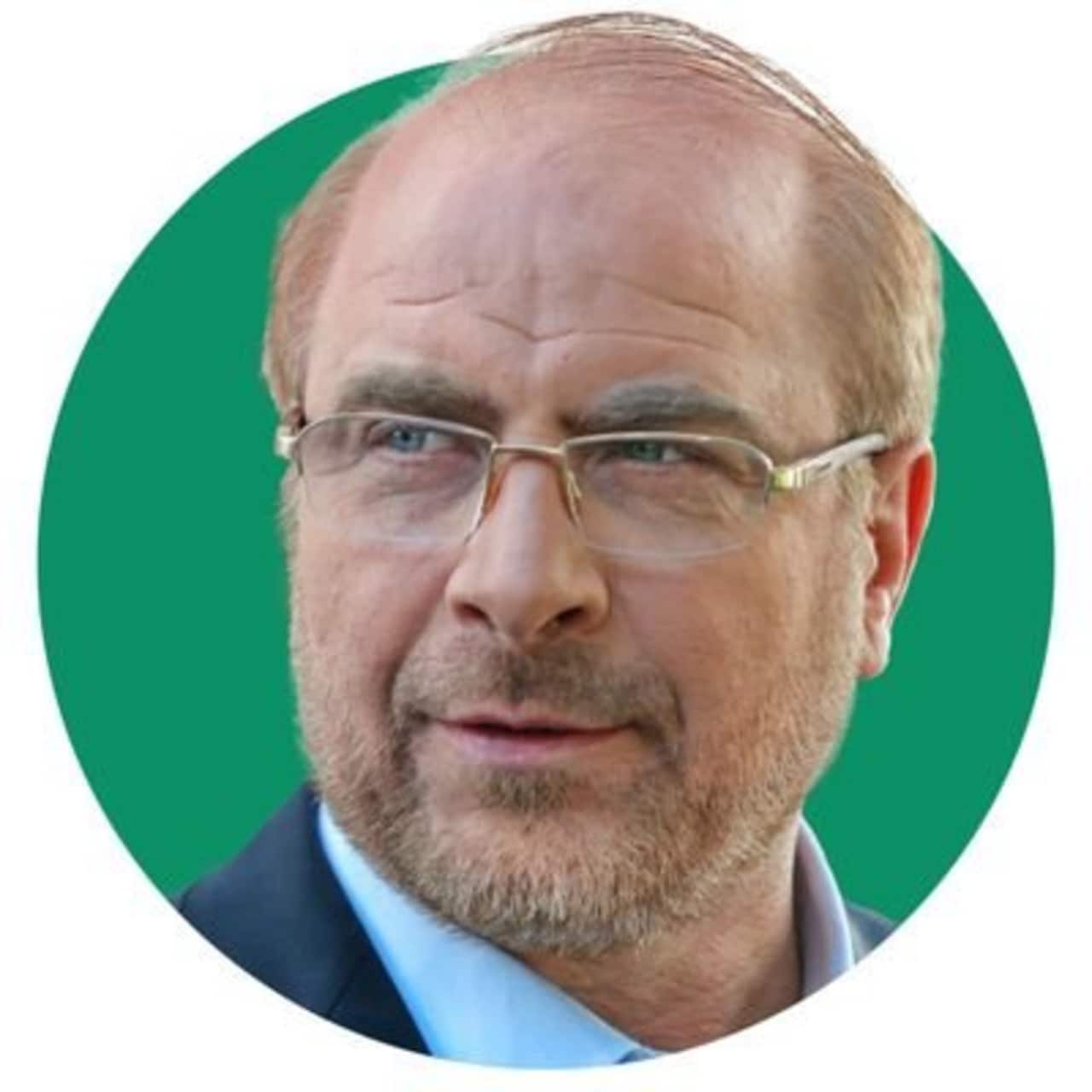
Mohammad Bagher Ghalibaf, the Speaker of Iran’s Parliament, knows this weight. He also knows the optics of strength. Recently, his rhetoric has shifted, cooling the already frigid air surrounding the prospect of a second round of direct talks with the United States. To the casual observer, it looks like a door slamming shut. To those who live within the tension, it is the sound of a heavy bolt sliding into place, a signal that the price of entry has just gone up.
Politics in this region is rarely about the words spoken at a podium. It is about the silence between them. Ghalibaf, a man who has navigated the treacherous waters of the Iranian establishment for decades, is currently signaling a profound skepticism. He isn't just doubting the utility of the talks; he is questioning the very foundation of the American approach. This isn't a simple "no." It is a calculated "not like this."
Consider a hypothetical family in a middle-class Tehran apartment. Let’s call them the Rahimis. They sit around a dinner table that has shrunk over the years. Not the physical wood, but what sits atop it. The father remembers a time when a "deal" meant the world would open up. He remembers the brief, flickering hope of 2015, when the nuclear agreement felt like a bridge to a normal life. Now, he watches the news and sees Ghalibaf’s stern face. He doesn’t see a politician; he sees the gatekeeper of his children's future. When Ghalibaf casts doubt on the talks, the Rahimi family feels the bridge swaying in a violent wind.
The core of the friction lies in a fundamental misalignment of trust. The Iranian leadership views the American side not as a partner, but as a fickle entity that can tear up a contract with the change of an administration. From Ghalibaf’s perspective, why sit down for a second round of coffee and pleasantries if the last cup was poisoned? He is leaning into a narrative of self-reliance, a "resistance economy" that attempts to insulate the nation from the whims of Western capitals.
But self-reliance is a brutal teacher.
It means the local manufacturer can’t get the specific German-made ball bearings he needs for his assembly line. It means the hospital pharmacist has to apologize to a mother because the specialized oncology meds are stuck behind a wall of banking sanctions. These are the invisible stakes. The data points in a briefing room are heartbeats in a waiting room.
Ghalibaf’s recent assertions suggest that Iran sees the U.S. as being in a position of weakness, or at least, not in a position to dictate terms. He is playing to a domestic audience that is tired of feeling like a pawn. By casting doubt on the talks, he reinforces his image as a defender of national dignity. He is telling the world that Iran will not come to the table as a beggar.
The strategy is risky. It’s a high-stakes poker game where the chips are the daily lives of eighty million people. If the talks stall indefinitely, the pressure cooker continues to hiss. The gap between the ruling elite’s geopolitical ambitions and the street’s economic reality widens.
Wait. Look closer at the language being used. Ghalibaf isn't just rejecting the U.S.; he is demanding a change in the "behavior" of the interlocutors. It is a psychological play. In the souks and the universities, people debate whether this is a genuine shift toward isolation or a sophisticated bartering tactic. Is he killing the deal, or is he just making sure the next deal is written in stone?
History provides a grim context. For a century, this nation has seen its borders drawn, its leaders toppled, and its resources extracted by outside powers. That collective memory creates a thick skin of cynicism. When an American official talks about "diplomacy," many in Tehran hear "subterfuge." Ghalibaf is tapping into that ancient well of suspicion. He is standing on a foundation of historical grievances that make any handshake look like a betrayal to the hardliners.
There is a specific kind of exhaustion that settles into a society under perpetual Sanction. It’s not a sudden collapse, but a slow erosion. You see it in the crumbling facades of buildings that can’t be repaired and in the faces of young graduates looking at one-way tickets to Istanbul or Dubai. This "brain drain" is a silent hemorrhage. While the politicians argue over the percentage of uranium enrichment, the country’s most valuable resource—its intellect—is packing a suitcase.
Ghalibaf’s skepticism effectively puts the ball back in Washington’s court, but it’s a ball wrapped in barbed wire. He is demanding guarantees that perhaps no democracy can truly give. How does a President today promise what a President four years from now will do? This is the paradox that haunts the negotiating table. It is a clash of systems: one that values the permanence of revolutionary ideals and one that is subject to the pendulum swings of the ballot box.
The tragedy of the "second round" is that the first round never really ended for the people on the ground. They have been living in the aftermath of the previous failure every single day. For them, "negotiations" are not a headline. They are the difference between a business staying open and a "For Lease" sign appearing in a dusty window.
Behind the closed doors of the Majlis, the debates are likely fierce. Ghalibaf must balance the demands of the Supreme Leader, the pressure from the Revolutionary Guard, and the quiet, desperate hum of a public that just wants to breathe. His public casting of doubt serves as a pressure valve for the hardliners, but it does little to cool the fever of the economy.
If you walk through the Laleh Park in the evening, you see retirees playing chess. They move the pieces with a slow, practiced grace. They understand that a single move can dictate the end of the game an hour before it happens. Ghalibaf is making his move. He is betting that by showing the back of his hand, he will eventually see a better face from his opponents.
But the players at the park know something the politicians often forget. You can win the game and still find yourself sitting alone in the dark. The board can be cleared, the strategy can be perfect, but if there is no one left to play with, or no prize left to claim, the victory is hollow.
The doubt Ghalibaf has cast isn’t just about a meeting in a neutral European city. It’s a doubt about the possibility of a shared future. It is a signal that the walls are being reinforced, the windows are being shuttered, and the long, cold night of "strategic patience" is far from over.
As the sun sets over the Alborz mountains, the city glows with a million lights, each one representing a home trying to navigate a world that feels increasingly indifferent to its struggle. The Speaker of the Parliament has spoken, the cameras have flashed, and the headlines have been sent across the globe. Yet, in the quiet corners of the city, the only sound that matters is the clicking of a calculator in a small grocery store, tallying the cost of survival in a world where the talk is cheap, but the silence is devastatingly expensive.
A man stands on his balcony, looking out at the smog-tinted horizon. He holds a phone that connects him to a world he is told is his enemy, yet he uses it to watch videos of people living lives that seem like science fiction. He hears the news of the "doubt" cast by his leaders. He sighs, a sound lost in the roar of the city, and goes back inside to a room where the light is dimming, waiting for a tomorrow that looks exactly like today.