The air inside the Al Khiran Mall doesn't smell like a typical airport terminal. There is no scent of jet fuel or the frantic ozone of a security X-ray machine. Instead, it smells of new floor wax and expensive espresso. Yet, for a specific group of travelers in Kuwait, this polished shopping center has become the unlikely threshold to a long-awaited homecoming.
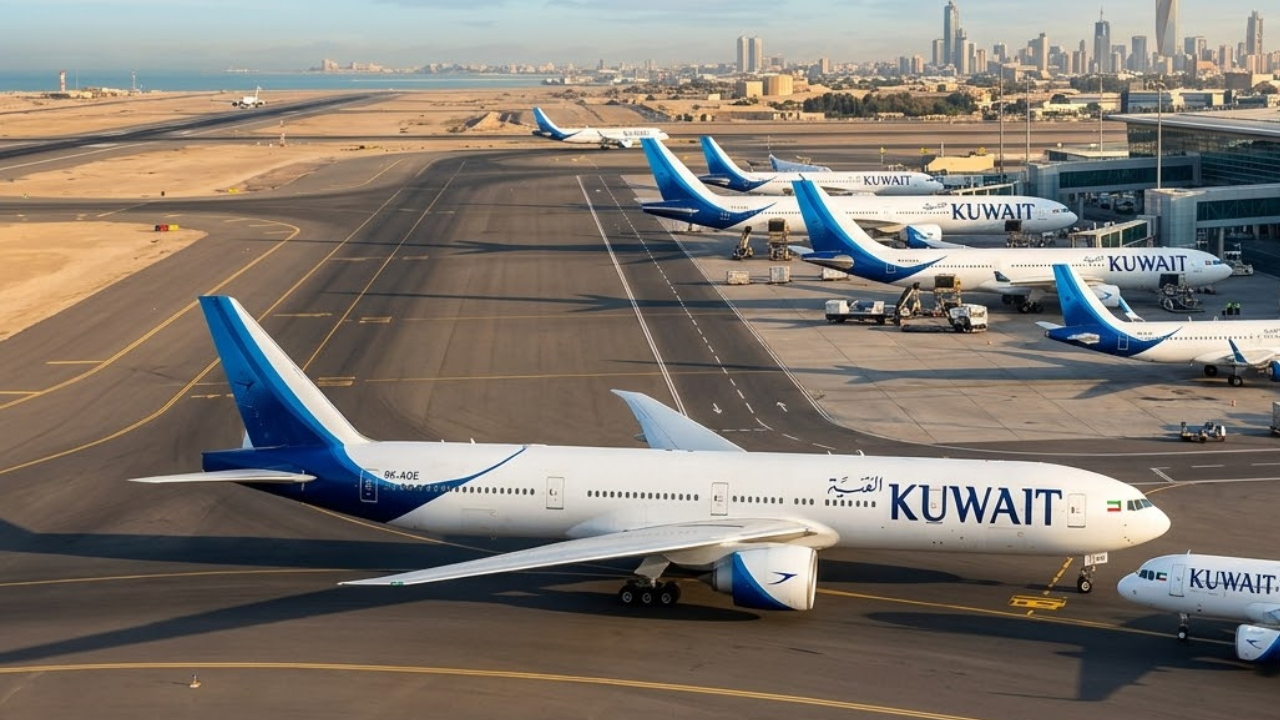
Imagine a desk clerk named Ahmed. He hasn't seen his mother in Cairo for two years. He has the saved dinars, the packed suitcase, and the burning need to sit in a kitchen in Heliopolis, but the direct corridors between Kuwait and Egypt have been complicated by the shifting sands of regional aviation logistics. When Kuwait Airways announced the resumption of its Cairo service starting March 26, 2026, it wasn't just a corporate press release. It was a bridge rebuilt.
But this bridge has a unique architecture. It doesn’t span the map in a straight line.
The Dammam Connection
Geography is often a suggestion rather than a rule in modern flight paths. To get to Cairo, travelers will first find themselves touching down in Dammam, Saudi Arabia. This isn't a mere layover; it is the strategic pivot point that makes the route viable.
By routing through King Fahd International Airport, Kuwait Airways is navigating a complex web of bilateral agreements and operational efficiencies. For the passenger, it means a slightly longer journey in minutes but a significantly shorter one in terms of emotional endurance. The alternative—waiting for direct slots that may not materialize or booking three separate low-cost carriers with no baggage protection—is a far more exhausting trek.
Consider the mechanics of the transfer. You board in Kuwait, a short hop over the Gulf brings you to the Eastern Province of Saudi Arabia, and then the nose of the aircraft turns West toward the Nile. It is a rhythmic pulse of travel: ascent, descent, a moment of transit, and then the final stretch.
Checking In Between the Storefronts
The most human element of this new operational Reality is where the journey begins. Usually, the stress of international travel starts at the Departures curb of a crowded airport. You fight for a trolley. You stand in a line that snakes toward a distant counter while digital screens flicker with delays.
Kuwait Airways has moved that stressor into the Al Khiran Mall.
It sounds counterintuitive. Why go to a mall to leave the country? But the psychology is sound. By processing travel procedures—the document checks, the bag drops, the boarding pass printing—within the mall’s dedicated facility, the airline is stripping away the "airport anxiety" that spikes the moment you enter a terminal.
You aren't a "passenger" yet. You are still a person. You can check your heavy luggage, verify your visa for Egypt, and then walk fifty yards to buy a book or a bag of nuts for the flight. The transition from civilian life to "traveler" is cushioned by the familiar environment of a shopping center. By the time you reach the actual gate at the airport, the heavy lifting is done. Your hands are empty. Your mind is quieter.
The Invisible Stakes of a Boarding Pass
We often talk about airlines in terms of fleet age or seat pitch. We analyze "resumed services" as data points on a spreadsheet. This misses the heartbeat of the matter.
For the Egyptian diaspora in Kuwait, a flight to Cairo is a lifeline. It is the ability to be present for a wedding, to hold a hand during a surgery, or to simply stand on a balcony and hear the city's chaotic, beautiful symphony. When a national carrier pulls back from a route, those lives are put on hold. When they return, even via a transit point like Dammam, the gears of family life begin to turn again.
There is a specific kind of tension in a household when a trip is "planned" but not yet "booked." It sits in the corner of the room. It colors the evening phone calls. "Maybe next month," becomes the mantra. The March 26 start date isn't just a Tuesday on a calendar; it is the day that "maybe" becomes "finally."
Navigating the Formalities
Reliability is the currency of trust in the Middle East aviation market. The "travel procedures" mentioned in the official announcements aren't just bureaucratic hurdles. They are the guardrails of the experience.
At Al Khiran, the staff are trained to handle the specificities of the Cairo route. Egypt’s entry requirements can be fluid. Having a dedicated space away from the terminal chaos allows for a more deliberate, human interaction. If a document is missing or a weight limit is exceeded, it is handled in the calm of the mall, not the high-pressure environment of a closing gate.
The logic is simple: move the friction to a place where there is more room to breathe.
The Weight of the Suitcase
Every bag dropped at the Al Khiran counter tells a story. There are the heavy ones, stuffed with gifts from Kuwait—chocolates, electronics, perfumes—the physical manifestations of a year's hard work being sent back to loved ones. Then there are the light ones, belonging to the business travelers for whom the Kuwait-Cairo-Dammam triangle is a professional necessity.
The resumption of these flights signals a stabilization. It suggests that the logistical hurdles that once blocked these paths are being cleared by creative routing. Using Dammam as a hub is a clever workaround, a way to keep the engines humming while the broader political and economic landscapes continue to shift.
It is a reminder that we are rarely moving in a straight line. Progress, like this flight path, often requires a detour. We go East to go West. We go to a mall to go to an airport. We wait for years so that a Tuesday in March can change everything.
As the first flight pushes back from the tarmac on the 26th, heading toward the Saudi coast before banking toward Africa, the passengers won't be thinking about regional hub strategies or mall-based processing efficiencies. They will be looking out the window, watching the desert give way to the sea, knowing that in a few hours, the air will change. It will lose the scent of floor wax and take on the dust, spice, and ancient heat of the city they call home.
The lights of the cabin will dim. The hum of the engines will settle into a steady drone. Somewhere over the Red Sea, the distance between Kuwait and Cairo will finally shrink to zero.
Would you like me to find the specific baggage allowance and check-in window times for the Al Khiran Mall facility to help you plan your trek?