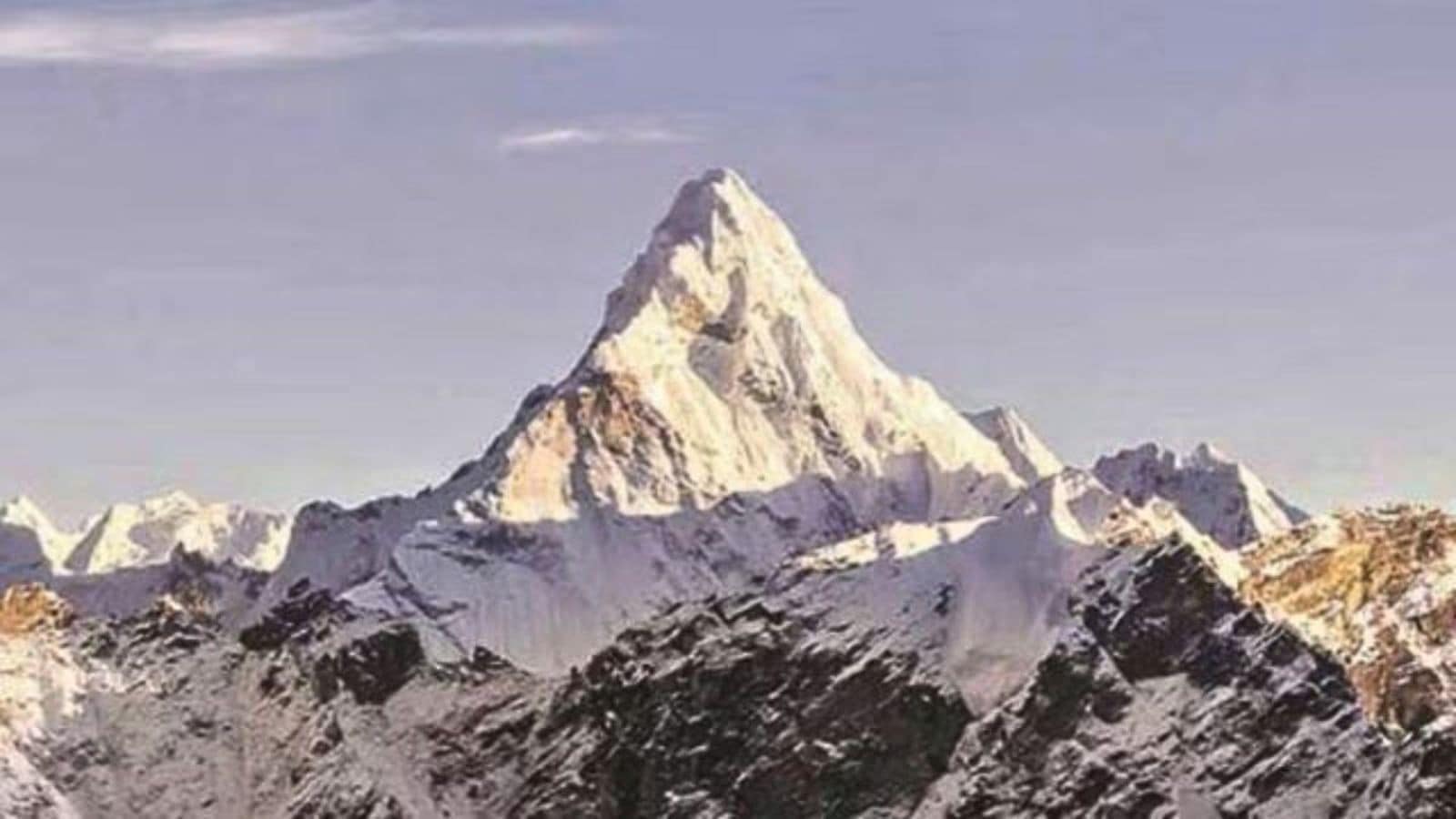
The restoration of the summit route on Mount Everest following a two-week blockage is not merely a mountaineering update; it is a critical reset of a high-stakes, time-sensitive supply chain. In the context of high-altitude operations, the "route" functions as a single-track artery through which human capital, oxygen reserves, and waste must flow within a narrow meteorological window. When Sherpa teams clear a blockage—typically caused by shifting ice or heavy snow accumulation—they are effectively reopening a closed economy where the currency is time and the cost of failure is biological collapse.
The Architecture of the Bottleneck
The blockage of the South Col route creates a cascading failure across the entire expedition ecosystem. To understand the gravity of a two-week delay, one must quantify the constraints of the Himalayan climbing season.
The Seasonal Compression Ratio
The spring climbing window is dictated by the movement of the subtropical jet stream. High-velocity winds usually vacate the summit area for a period of 5 to 14 days in late May. When a route remains closed for 14 days during the lead-up to this window, the density of climbers waiting at lower camps increases exponentially. This creates a "compressed summit wave." Instead of 600 climbers attempting the peak over two weeks, the entire cohort is forced into a 72-hour window.
Kinetic Friction in the Death Zone
The physical clearing of the route involves the installation of fixed lines—static ropes anchored into ice and rock. When these lines are absent or buried, the throughput of the Khumbu Icefall and the Hillary Step drops to zero.
- The Lead-Climber Constraint: Only a specialized tier of elite Sherpas possesses the technical proficiency to "fix" the route.
- Fixed-Line Reliability: Every day a rope is buried under fresh snow, its structural integrity is compromised by ice-loading and UV degradation.
- Physical Obstruction: A blockage often results from a serac collapse or a "blue ice" sheer. These require manual labor using ice axes and shovels at altitudes where oxygen saturation is roughly 30% of sea-level values.
The Economic Impact of the Two-Week Latency
The delay in clearing the route triggers three specific economic pressures on expedition operators.
1. Oxygen Burn Rates
Expeditions operate on a strict inventory of supplemental oxygen (bottled $O_2$). Each bottle provides approximately 5 to 7 hours of flow at a standard rate.
- Static Consumption: Climbers at Camp III (7,200m) and Camp IV (7,950m) consume oxygen even while resting.
- Inventory Depletion: A 14-day delay often forces teams to use "reserve" bottles intended for the descent.
- The Logistics Gap: If the route is closed, Sherpas cannot ferry fresh bottles to high camps, creating an inventory deficit exactly when demand is highest.
2. Metabolic Decay
Human physiology at high altitude is a process of managed deterioration. Above 5,500 meters, the body cannot effectively repair tissue or digest nutrients efficiently.
- Muscle Mass Atrophy: Two weeks of inactivity at Base Camp or Camp II results in significant loss of fast-twitch muscle fiber and cardiovascular VO2 max.
- Psychological Fatigue: The cognitive load of waiting for a route to open increases the probability of decision-making errors during the eventual summit push.
3. Personnel Cost and Contractual Liability
The "Sherpa clearing team" represents a specialized labor force. Their inability to work due to weather or technical blockages results in "dead time" where daily wages and food costs continue to accrue without progress.
The Mechanics of Route Restoration
Reopening the route is a tactical operation requiring specific technical maneuvers. The Sherpas do not just "walk" to the top; they rebuild the infrastructure.
Anchor Point Engineering
Clearing the route involves locating lost anchors. In many cases, old snow pickets and ice screws are buried under meters of fresh powder. The team must establish new anchor points in stable "black ice" or bedrock.
- Lead Fixing: Two Sherpas climb unroped or on short-belays to the highest accessible point.
- Line Tensioning: 1,000-meter spools of rope are hauled and tensioned to prevent "slack-load" which causes falls.
- Hazard Mitigation: Large snow cornices or unstable wind slabs must be intentionally triggered (avalanche mitigation) or bypassed.
The Hillary Step Bottleneck
The final 100 meters of the climb represent the ultimate structural bottleneck. If the fixed lines are not perfectly tensioned here, a queue forms. A queue at 8,800 meters is not just an inconvenience; it is a metabolic crisis. Each minute spent standing still increases the risk of frostbite as blood flow to extremities slows to preserve core temperature.
Quantifying Risk in the Post-Blockage Surge
The immediate aftermath of a route clearing is the most dangerous period of the season.
The Convergence Factor
When the route opens, "climbing density" spikes. This leads to several systemic failures:
- Anchor Overload: Fixed lines are designed for sequential use. In a surge, multiple climbers may put weight on the same rope section simultaneously, testing the tensile strength of the anchors.
- Resource Scarcity: Human traffic jams at the "Yellow Band" or "Geneva Spur" delay Sherpa teams trying to bring down empty oxygen cylinders and trash, resulting in camp overcrowding.
- Meteorological Volatility: Because the window has been shortened by the two-week delay, leaders are more likely to push through marginal weather. The margin for error is effectively erased.
Tactical Decision-Making Framework
Expedition leaders must now choose between two strategies:
- The Early Mover Advantage: Pushing immediately after the route is fixed. The risk is high-altitude exhaustion for the Sherpa team who just cleared the route.
- The Lag Strategy: Waiting for the first wave to finish. The risk is the weather window closing before the turn arrives.
Operational Logistics of Waste and Body Recovery
A two-week blockage also halts the removal of biological and technical waste. Everest is a closed-loop system that relies on constant downward flow.
- Human Waste Management: Bags of waste at Camp II and Camp IV must be manually carried down. A 14-day backlog creates sanitation risks in cramped camping areas.
- The Body Recovery Constraint: If a fatality occurs during the blockage, the body cannot be moved. This creates a psychological burden for the fixing team who must pass the location repeatedly during the clearing process.
Strategic Recommendation for High-Altitude Management
Operators must shift from a "Success-Based" model to a "Resilience-Based" model. The two-week blockage highlights the fragility of relying on a single fixed-line infrastructure.
To mitigate the effects of future blockages, the industry must adopt a redundant supply strategy:
- Forward Oxygen Positioning: Pre-positioning 150% of required oxygen at Camp II before the season begins.
- Diversified Labor Pools: Establishing two independent route-fixing teams—one for the lower sections and one for the summit ridge—to reduce the metabolic load on a single group.
- Dynamic Pricing for Windows: Adjusting expedition costs based on the "window density." Climbers willing to take later, higher-risk windows should be subsidized by those paying for the primary, lower-risk slots, allowing for better distribution of human traffic.
The reopening of the Everest route is a temporary solution to a systemic problem. The real challenge is not the ice; it is the management of the human surge that follows its removal. Success in the current season depends entirely on the ability of team leaders to throttle their ascent rates to match the reduced throughput capacity of the newly fixed lines.