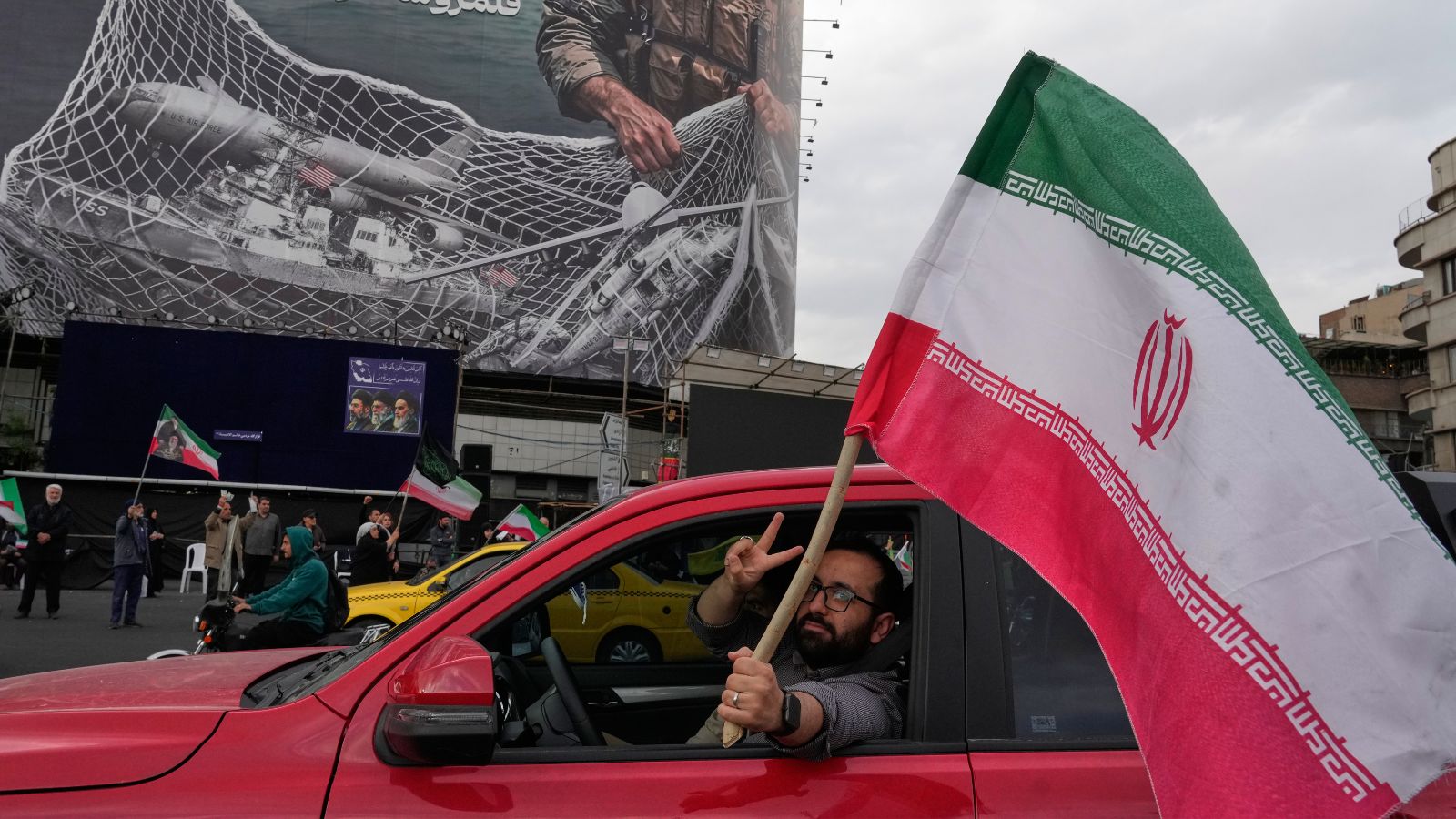
The United States cannot legally blockade the Strait of Hormuz under current international law, regardless of the geopolitical tensions simmering in the Persian Gulf. Any attempt to physically obstruct the passage of commercial vessels would violate the 1982 United Nations Convention on the Law of the Sea (UNCLOS) and the long-standing principle of transit passage. While Washington frequently cites "freedom of navigation" as the bedrock of its naval presence, a blockade is an act of war, not a law enforcement tool. Under the established rules of the sea, even a superpower cannot unilaterally choke off a waterway that serves as the jugular vein of global energy without shredding the very legal framework it claims to protect.
The Transit Passage Trap
The Strait of Hormuz is not merely a patch of open water. It is an international strait where the territorial waters of Iran and Oman overlap completely. Because the strait is narrower than 24 nautical miles, there is no "high seas" corridor. Under UNCLOS, this geography triggers the regime of transit passage, which grants all ships and aircraft—including military ones—the right to continuous and expeditious navigation. Discover more on a related subject: this related article.
Unlike "innocent passage," which applies to standard territorial seas and allows coastal states to suspend travel if their security is threatened, transit passage cannot be suspended. It is a non-negotiable right. If the U.S. Navy were to park a carrier strike group across the mouth of the Gulf to inspect or turn back tankers, it would be overstepping its legal authority. Washington finds itself in a peculiar position here. The U.S. has never ratified UNCLOS, yet it recognizes the convention’s provisions on transit passage as customary international law. You cannot claim the benefits of a treaty to move your own destroyers while simultaneously ignoring the restrictions that prevent you from stopping someone else's merchant fleet.
The Myth of Sanctions Enforcement
A common misconception in policy circles is that the U.S. can use its Navy to enforce unilateral economic sanctions. This is a legal fallacy. Sanctions are domestic tools. They penalize companies that use the U.S. financial system, but they do not provide a "license to seize" on the high seas. Further analysis by NPR explores related views on this issue.
International law distinguishes between contraband in a declared war and commercial goods during peacetime. Unless the UN Security Council authorizes a maritime interdiction—similar to the operations against Iraq in the 1990s—any seizure of a vessel in international waters is technically an act of piracy or an illegal use of force. When the U.S. "seizes" Iranian oil, it typically does so through legal maneuvers involving civil forfeiture in American courts, usually after the vessel enters a friendly port or through pressure on the ship’s flag state. Physically stopping a ship in the Strait of Hormuz based solely on American sanctions would trigger a crisis that the current maritime insurance and registration systems are not equipped to handle.
The Belligerent Right Paradox
The only legal path to a blockade is through the declaration of an armed conflict. Under the San Remo Manual on International Law Applicable to Armed Conflicts at Sea, a blockade is a recognized method of naval warfare. However, even this path is riddled with obstacles.
For a blockade to be valid, it must be declared, notified to all nations, and—most importantly—effectively maintained. You cannot have a "paper blockade." You must have the physical force to stop all traffic. Furthermore, a blockade cannot block access to the ports or coasts of neutral states. Since the Strait of Hormuz is the only entry point for neutral nations like Kuwait, Qatar, and the United Arab Emirates, a total U.S. blockade on Iran would illegally trap the commerce of America's own allies.
The logistical reality makes a legal blockade almost impossible to execute without committing a series of war crimes against neutral commercial interests. The global economy relies on the predictable flow of approximately 21 million barrels of oil per day through that chokepoint. The moment a blockade begins, the "neutrality" of the strait vanishes, and the legal distinction between an "interdiction" and an "act of aggression" disappears.
Iran’s Legal Counter-Punch
Iran is not a passive observer in this legal theater. Tehran also hasn't ratified UNCLOS, though it signed it. Iran argues that because it is not a party to the treaty, it is only bound by the older 1958 Convention on the Territorial Sea, which utilizes the "innocent passage" standard rather than "transit passage."
Tehran’s legal stance is that it has the right to bar any vessel that is not "innocent"—namely, foreign warships or tankers it deems a threat to its environment or security. This creates a volatile legal vacuum. If the U.S. attempts to enforce a blockade, Iran can argue it is merely defending its territorial waters against a non-innocent intrusion. This isn't just academic hair-splitting. It is the framework used to justify the "Tanker Wars" of the 1980s and the modern-day "shadow war" of ship seizures.
The High Cost of Breaking the Rules
If the U.S. decides to ignore these legal constraints, the damage extends far beyond the Persian Gulf. The international maritime order is built on the consent of nations to follow specific routes and rules. If the world’s primary guarantor of maritime security begins to arbitrarily block straits, other nations will follow suit.
Imagine China deciding to apply "U.S. logic" to the South China Sea or the Taiwan Strait. If Washington establishes a precedent that a superpower can blockade an international strait based on its own domestic security interests, it loses the legal high ground to protest when Beijing does the same. The U.S. Navy’s entire global strategy is predicated on the idea that the oceans are common property. A blockade in Hormuz would be a self-inflicted wound to the principle of "Global Commons."
Financial Fallout and Sovereign Immunity
The insurance industry, specifically the Protection and Indemnity (P&I) Clubs, operates on the assumption of legal stability. A blockade by the U.S. would likely be classified as a "war risk," causing premiums to skyrocket or coverage to be canceled entirely for the region.
There is also the issue of sovereign immunity. Warships and government-owned vessels have absolute immunity from the jurisdiction of any state other than their flag state. If a U.S. blockade attempts to stop a Chinese or Russian state-owned vessel, it is not just a trade dispute; it is a direct confrontation with the sovereignty of another nuclear-armed power. The law of the sea was designed to prevent exactly this kind of escalation. By attempting to use a blockade as a scalpel for policy, the U.S. would be using a sledgehammer on the foundations of international diplomacy.
The reality of the Strait of Hormuz is that it is a legal fortress. The U.S. can monitor, it can shadow, and it can threaten, but a blockade remains an extralegal option that carries the price of total regional war and the collapse of international maritime law.
Stop looking for a "legal" way to choke the strait. It doesn't exist.



