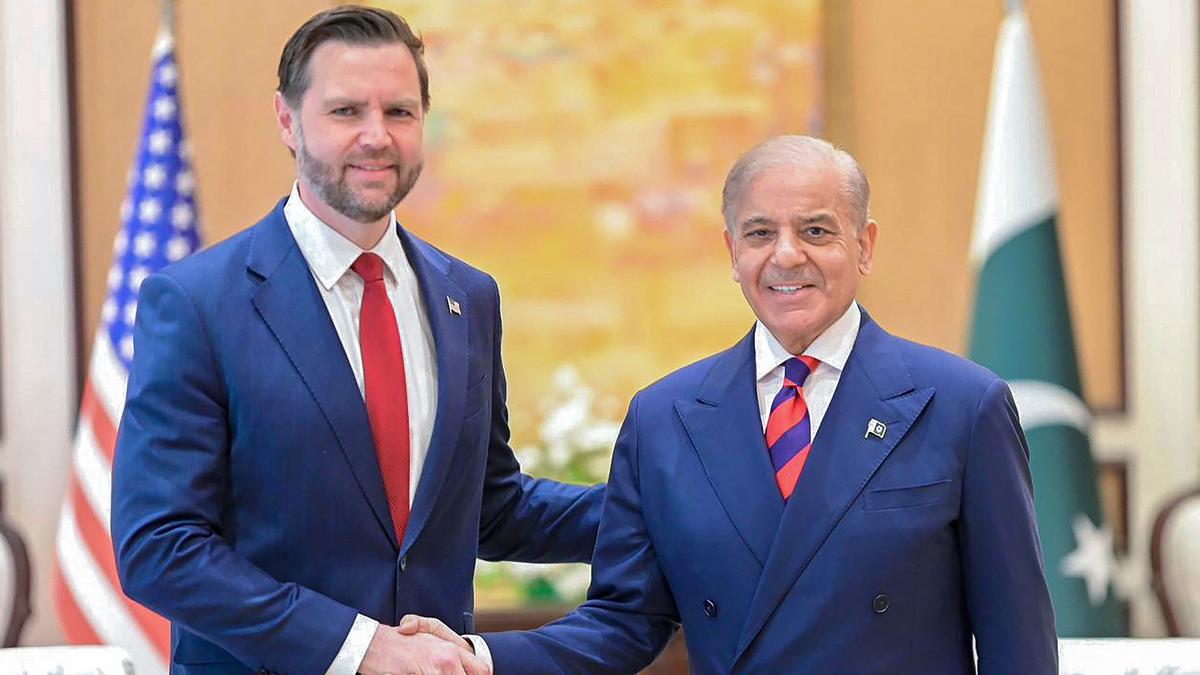
The convergence of United States and Iranian envoys in Islamabad to meet with the Pakistani Prime Minister represents a calculated utilization of Pakistan as a neutral diplomatic buffer, a role necessitated by the breakdown of direct communication channels between Washington and Tehran. This is not a shift in core geopolitical alignments, but rather an exercise in transactional mediation. Pakistan’s geographic proximity to Iran and its long-standing, albeit fractured, security partnership with the United States make it the primary theater for managing regional friction points that neither superpower nor regional power can solve in isolation.
The Trilateral Strategic Matrix
The logic of these meetings rests on three distinct operational layers: security containment, energy infrastructure viability, and the stabilization of the Afghan-border corridor. Each actor enters the Islamabad node with a specific cost-benefit function.
The United States: Risk Mitigation and Intelligence Parity
Washington’s engagement signals a preference for "off-shore balancing." The primary objective is to ensure that Iran’s regional influence—specifically regarding militant proxies and its nuclear trajectory—does not destabilize a nuclear-armed Pakistan. The U.S. envoy’s presence serves to monitor the depth of Iran-Pakistan cooperation while pressuring Islamabad to remain compliant with international sanctions regimes.
From a strategic standpoint, the U.S. views Pakistan as a firewall. If Pakistan tilts too far toward Iranian energy or security cooperation, the U.S. loses its primary lever of influence in South Asia. Therefore, the American strategy is to offer enough security assistance to maintain Pakistani dependency while blocking any structural economic integration between Islamabad and Tehran.
Iran: Sanctions Evasion and Strategic Depth
For Tehran, the Pakistani Prime Minister acts as a vital conduit to the West. Under heavy economic pressure, Iran requires the completion of the Iran-Pakistan (IP) gas pipeline to secure a reliable revenue stream and break its diplomatic isolation. By meeting in Islamabad, Iran seeks to demonstrate that it is a central pillar of regional stability, forcing the U.S. to acknowledge its presence in any discussion regarding South Asian security.
Tehran’s logic is rooted in asymmetric leverage. They understand that a volatile Pakistan is a nightmare for the U.S. By offering energy and security cooperation, Iran positions itself as part of the solution to Pakistan’s internal economic crises, thereby making it harder for Washington to demand total Iranian containment from the Pakistani leadership.
Pakistan: The Neutrality Premium
The Pakistani administration is navigating a "Balance of Constraints." Islamabad needs American financial backing through IMF programs and military hardware, yet it cannot afford a hostile border with Iran, especially as it grapples with internal insurgencies in Balochistan.
- The Economic Constraint: Pakistan requires cheap energy to stave off industrial collapse.
- The Security Constraint: Cross-border militancy requires intelligence sharing with Tehran.
- The Diplomatic Constraint: Offending Washington risks the withdrawal of the financial lifelines that keep the Pakistani economy solvent.
The Mechanics of the Iran-Pakistan Gas Pipeline Bottleneck
The IP pipeline serves as the primary friction point in these negotiations. While the infrastructure on the Iranian side is largely complete, the Pakistani segment remains stalled. The bottleneck is not engineering-based, but rather a function of International Financial Compliance.
If Pakistan proceeds with the pipeline, it triggers U.S. sanctions that would likely terminate its current IMF arrangements. If it fails to proceed, it faces billions of dollars in contractual penalties from Iran. The current negotiations in Islamabad are an attempt to find a "Sanctions-Exempt" workaround, perhaps involving barter trade or electricity swaps, which are harder for the U.S. Treasury to track and penalize than direct currency transfers.
Security Synchronization and the Balochistan Variable
A critical but often overlooked driver of these meetings is the security situation in the border region of Sistan and Baluchestan. Both Tehran and Islamabad face threats from ethnic separatist groups that move fluidly across the frontier.
The mechanism of cooperation here is the Joint Border Center. The U.S. interest in these talks is to ensure that "security cooperation" between Iran and Pakistan does not evolve into an intelligence-sharing pact that compromises U.S. assets or technologies within the Pakistani military. Conversely, Iran is using the threat of border instability to force Pakistan into a more formal security alliance, effectively pushing the U.S. further out of the regional security loop.
The Afghan Factor and Regional Transit
The instability in Afghanistan since 2021 has forced a realignment of regional transit logic. Both the U.S. and Iran have a shared interest in preventing the total collapse of the Afghan state, though for different reasons.
- U.S. Goal: Containment of extremist groups (IS-K) and preventing a refugee crisis that destabilizes Pakistan.
- Iranian Goal: Securing trade routes to Central Asia and managing the flow of Afghan refugees into Iranian territory.
Pakistan sits at the intersection of these interests. The meetings with the Prime Minister are an attempt to synchronize a regional response to the Taliban’s inability or unwillingness to govern its borders. By using Pakistan as the middleman, the U.S. can coordinate regional security measures without having to officially recognize or sit at the table with the Iranian leadership.
Structural Limitations of the Islamabad Channel
Despite the high-level nature of these envoys, several structural "Hard Stops" prevent a total diplomatic breakthrough.
- The Sovereignty Paradox: Pakistan cannot act as a truly neutral mediator as long as its central bank is dependent on U.S.-aligned financial institutions.
- The Nuclear Overhang: Any U.S. concession to Iran through the Pakistani channel is limited by the strictures of the JCPOA (Joint Comprehensive Plan of Action) or its remnants. Washington will not allow Pakistan to facilitate Iranian economic growth while the nuclear issue remains unresolved.
- Domestic Political Volatility: The Pakistani government’s internal instability makes it a weak guarantor of long-term agreements. Both Washington and Tehran are aware that a change in leadership in Islamabad could render current negotiations null and void.
The Resultant Geopolitical Equilibrium
The outcome of these meetings is unlikely to be a signed treaty or a public alliance. Instead, we are seeing the establishment of a De-escalation Protocol.
The U.S. will likely grant "quiet" waivers or overlook small-scale energy cooperation in exchange for Pakistan maintaining a hard line on Iranian military technology transfers. Iran will likely delay legal action on the pipeline penalties in exchange for Pakistan taking more aggressive action against anti-Iran militants on its soil.
The strategy for any regional observer must be to ignore the rhetoric of "brotherly ties" or "strategic partnerships" and instead track the flow of capital and the movement of border security assets. The real negotiations are happening at the level of the Central Bank of Pakistan and the General Headquarters (GHQ) in Rawalpindi.
The final strategic move for Pakistan is to maintain this "Active Neutrality" as long as possible. The moment Pakistan chooses a side, its value as a diplomatic node vanishes, and its economic or security vulnerabilities will be immediately exploited by the slighted party. For the U.S. and Iran, Islamabad remains a necessary, if frustrating, valve to release regional pressure without the political cost of direct engagement.



