The sea does not care about politics. It is a vast, slate-gray expanse that swallows sound and light with equal indifference. But for the fishermen off the coast of the Korean Peninsula, the water has recently begun to feel less like a resource and more like a tripwire. When the horizon flashes—a brief, violent violet that burns through the morning mist—it isn't the sun. It is the signature of a new kind of ghost in the water.
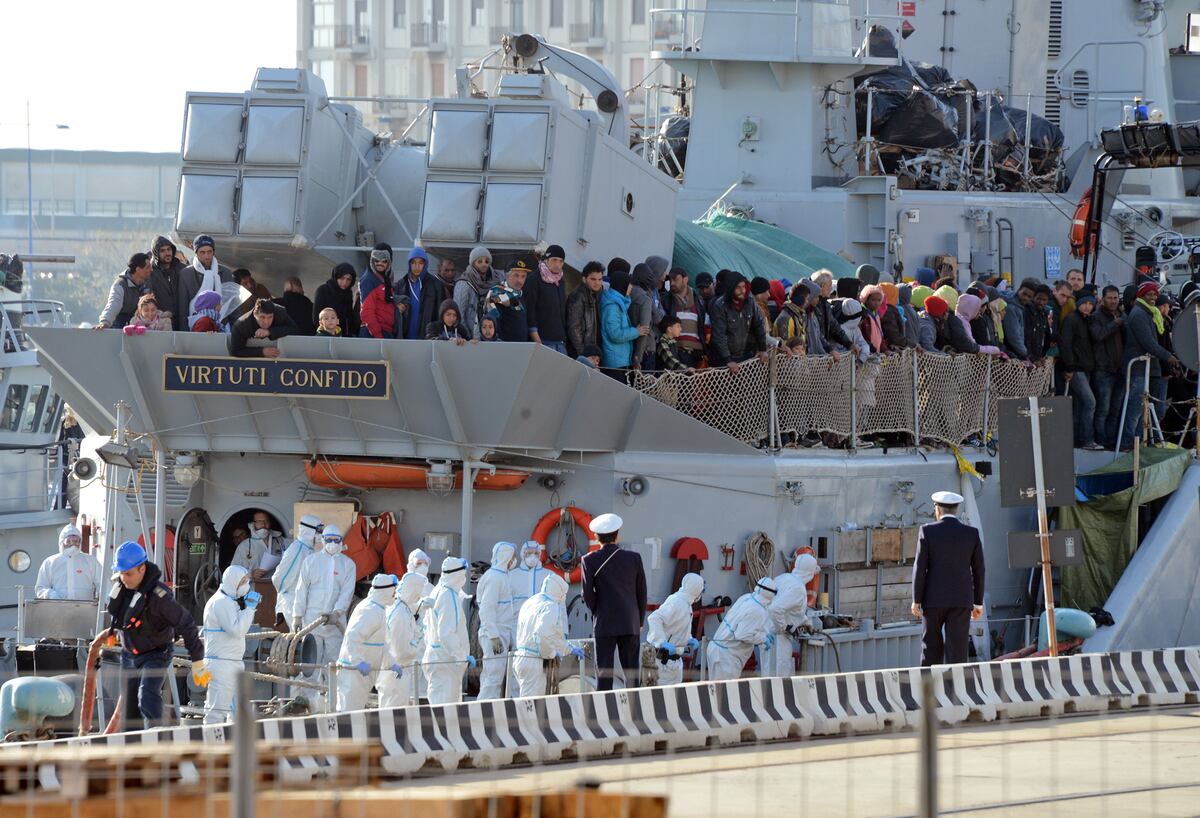
Kim Jong Un recently stood on the deck of a "nuke warship," a vessel designed to carry the weight of a world-ending promise. This isn't just about another missile test. We have become numb to the grainy footage of projectiles arching into the blue. This is about the localization of the threat. It is about moving the silos from the static, trackable mountainsides to the fluid, unpredictable depths of the ocean.
The Weight of the Invisible
Imagine a young sailor stationed on a destroyer in these waters. He is twenty-one. He has a girlfriend in Seoul or a mother in Tokyo. He watches a radar screen that should be tracking weather patterns or commercial freighters. Instead, he is looking for a ripple. The psychological toll of North Korea’s "tactical nuclear" naval expansion isn't found in the megatonnage of the warheads. It is found in the persistent, grinding anxiety of the unknown.
The ship Kim inspected is a physical manifestation of a shift in strategy. By mounting cruise missiles on naval platforms, Pyongyang is attempting to create a "second-strike" capability. If you can’t find the launcher, you can’t stop the launch. This turns the entire Sea of Japan into a giant, liquid shell game.
Modern warfare often feels like a series of abstract data points. We talk about "strategic assets" and "denuclearization windows." But for the people living in the shadow of these tests, the reality is sensory. It is the vibration in the floorboards. It is the way the birds go silent. The latest threats issued by Kim—vowing to "annihilate" enemies if provoked—are designed to sound like madness. They aren't. They are a cold, calculated form of communication.
The Engineering of Fear
Building a nuclear-capable navy is an immense technical hurdle. Salt water is corrosive. Engines are loud. Keeping a missile ready to fire while it bounces on the waves requires a level of engineering sophistication that many experts once thought was beyond the North’s reach. Yet, the images show a polished, functional reality.
Consider the "Pulhwasal-3-31," a new strategic cruise missile. It doesn't fly high in the atmosphere where it can be easily spotted by satellite. It hugs the waves. It mimics the contours of the earth. It is a predator that stays below the line of sight until the very last second. When Kim Jong Un calls this a "horror threat," he is referencing the mathematical difficulty of interception.
We often treat these events as a repetitive loop, a "saber-rattling" ritual we’ve seen a thousand times. That perspective is a luxury of distance. The reality is that the technology is maturing. Each test is a lesson learned. Each launch is a calibration of the world’s reaction.
A Quiet Morning in Vladivostok
Geography is a stubborn thing. This isn't just a crisis for the South or for the Americans. These missiles are being tested in a backyard shared by Russia and China. When a "nuke warship" fires into the East Sea, the reverberations travel through the diplomatic halls of Moscow and Beijing just as loudly as they do in Washington.
The stakes are invisible until they aren't. We live in a world where the margin for error is shrinking. A miscalculation by a single ship commander, a glitch in a radar system, or a misinterpreted drill could turn a narrative of "deterrence" into a narrative of "history."
The people who live on these coasts—the shopkeepers in Busan, the office workers in Niigata—don't look at the missiles as political statements. They look at them as weather. Something dangerous and unpredictable that has simply become part of the environment. There is a profound sadness in that normalization.
The Ghost in the Machine
The "nuke warship" is more than a weapon; it is a mirror. It reflects our inability to find a language that isn't built on threats. We are witnessing the birth of a naval nuclear age in one of the most congested maritime corridors on the planet.
But the real story isn't the steel or the fire. It’s the silence that follows. After the missile splashes down, after the state media has stopped its triumphant broadcast, the sea returns to its slate-gray indifference. The fishermen go back to their nets. The sailor continues to watch his radar.
The tension doesn't go away. It just sinks, waiting for the next flash to turn the mist into a bruise.
Kim Jong Un’s presence on that deck was a curated performance, but the steel beneath his feet was real. The missiles are real. And the fear of the person watching the horizon, wondering if the next sunrise will be a natural one, is the most real thing of all.
There is no "solution" in a headline. There is only the reality of a world that is becoming increasingly comfortable with the sight of nuclear fire over open water. We are watching a slow-motion transformation of the sea into a fortress, and we are all, in some way, standing on the shore, waiting to see what the tide brings in next.
The water remains cold. The steel remains sharp. And the world holds its breath, not because it wants to, but because it has forgotten how to breathe any other way.