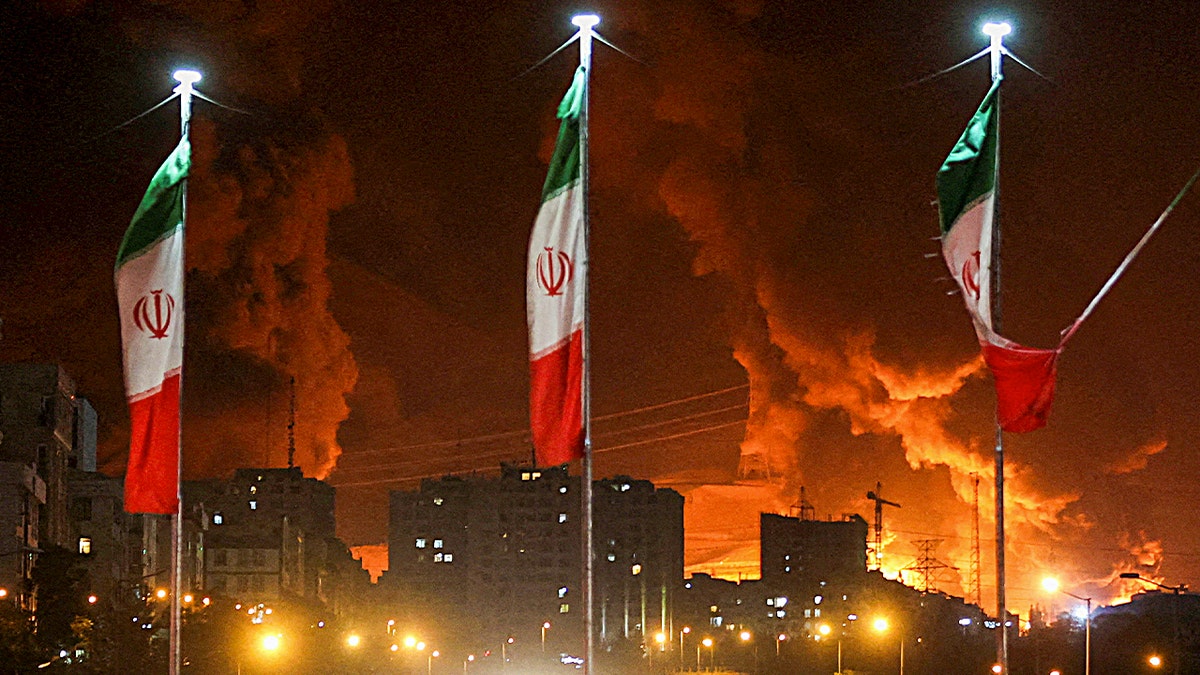
The consensus among geopolitical "experts" is as predictable as it is wrong. They look at aging infrastructure in the Khuzestan province, a handful of US sanctions, and occasional drone chatter, then confidently predict the total evaporation of Iranian crude from the global market. They call it a ticking time bomb. They say the industry is "about to explode" under the weight of its own obsolescence.
They are hallucinating.
What the armchair analysts miss—and what I’ve seen firsthand in markets that operate in the gray—is that the Iranian oil machine has evolved into a hyper-resilient, decentralized shadow entity. It doesn’t need "modernization" in the Western sense to survive. It has already mastered the art of the permanent workaround. If you’re waiting for a catastrophic failure that rebalances the Brent crude price, you’re going to be waiting for a very long time.
The Myth of the Rusting Rig
The loudest argument for an Iranian collapse centers on technical decay. Critics point to the lack of investment from majors like Total or Eni since the 2018 snapback sanctions. They claim that without Western parts, the South Pars gas field and the Ahvaz oil fields will simply grind to a halt.
This assumes the Iranians are sitting on their hands. They aren't.
Since the mid-2000s, Iran has developed a domestic supply chain that mimics Soviet-era "good enough" engineering. They don't need a proprietary Siemens turbine when they can reverse-engineer a Chinese or Russian equivalent that does 85% of the job at 40% of the cost. More importantly, the "technical collapse" narrative ignores the reality of the dark fleet.
When you can’t get a part, you don't shut down. You cannibalize. You innovate via the black market. The National Iranian Oil Company (NIOC) operates more like a guerrilla insurgency than a corporate entity. They have adapted to low-pressure environments and reservoir damage by using unconventional recovery methods that Western ESG standards would never allow. They are willing to burn the furniture to keep the house warm, and in the world of high-stakes energy, that works.
Sanctions Are a Training Program Not a Prison
Western policymakers treat sanctions like a cage. For the Iranian oil sector, they have been a gym. Every year of restricted trade has forced Tehran to build a more sophisticated financial and physical infrastructure that bypasses the SWIFT system and the US Dollar.
The "lazy consensus" says that because Iran has to sell its oil at a discount—often $10 to $15 below the benchmark—to Chinese "teapots" (independent refineries), they are bleeding out.
Wrong.
They are capturing market share that is physically impossible for the US to touch. By utilizing Ship-to-Ship (STS) transfers in the Malacca Strait and re-labeling crude as Malaysian or Omani, Iran has created a frictionless trade route that operates outside the reach of the Treasury Department.
The Real Math of the Discount
Let’s look at the numbers. If Brent is at $80, and Iran sells at $65:
- They still make a massive profit because their lifting costs are among the lowest in the world—roughly $10 to $15 per barrel.
- They avoid the 3% to 5% fees associated with legal, insured, and banked transactions.
- They build "favors" into the pricing that manifest as military hardware or infrastructure tech from their buyers.
The discount isn't a sign of weakness; it’s a cost of doing business that they have already factored into their long-term survival strategy. While the West waits for a "breaking point," Iran is busy optimizing the "bending point."
The Ghost Fleet is the New Infrastructure
People ask: "How can they export when their tankers are being seized?"
The answer is that they don't own the fleet—not all of it. The rise of the "Ghost Fleet" is the single most disruptive force in energy logistics over the last decade. We are talking about hundreds of vintage tankers, owned by shell companies in the Marshall Islands or Liberia, operating with disabled AIS (Automatic Identification System) transponders.
These ships are the infrastructure. You can’t sanction a ghost. When one vessel gets blacklisted, the cargo is transferred to another mid-ocean, the paperwork is "sanitized," and the oil arrives at a port in Shandong as "bitumen blend."
The competitor's piece suggests that one major strike on the Kharg Island terminal would end the game. That’s amateur logic. Iran has already begun diversifying its export terminals, moving operations east of the Strait of Hormuz to Jask. They are decentralizing the very target the West thinks it can hit.
The Fatal Flaw in the "Explosion" Theory
The "explosion" theory relies on the idea that the Iranian people or the technocrats within the NIOC will eventually give up because the system is inefficient.
Efficiency is a Western luxury.
In a survivalist economy, the only metric that matters is flow. As long as the oil moves, the regime stays liquid. They don't need a $200 billion capital expenditure program to keep the lights on; they need enough to pay the IRGC and keep the domestic price of gasoline subsidized enough to prevent a total revolt.
I’ve watched analysts make this same mistake with Venezuela for twenty years. They see the smoke and assume the engine is dead. But these engines are designed to run on smoke.
Stop Asking if it Will Fail
The wrong question is: "When will the Iranian oil industry collapse?"
The right question is: "How does the global market handle an un-killable, unregulated 3 million barrels per day?"
If you are a trader or a policy wonk, you need to accept that the Iranian supply is a permanent fixture of the underworld economy. It acts as a pressure valve for China and a thorn in the side of OPEC+.
The Hard Truths:
- Technological isolation hasn't killed production; it has just made it uglier and harder to track.
- The "collapse" is a Western projection of what we think should happen to an aging industry.
- The dark fleet is now a permanent sub-sector of global shipping that won't go away even if sanctions are lifted.
The industry isn't about to explode. It has already finished its transformation into something much more dangerous: a system that thrives on the very chaos intended to destroy it.
Betting on a collapse is betting on a world that doesn't exist anymore. The Iranians aren't playing by the rules of the IEA or the World Bank. They are playing a game of attrition where the goal isn't to win, but to never stop playing.
The rigs will keep pumping, the ghosts will keep sailing, and the "experts" will keep being surprised.
Get used to it.