The sea does not care about flags. To a captain standing on the bridge of a 300-meter-long tanker, the water looks the same whether it is under the jurisdiction of a sovereign nation or the lawless expanse of the high seas. But in the Strait of Hormuz, the water carries a weight that the eyes cannot see. It is a pressure that sits in the back of the throat. It is the knowledge that you are sailing through a throat, and that at any moment, the throat can close.
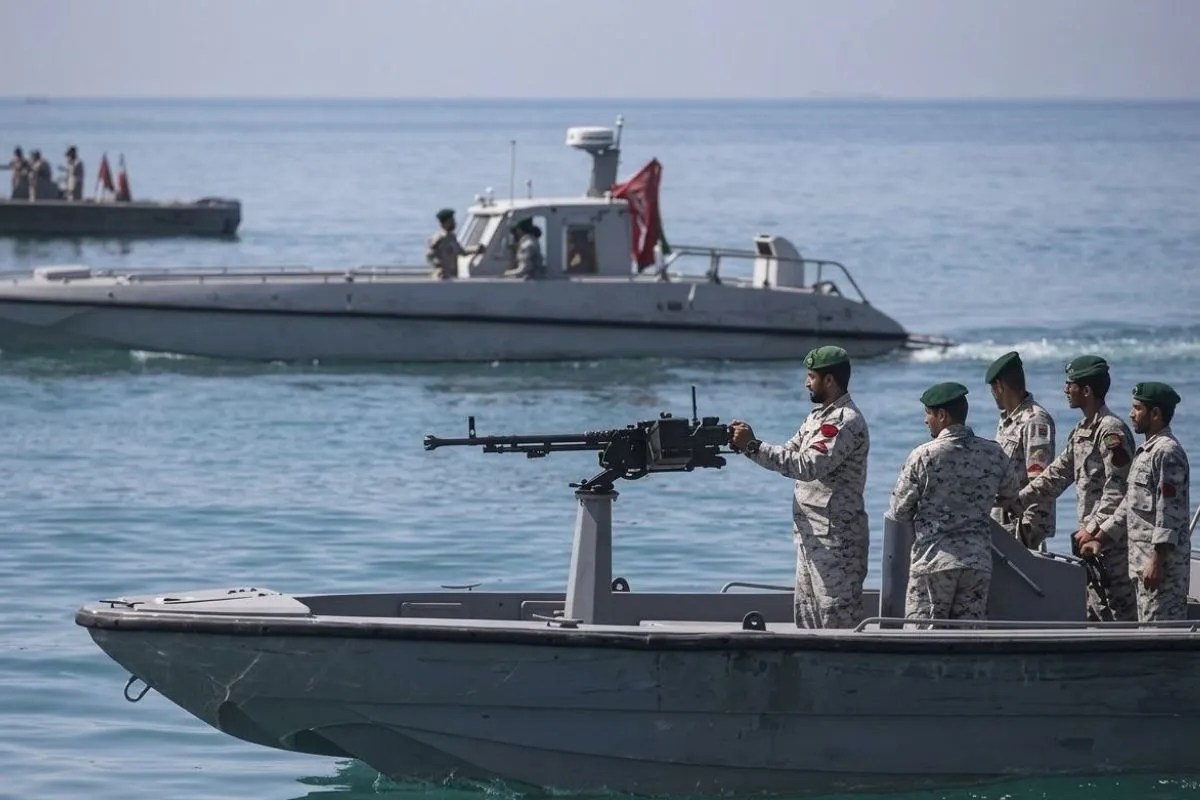
Twenty-one miles. That is the width of the narrowest point of the Strait. It is a geographic fluke that dictates the price of the coffee in your hand, the heat in your home, and the stability of global empires. When the Iranian Revolutionary Guard Corps (IRGC) fast boats appear on the radar as tiny, aggressive blips, the math of global trade suddenly becomes very personal for the crew on board.
Recently, a Chinese-flagged vessel found itself in the crosshairs of this geopolitical friction. For years, there was a silent assumption that a Chinese flag acted as a kind of digital armor. Beijing and Tehran are partners, bound by oil and mutual opposition to Western hegemony. But the sea has a way of dissolving assumptions. When the radio crackled with a command from the Iranian navy to halt and prepare for inspection, the crew realized that in these waters, even a superpower’s shadow isn't always long enough to provide shade.
The Ghost in the Radio
Imagine the bridge of a modern cargo ship. It is a cathedral of screens. Blue glows, digital charts, and the rhythmic pulse of the Automatic Identification System (AIS). It feels sterile and safe. Then comes the voice. It isn't a polished broadcast; it is often distorted, urgent, and delivered with the absolute authority of someone holding a weapon.
The Iranian patrol boats don't always need to fire a shot to win. They use the radio as a scalpel. They issue commands that force a captain to make a choice in seconds: defy a sovereign military or deviate from a multi-million dollar schedule. For the Chinese vessel caught in this latest encounter, the message was clear. Change course. Now.
The ship pivoted. It wasn't a grand cinematic maneuver. It was a slow, heavy groan of steel against current. But that turn represented a massive shift in the reality of maritime security. If China’s "unbreakable" bond with Iran cannot protect its own commercial interests from being harassed in the world's most vital chokepoint, then the rules of the game have officially evaporated.
The Logistics of a Heart Attack
We often talk about "global supply chains" as if they are abstract lines on a map. They aren't. They are physical objects moving through physical space. One-fifth of the world’s total oil consumption passes through this tiny gap between Oman and Iran.
Think of the Strait of Hormuz as the carotid artery of the global economy.
When a vessel is stopped or diverted, it isn't just one ship that is affected. A ripple effect moves backward through the system. Insurance premiums for every ship in the region spike instantly. Logistics managers in Singapore and Rotterdam start looking at their watches. Somewhere in a suburban neighborhood, a gas station manager receives a notification that the next delivery will be four cents higher per gallon.
The tension in the Strait is a tax on human existence. We pay it every time a geopolitical ego needs to be stroked or a regional power wants to signal its relevance. The Iranian strategy is one of "calculated unpredictability." By stopping a Chinese ship—a vessel belonging to its most significant economic patron—Tehran is telling the world that it holds the master key to the gate. They are proving that no one is exempt from the toll.
The Men on the Water
Behind the headlines are people who didn't sign up for a war. The merchant mariners—often from the Philippines, India, or Eastern Europe—are the forgotten protagonists of this story. They live in a world of vibration and salt, moving the fuel that keeps the rest of us comfortable.
When the Iranian boats approach, these sailors aren't thinking about the 25-year strategic cooperation agreement between Beijing and Tehran. They are looking at the heavy machine guns mounted on the bows of the fast boats. They are thinking about their families. They are wondering if they are about to become pawns in a "maximum pressure" campaign they never asked to join.
The psychological toll of navigating the Strait has become a permanent feature of the job. It is a high-stakes game of "Simon Says." If Simon tells you to turn north into Iranian waters, you turn north. If Simon tells you to cut your engines, you cut your engines. To do otherwise is to risk the fate of the Stena Impero or the Advantage Sweet, ships that were seized and held for months, their crews becoming unwilling guests in a diplomatic chess match.
The Failure of the Digital Shield
We live in an age of supposed transparency. We can track every ship on the planet in real-time using satellite data. We thought that by making the world visible, we would make it safe. We were wrong.
In fact, the technology has become a target. Reports of GPS jamming and "spoofing" in the Strait have increased. Ships find their navigation systems telling them they are miles away from their actual location, sometimes nudging them into territorial waters where they can be legally "detained." It is a digital trapdoor.
The Chinese vessel's diversion is a reminder that hardware and software are secondary to the man with the megaphone and the patrol boat. You can have the most advanced radar in the world, but it cannot tell you the intent of the person on the other end of the radio. It cannot tell you if today is the day a regional skirmish turns into a global conflagration.
The Weight of the Silence
After the encounter, the Chinese ship moved on. The radio went silent. The fast boats retreated toward the coast of Bandar Abbas. On the surface, nothing changed. The sun continued to beat down on the turquoise water.
But the silence that follows these encounters is deafening. It is the silence of a shifting world order. It tells us that the old protections are failing. It tells us that the "Blue Water Navy" of any superpower is only as effective as its willingness to engage, and right now, the world is watching to see who will blink first.
We treat these events as "news," as if they are isolated incidents to be read and forgotten. But they are symptoms of a deepening fever. Every time a ship is forced to turn, the world becomes a little smaller, a little more expensive, and a significantly more dangerous place to do business.
The Strait of Hormuz remains a place where geography mocks globalism. It is a reminder that for all our digital sophistication and economic interdependency, we are still beholden to a few miles of water and the whims of the people who guard it. The next time you flip a light switch, remember the heavy groan of a tanker turning in the dark, miles from home, because a voice on the radio told it that its flag no longer mattered.