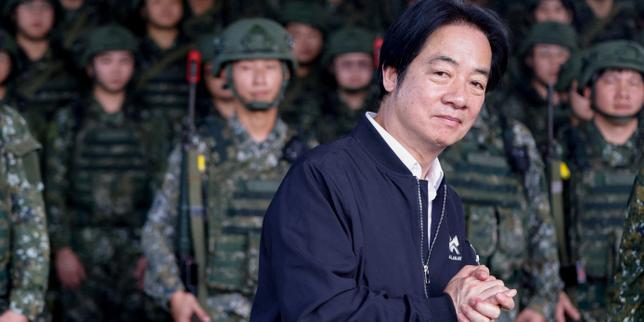
Taiwanese President Lai Ching-te lives in a world where the simple act of boarding a plane for an official state visit is a high-stakes geopolitical gamble. While most world leaders worry about polling or policy, Lai faces a systematic, multi-layered blockade orchestrated by Beijing designed to erase Taiwan’s presence from the international map. This isn't just about diplomatic snubs; it is a sophisticated campaign of "legal warfare," economic intimidation, and airspace bullying that has effectively turned the President of a top-25 global economy into a prisoner of his own geography.
The reality is stark. Out of the 193 member states of the United Nations, only 12 maintain formal diplomatic ties with Taipei. But the numbers don't tell the whole story. The real crisis lies in the "grey zone" tactics that prevent Lai from even transiting through major hubs without triggering a military or economic tantrum from the mainland.
The Shrinking Sovereignty Sandbox
For decades, the "transit diplomacy" model allowed Taiwanese leaders to meet with US officials under the guise of technical stopovers. You land in New York or Los Angeles to refuel, grab a coffee with a senator, and move on to a friendly capital in Latin America or the Caribbean. That window is slamming shut. Beijing has moved beyond mere protests, now deploying carrier strike groups and hundreds of sorties across the median line in the Taiwan Strait every time a high-level departure is even rumored.
This physical intimidation creates a logistical nightmare. When the President travels, the risk profile now includes the potential for a total blockade of the island's airspace under the pretext of "military exercises." It turns a routine diplomatic mission into a potential catalyst for global trade paralysis.
Economic Extortion as a Diplomatic Silencer
Beijing’s primary tool for isolating Lai isn't just missiles; it’s the ledger. The strategy is simple: punish any nation that dares to host him, even in an unofficial capacity. We saw this play out with Lithuania when they allowed a "Taiwanese Representative Office" to open. China didn't just recall an ambassador; they deleted Lithuania from their customs system, effectively banning the country’s exports and pressuring German car parts manufacturers to drop Lithuanian suppliers.
The Cost of a Handshake
For developing nations in the Global South, the choice is increasingly binary. Do you accept a Taiwanese delegation and risk losing access to the Belt and Road Initiative? Or do you take the infrastructure loan and sign a "One China" memorandum that explicitly bars Taiwanese officials from your soil?
- Infrastructure Debt: Nations like Honduras and Nauru have recently flipped their recognition to Beijing, cited often as a move for "economic development."
- Market Access: Large economies in Europe and Southeast Asia fear "informal" sanctions on their luxury goods or agricultural exports.
- Supply Chain Vulnerability: The threat of disrupting semiconductor flows remains the ultimate deterrent, though it cuts both ways.
The Technical Warfare of International Organizations
It isn’t just about where Lai can fly; it’s about where his government isn’t allowed to speak. From the World Health Assembly to INTERPOL, the blockade is total. This creates a dangerous information vacuum. During the early days of the COVID-19 pandemic, Taiwan’s warnings were filtered out by a bureaucracy terrified of offending Beijing.
This systematic exclusion extends to civil aviation. The International Civil Aviation Organization (ICAO) manages global flight safety. By locking Taiwan out, Beijing forces the island to manage one of the world's busiest air corridors without direct access to real-time international data feeds. It is a cynical use of safety protocols as a weapon of isolation.
The Silicon Shield Paradox
There is a persistent myth that Taiwan’s dominance in high-end semiconductor manufacturing—the so-called Silicon Shield—makes its leaders untouchable. The logic suggests that because the world needs TSMC, the world will protect Taiwan’s right to participate in global affairs.
This is a dangerous oversimplification. In reality, the Silicon Shield has become a source of anxiety for the West, leading to "de-risking" strategies that might actually weaken Taiwan’s long-term leverage. If the US, Japan, and the EU successfully relocate advanced chip production to their own shores, the incentive to provide a diplomatic or military umbrella for Taipei’s leadership significantly diminishes. Beijing knows this. They are playing a long game of attrition, waiting for the moment when Taiwan’s technological indispensability fades.
Digital Diplomacy and the Virtual Escape Hatch
Denied the physical red carpet, Taipei is pivoting to a "digital-first" foreign policy. If Lai cannot land in Paris or Tokyo, his administration ensures that Taiwan’s presence is felt through tech partnerships and cybersecurity cooperation. They are trading sovereign recognition for functional integration.
However, a Zoom call is not a state visit. Digital presence lacks the "sovereign weight" required to sign treaties or join security blocs. The psychological impact of a President being unable to leave his borders without sparking a regional crisis cannot be underestimated. It reinforces the narrative of Taiwan as a "problem to be solved" rather than a partner to be engaged.
The US Transit Tightrope
The United States remains the only power capable of defying the blockade, yet even Washington is treading carefully. The Biden administration—and likely any successor—must balance the "Taiwan Relations Act" against the need for a stable relationship with China. This results in the "undisclosed stopover," where the President of Taiwan lands in a US territory like Guam or Hawaii rather than the mainland.
It is a diminished version of diplomacy. It happens in the dark, away from cameras, in airport hangars and secure hotels. For Lai, every trip is a calculation of whether the diplomatic gain outweighs the inevitable "punishment" his citizens will face in the form of trade bans or military drills the moment he returns.
A Systemic Failure of the Rules-Based Order
The inability of a democratically elected leader to engage in standard international travel exposes the hollowness of the "rules-based international order." When the 21st largest economy in the world is treated as a pariah due to the threats of a neighbor, the system isn't working—it's being gamed.
The pressure is not just on Taipei; it is on every capital that claims to value democratic sovereignty. Each time a nation denies a transit request or cancels a meeting to avoid "friction," they validate the effectiveness of Beijing’s blockade. This isn't just Taiwan’s problem. It is a blueprint for how any major power can use economic and military weight to rewrite the norms of international movement.
The blockade is working because it is quiet. It doesn't require a single shot to be fired. It only requires the world to remain silent as the walls close in.
The immediate challenge for Lai Ching-te is not just about finding a runway that will accept his plane. It is about proving that Taiwan exists as more than just a geopolitical flashpoint. Every successful transit, however hushed, is a crack in the wall. Every failed attempt is a reminder that in the current global climate, the right to travel is a privilege granted by the powerful, not a right held by the sovereign.
Taipei’s response must move beyond asking for permission. The focus is shifting toward "mini-lateralism"—building deep, functional ties with smaller groups of like-minded nations on specific issues like AI ethics, semiconductor supply chains, and disaster relief. These are areas where Taiwan’s expertise is too valuable to ignore, regardless of what the UN charter says.
The era of the grand presidential tour may be over for Taiwan. In its place is a gritty, piecemeal struggle for every inch of diplomatic space. It is a war of a thousand small cuts, where the victory isn't a seat at the table, but the mere fact that you showed up at the building.